What Is Divine Command Theory and Its Challenges?
TL;DR
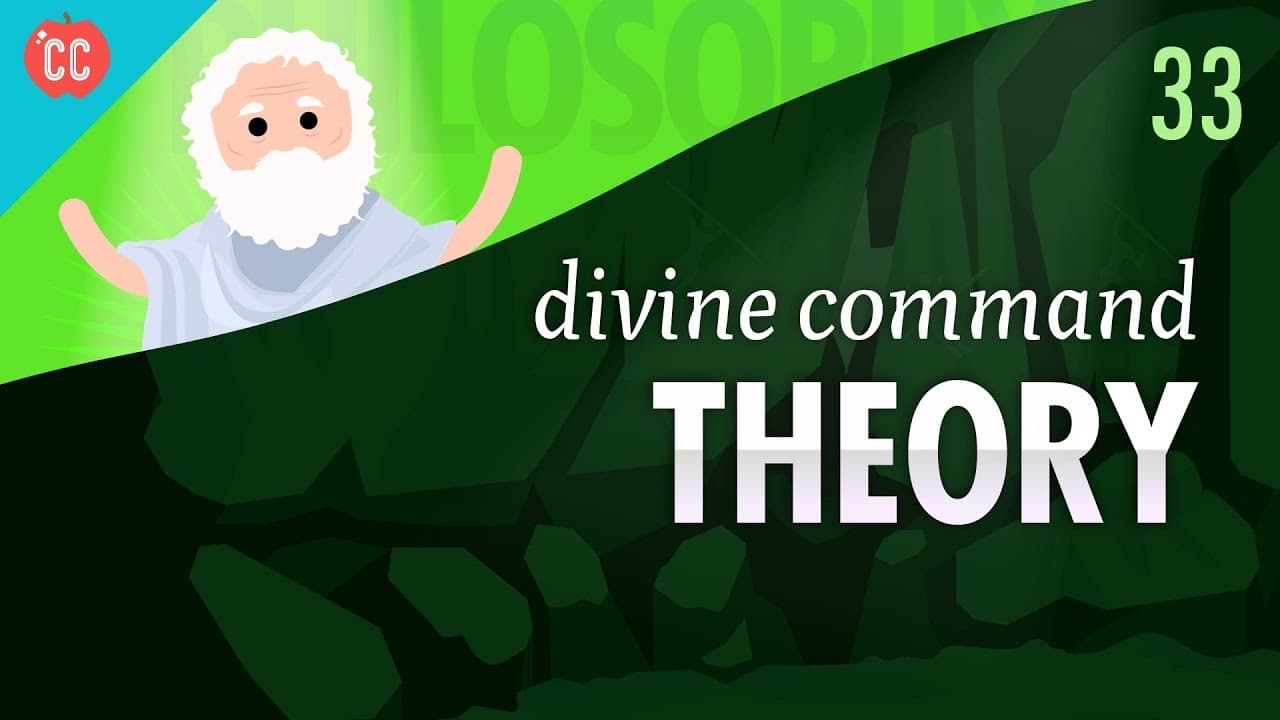
Divine Command Theory asserts that morality is determined by God's commands, often found in religious texts like the Bible. However, it faces significant challenges, notably the Euthyphro Problem, which questions whether actions are good because God commands them or if God commands them because they are intrinsically good. This dilemma raises issues about the arbitrariness of morality and the nature of God's authority.
Transcript
The book of Deuteronomy, chapter 22, verse 11, says that people must refrain from wearing fabrics made of wool and linen mixed together. The First Epistle to Timothy, chapter 2, verse 9, prohibits women from wearing braids or gold chains. And Leviticus lays out restrictions against tattoos and gossip, among other things. For billions of people, the... Read More
Key Insights
- Divine Command Theory posits that morality is dictated by divine commands, often sourced from religious texts like the Bible.
- The theory provides a simple framework for morality, suggesting that ethical guidelines are clear-cut as long as they align with divine instructions.
- The Euthyphro Problem, introduced by Plato, questions whether actions are good because God commands them or if God commands them because they are good.
- Choosing the first horn of the Euthyphro dilemma implies that morality is arbitrary, subject to God's changing whims.
- The second horn suggests that morality exists independently of God, which challenges the belief in God's omnipotence and the necessity of divine guidance.
- The dilemma highlights significant challenges for divine command theorists, questioning the consistency and universality of divine moral directives.
- Determining which divine commands are binding remains problematic, as interpretations vary across religious texts and denominations.
- The episode sets the stage for exploring alternative moral theories that address divine command theory's limitations while maintaining a theistic perspective.
Install to Summarize YouTube Videos and Get Transcripts
Explore YouTube Video Summarizer or Get YouTube Transcript Extractor
Questions & Answers
Q: What is Divine Command Theory?
Divine Command Theory is an ethical framework that posits morality is determined by divine commands. It suggests that actions are right or wrong based on whether they align with the instructions of a deity or deities. This theory is often rooted in religious texts, such as the Bible, and provides a straightforward approach to determining ethical behavior by following divine edicts.
Q: What is the Euthyphro Problem?
The Euthyphro Problem, introduced by Plato, presents a dilemma for divine command theorists. It questions whether actions are morally right because God commands them or if God commands them because they are inherently right. This dilemma challenges the notion of morality's dependence on divine will and raises questions about the arbitrariness of divine commands and the nature of goodness.
Q: How does the Euthyphro Problem challenge Divine Command Theory?
The Euthyphro Problem challenges Divine Command Theory by presenting a dilemma: if actions are right because God commands them, morality becomes arbitrary, subject to God's changing whims. Conversely, if God commands actions because they are inherently right, it suggests that morality exists independently of God, challenging the belief in God's omnipotence and the necessity of divine guidance for moral understanding.
Q: What are the implications of choosing the first horn of the Euthyphro dilemma?
Choosing the first horn of the Euthyphro dilemma implies that morality is arbitrary, dependent solely on God's commands. This view suggests that God's whims could change moral standards at any moment, leading to ethical uncertainty. It raises concerns about the consistency and universality of moral principles if they are subject to divine caprice, potentially undermining the stability of ethical systems.
Q: What are the implications of choosing the second horn of the Euthyphro dilemma?
Choosing the second horn of the Euthyphro dilemma implies that morality exists independently of God, suggesting that God commands actions because they are inherently good. This view challenges the notion of God's omnipotence, as it posits a standard of goodness outside of divine influence. It also raises questions about the necessity of divine guidance if moral understanding can be achieved independently.
Q: Why is determining binding divine commands problematic?
Determining binding divine commands is problematic because interpretations of religious texts vary widely across different denominations and cultural contexts. Some commands are considered binding, while others are seen as outdated or context-specific. This inconsistency raises questions about the universality and applicability of divine commands, challenging the coherence and practicality of Divine Command Theory in guiding ethical behavior.
Q: How does the episode address the limitations of Divine Command Theory?
The episode addresses the limitations of Divine Command Theory by exploring the Euthyphro Problem and its implications for divine morality. It highlights challenges in determining which divine commands are binding and the theory's inability to provide consistent ethical guidance. These limitations prompt the exploration of alternative moral theories that address these issues while maintaining a theistic perspective, suggesting the need for a more robust ethical framework.
Q: What alternative moral theories might address the challenges of Divine Command Theory?
Alternative moral theories that might address the challenges of Divine Command Theory include Natural Law Theory, which posits that moral principles are inherent in the natural world and accessible through reason. Another is Virtue Ethics, which focuses on character development and moral virtues rather than specific divine commands. These theories aim to provide a more consistent and universal approach to ethics while potentially accommodating a theistic perspective.
Summary & Key Takeaways
-
Divine Command Theory suggests that morality is determined by divine commands, often derived from religious texts like the Bible. This theory offers a straightforward approach to ethical questions, but it faces challenges, such as the Euthyphro Problem, which questions the nature of morality's dependence on divine will.
-
The Euthyphro Problem, introduced by Plato, presents a dilemma for divine command theorists: are actions good because God commands them, or does God command them because they are inherently good? Each option presents significant philosophical challenges, questioning the arbitrariness of morality and God's omnipotence.
-
The episode explores the difficulties in determining which divine commands are binding, as interpretations vary widely. These challenges highlight the limitations of divine command theory, prompting the exploration of alternative moral theories that address these issues while maintaining a theistic perspective.
Read in Other Languages (beta)
Share This Summary 📚
Summarize YouTube Videos and Get Video Transcripts with 1-Click
Try YouTube Summary with ChatGPT & Claude or YouTube Transcript Generator
Explore More Summaries from CrashCourse 📚





Summarize YouTube Videos and Get Video Transcripts with 1-Click
Try YouTube Summary with ChatGPT & Claude or YouTube Transcript Generator