How to Build an Asaki Oscillator with a Single Transistor
TL;DR
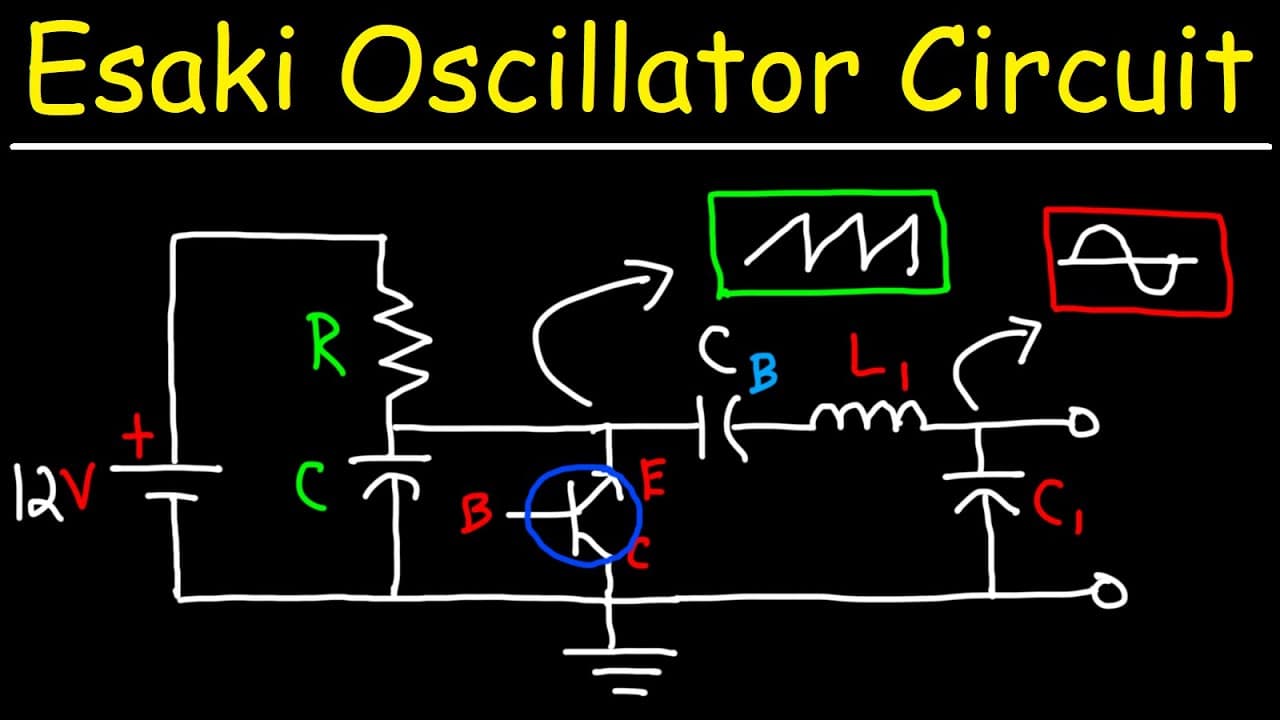
To build an Asaki oscillator, connect a single NPN transistor, a resistor, and a capacitor to a 12V battery. The output frequency can be adjusted by changing the resistance and capacitance values, which also influences the waveform shape. Adding an LC filter can convert the output from a sawtooth wave to a sine wave while affecting the output voltage.
Transcript
in this video we're going to talk about how to make the asaki oscillator which uses a single transistor this circuit doesn't use many components which is nice so the first thing we need is a power source and so we're going to use a battery for that and then we need a resistor and a capacitor now across the capacitor we're going to connect an npn tr... Read More
Key Insights
- 😒 The Asaki oscillator uses minimal components, making it a simple and cost-effective circuit.
- ⚡ The voltage of the battery needs to be relatively high for the circuit to oscillate correctly.
- 💱 The frequency and shape of the output waveform can be adjusted by changing the values of the resistor and capacitor.
- 👋 Adding an LC filter network can convert the sawtooth wave into a sine wave.
- ⚡ The inductor in the LC filter network can increase the voltage of the output waveform.
- ❓ The Asaki oscillator provides an opportunity to explore the concepts of transistor operation and RC networks in practical circuits.
- 🙂 Practical circuit designs may require slightly different component values than calculated formulas provide, but the formulas offer approximate guidance.
Install to Summarize YouTube Videos and Get Transcripts
Explore YouTube Video Summarizer or Get YouTube Transcript Extractor
Questions & Answers
Q: What components are required to build the Asaki oscillator?
The circuit requires a power source (12V battery), a resistor, a capacitor, and an NPN transistor.
Q: How does the Asaki oscillator differ from other circuits using an NPN transistor?
In the Asaki oscillator, the collector pin of the transistor is connected to the negative terminal of the battery, while the emitter pin is connected to the positive terminal.
Q: How does adjusting the resistor and capacitor values affect the output waveform?
Increasing the resistor value increases the charging time of the capacitor, therefore changing the shape of the waveform. Increasing the capacitor value decreases the frequency of the circuit.
Q: Why is the bypass capacitor necessary in this circuit?
The bypass capacitor prevents current from flowing through the load circuit and affecting the operation of the oscillator.
Summary & Key Takeaways
-
The Asaki oscillator uses a single transistor, a resistor, and a capacitor to generate an oscillating output waveform.
-
The voltage source is a 12V battery, and the output is taken across the emitter and collector pins of the transistor.
-
Adjusting the values of the resistor and capacitor can affect the frequency and shape of the output waveform.
Read in Other Languages (beta)
Share This Summary 📚
Summarize YouTube Videos and Get Video Transcripts with 1-Click
Try YouTube Summary with ChatGPT & Claude or YouTube Transcript Generator
Explore More Summaries from The Organic Chemistry Tutor 📚






Summarize YouTube Videos and Get Video Transcripts with 1-Click
Try YouTube Summary with ChatGPT & Claude or YouTube Transcript Generator