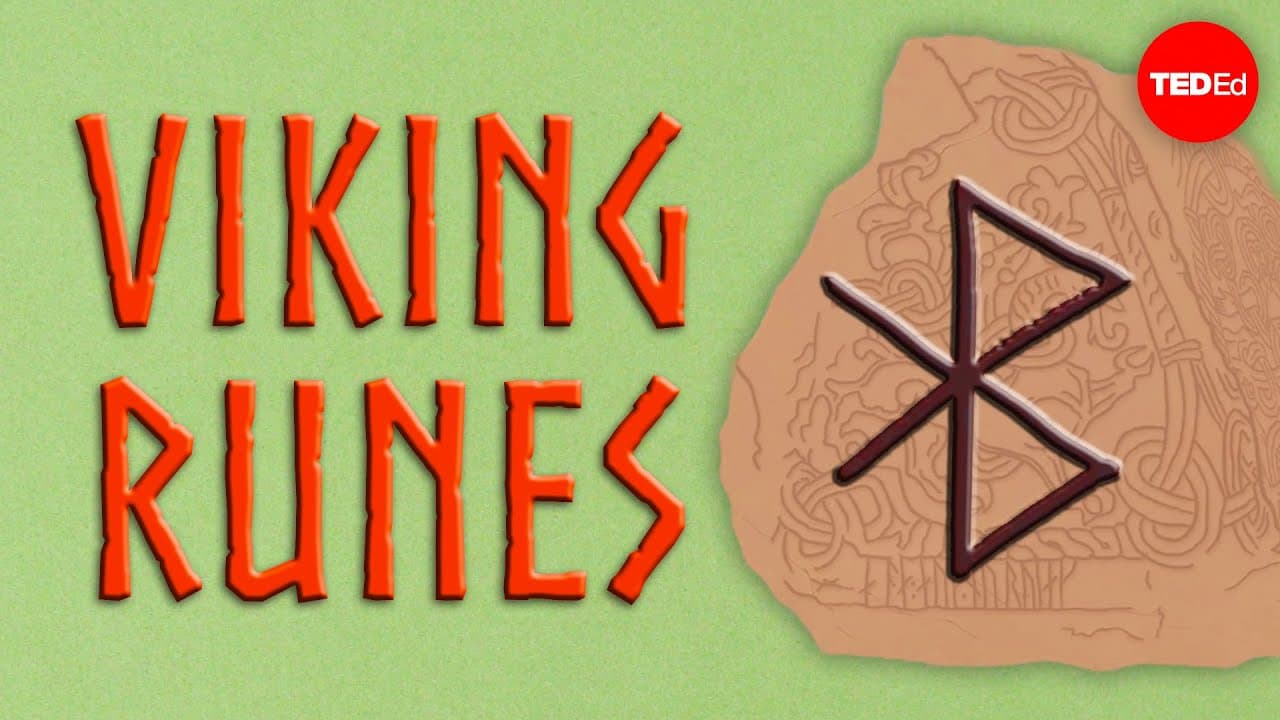
What Do Viking Runestones Reveal About Their Culture?
TL;DR
Viking runestones, inscribed with Old Norse runes, preserve significant historical and cultural messages, including memorials, spells, and influences from other cultures. These inscriptions reflect the Vikings' beliefs, societal structures, and their connection to mythology, with some remaining mysterious and undeciphered. They serve as essential records of Viking life and traditions, alongside standing evidence of their legacy today.
Transcript
In the 8th century CE, Vikings surged across the misty seas. They came from Scandinavia in Northern Europe but would travel far and wide. Some plundered and settled in the British Isles and France; others braved Artic exploration or forged clever new trade routes to the Middle East. With their steely navigational skills, advanced long-ships an... Read More
Key Insights
- 🏝️ Vikings' seafaring prowess and advanced ships enabled them to explore and conquer distant lands for over 300 years.
- 🥰 Runes served as a written medium for Viking history, magic, love, and power, showcasing the versatility of the Old Norse language.
- 👑 Viking runestones, like the Jelling stones, served as historical documents memorializing kings, queens, and powerful families from the Viking Age.
- 💄 Viking runes incorporated influences from Latin, Old Norse poetry, and other cultures, making deciphering their inscriptions a complex but rewarding task.
- 😒 The use of magical incantations in runic inscriptions reveals the mystical beliefs and practices of the Vikings in ensuring luck, protection, and success.
- 🧍 The legacy of Viking runes and culture is preserved through standing runestones across Scandinavia, with inscriptions warning against desecration or alteration.
- 🥳 The enduring resonance of Viking runes and culture is evidenced in modern-day symbols like the Bluetooth logo, derived from Harald Bluetooth's initials.
Install to Summarize YouTube Videos and Get Transcripts
Explore YouTube Video Summarizer or Get YouTube Transcript Extractor
Questions & Answers
Q: How did the Vikings utilize runic inscriptions to preserve their culture?
The Vikings used runes to write messages in Old Norse on various objects, from weapons to stones, to record history, memorialize the dead, and even cast magical spells.
Q: What influenced the Viking runic inscriptions apart from their native culture?
The Vikings interacted with other cultures, incorporating influences like Latin phrases and Old Norse poetry traditions into their runic messages.
Q: How did Vikings showcase power and familial ties through runic inscriptions?
Prominent figures like Sigríðr and Harald Bluetooth carved their names on stones to assert dominance and connect themselves to mythical heroism in the Viking Age.
Q: How did Viking runes continue to persist beyond the Viking era?
Despite the decline of the Viking sea expansion, Old Norse continued to be spoken, and runes remained in use, even into the 19th century in rural Scandinavia.
Summary & Key Takeaways
-
Vikings, originating from Scandinavia, navigated the seas, plundered territories, and traded through their advanced long-ships for over three centuries.
-
Runes, inscribed on various objects and locations, are keys to understanding Viking culture, written in Old Norse in the unique "futhark" alphabet.
-
Runes conveyed messages of love, power, historical events, and spells, with some inscriptions remaining mysterious and magical even today.
Read in Other Languages (beta)
Share This Summary 📚
Summarize YouTube Videos and Get Video Transcripts with 1-Click
Try YouTube Summary with ChatGPT & Claude or YouTube Transcript Generator
Explore More Summaries from TED-Ed 📚



Summarize YouTube Videos and Get Video Transcripts with 1-Click
Try YouTube Summary with ChatGPT & Claude or YouTube Transcript Generator