What Is Probability Sampling in Research?
TL;DR
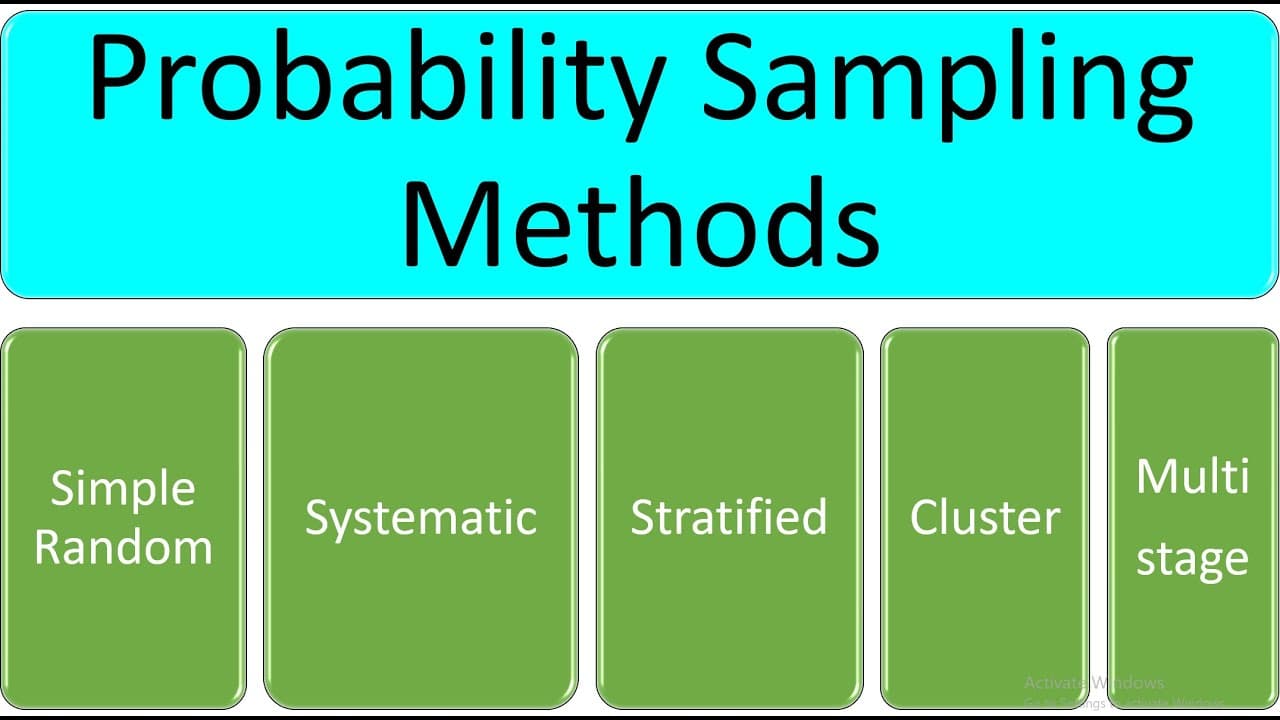
Probability sampling allows every member of a population to have an equal chance of selection, crucial for making statistical inferences in quantitative research. Various methods like simple random, stratified, and cluster sampling come with their own benefits and drawbacks, all of which require specific criteria such as a clearly defined target population and adequate sample size to implement effectively.
Transcript
hello everybody and welcome to lesson 9 probability sampling in this lesson we will cover the following three topics that is when to use proverb sampling types of proverb sampling merits and damage of each type of probability sampling as we discussed previously there are two types of sampling that is probably sampling and non-probability sampling i... Read More
Key Insights
- 👨🔬 Probability sampling is crucial for quantitative research to ensure statistical inference about a target population.
- 👨🔬 Types of probability sampling, such as simple random and stratified sampling, offer distinct advantages and disadvantages for research studies.
- 🎯 Criteria for using probability sampling include a clearly defined target population, random selection, independence of samples, adequate sample size, and representativeness of the sample.
- 💁 Multi-stage sampling is an advanced form of cluster sampling suitable for large, geographically dispersed populations.
- ✖️ Each type of probability sampling method, from simple random to multi-stage sampling, requires careful planning and consideration of specific criteria for successful implementation.
- 🎯 Probability sampling methods, when applied correctly, provide researchers with efficient and representative sampling techniques for drawing valid conclusions about a target population.
- 👨🔬 Understanding the differences and criteria for probability sampling methods is essential for researchers to choose the most appropriate sampling technique for their research studies.
Install to Summarize YouTube Videos and Get Transcripts
Explore YouTube Video Summarizer or Get YouTube Transcript Extractor
Questions & Answers
Q: What is probability sampling and why is it essential in research?
Probability sampling ensures each individual from a population has an equal chance of being selected, facilitating statistical inference about a target population in quantitative research.
Q: What are the main types of probability sampling discussed and how do they differ?
The main types of probability sampling are simple random, systematic, stratified, cluster, and multi-stage sampling, each offering distinctive methods for selecting samples based on various criteria.
Q: What are the key criteria for determining if probability sampling is appropriate for a research study?
Key criteria include a clearly defined target population, random selection, independence of samples, adequate sample size, and representativeness of the sample to ensure valid statistical inference.
Q: How does stratified sampling differ from other types of probability sampling methods?
Stratified sampling involves grouping the sampling frame into homogeneous subgroups based on predetermined criteria, allowing for precise representation across diverse characteristics within the population.
Summary & Key Takeaways
-
Probability sampling ensures each member of a population has an equal chance of being selected, crucial for statistical inference in quantitative research.
-
Different types of probability sampling, such as simple random, systematic, stratified, cluster, and multi-stage sampling, offer unique advantages and disadvantages.
-
Criteria for using probability sampling include a clearly defined target population, random selection, independence, adequate sample size, and representativeness of the sample.
Read in Other Languages (beta)
Share This Summary 📚
Summarize YouTube Videos and Get Video Transcripts with 1-Click
Try YouTube Summary with ChatGPT & Claude or YouTube Transcript Generator
Explore More Summaries from Solomon Getachew 📚
Summarize YouTube Videos and Get Video Transcripts with 1-Click
Try YouTube Summary with ChatGPT & Claude or YouTube Transcript Generator