How to Choose a Research Instrument Effectively
TL;DR
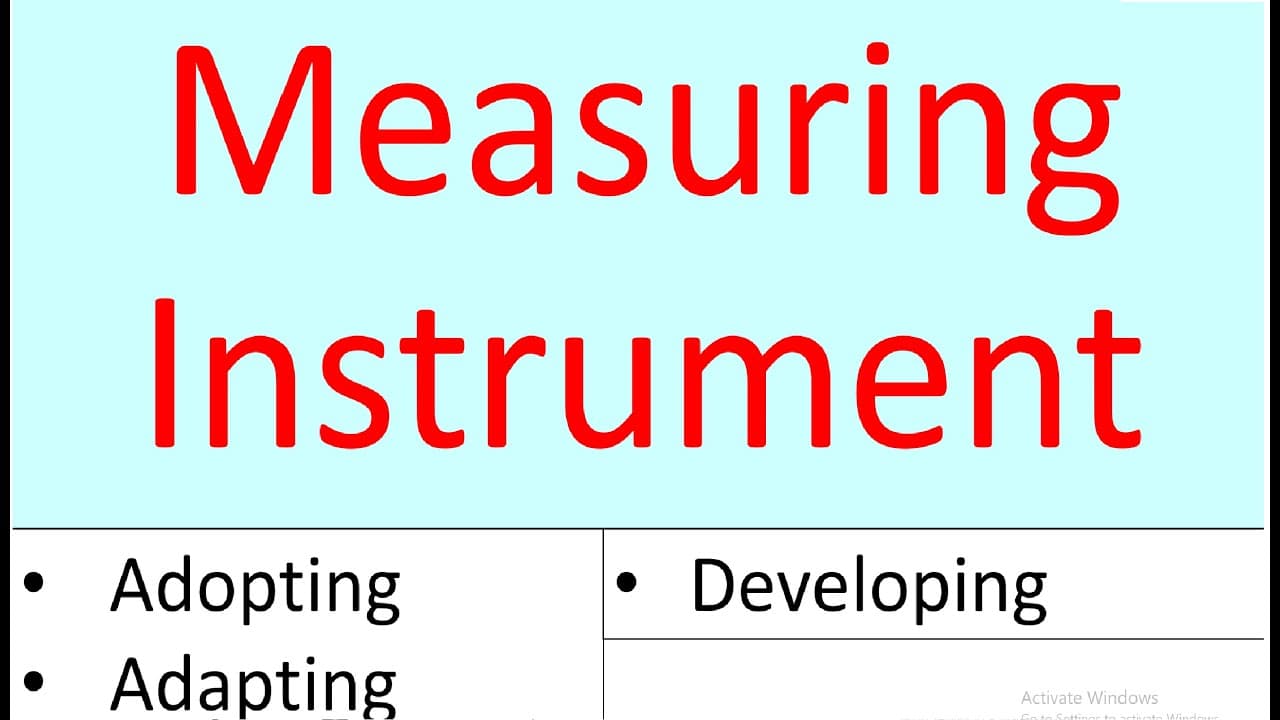
Selecting a research instrument can be done by adopting an existing tool, adapting one with modifications, or developing a new one. Adopting is the easiest and most time-efficient method, while adapting requires attention to cultural contexts, and developing is a comprehensive process that ensures accuracy in measurement.
Transcript
hello everybody and welcome to lesson 20 the title for this lesson is adopting adopting and developing instrument here the main objective of this lesson is to find out or to get an instrument which can measure our Concepts or research variables in research so where we can find the instrument to measure the concepts from where we can get the instrum... Read More
Key Insights
- ❓ Adopting an existing instrument without modifications is easier and better than adapting or developing an instrument.
- ⌛ Adopting an instrument saves time and energy in making significant changes.
- ❓ Adapting an instrument requires considering cultural and contextual differences and modifying the instrument accordingly.
- 👨🔬 Developing a research instrument involves several steps, including defining the concept, identifying components, specifying items, selecting an appropriate scale, administering a pilot test, and confirming reliability and validity.
Install to Summarize YouTube Videos and Get Transcripts
Explore YouTube Video Summarizer or Get YouTube Transcript Extractor
Questions & Answers
Q: What is the difference between adopting and adapting a research instrument?
Adopting a research instrument involves using an existing instrument without any modifications, while adapting involves modifying a pre-existing instrument to make it suitable for the current study.
Q: Why is reliability and validity important when adopting a research instrument?
Reliability ensures that the instrument consistently produces the same results, while validity measures the extent to which the instrument measures what it is supposed to measure.
Q: What considerations are important when adapting a research instrument?
When adapting a research instrument, considerations such as cultural and contextual relevance, modification of items, and ensuring suitability for the study are important.
Q: What is the process of developing a research instrument?
The process involves defining the concept to be measured, identifying its components, specifying observable and measurable items, selecting an appropriate scale, combining items into a composite scale, administering the scale to a sample for pilot testing, and confirming reliability and validity.
Summary & Key Takeaways
-
The lesson introduces three options for obtaining a research instrument: adopting, adapting, and developing.
-
Adopting an instrument involves using an existing instrument without any modifications, considering research objectives, reliability, validity, and population appropriateness.
-
Adapting an instrument involves modifying a pre-existing instrument to make it suitable for the current study, but reliability and validity evidence must be checked again.
Read in Other Languages (beta)
Share This Summary 📚
Summarize YouTube Videos and Get Video Transcripts with 1-Click
Try YouTube Summary with ChatGPT & Claude or YouTube Transcript Generator
Explore More Summaries from Solomon Getachew 📚



Summarize YouTube Videos and Get Video Transcripts with 1-Click
Try YouTube Summary with ChatGPT & Claude or YouTube Transcript Generator