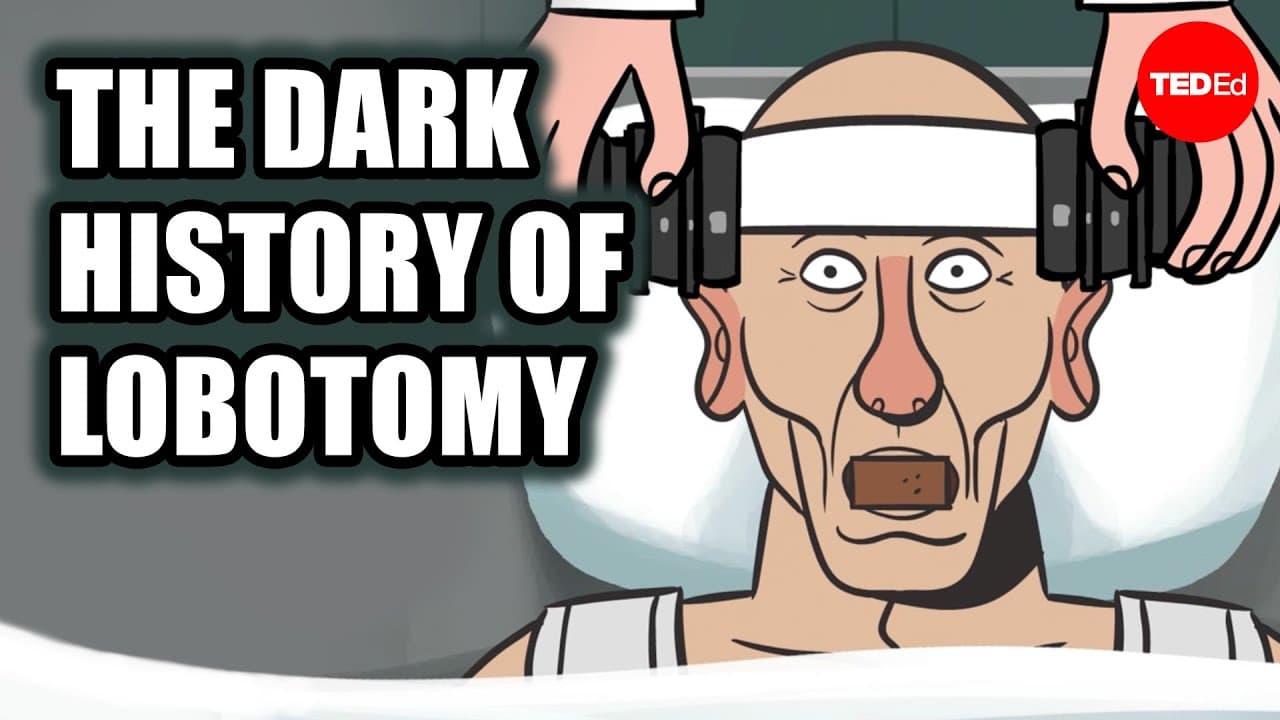
One of the most controversial medical procedures in history - Jenell Johnson
TL;DR
The lobotomy, initially seen as a treatment for mental illness, resulted in severe and unintended consequences.
Transcript
In 1935, neurophysiologist John Farquhar Fulton presented some shocking new research. After removing the frontal lobes of two chimps, he found they no longer experienced frustration or anxiety. As his research associate noted, it was as if they’d joined a “happiness cult.” Admittedly, the surgery had cost Fulton’s chimps some cognitive functions. B... Read More
Key Insights
- ❓ Egas Moniz, despite opposition, pioneered the lobotomy as a surgical remedy for mental illness, believing it could eliminate debilitating symptoms.
- 🥺 Initial enthusiasm led to widespread lobotomies despite a lack of consistent evidence regarding their effectiveness and safety.
- 😜 Sociocultural norms of the early 20th century shaped the criteria for mental illness, resulting in unnecessary lobotomies for individuals who may not have been mentally ill.
- 🦺 The introduction of simpler procedures, like the transorbital lobotomy, democratized access to this controversial treatment, often at the expense of patient safety.
- ✳️ The tragic outcomes for patients, like Rosemary Kennedy, highlighted the risks associated with lobotomies and the moral complexities of treating mental illness through invasive means.
- 💉 The popularity of lobotomy waned as psychiatric treatments evolved and improved, alongside growing awareness of mental health stigmas and the need for humane care.
- 😷 Lobotomy serves as a cautionary tale in medical history, emphasizing the importance of ethical considerations and informed patient consent in treatment practices.
Install to Summarize YouTube Videos and Get Transcripts
Explore YouTube Video Summarizer or Get YouTube Transcript Extractor
Questions & Answers
Q: What was the original purpose of the lobotomy procedure?
The lobotomy was developed to treat various mental illnesses, based on the belief that severing connections between the frontal lobes and the rest of the brain could alleviate symptoms of conditions like depression and anxiety. Egas Moniz, who pioneered the procedure, thought that by removing negative thought patterns from the neural connections, patients could achieve a state of tranquility and happiness.
Q: Who popularized the lobotomy in the United States?
The lobotomy gained significant popularity in the United States through the efforts of neurologist Walter Freeman and neurosurgeon James Watts. They advocated for the procedure, highlighting its ability to calm individuals who had been institutionalized for mental health reasons, despite the concerns and criticisms from other medical professionals of the time.
Q: What were some of the severe side effects experienced by lobotomy patients?
Many patients who underwent lobotomies experienced severe side effects, including apathy, significant personality changes, and cognitive impairments. Although some patients initially appeared calmer, others found themselves suffering from a reduced ability to express emotions or engage intellectually, stripping away their quality of life.
Q: How did the transorbital lobotomy differ from the original lobotomy procedure?
The transorbital lobotomy, developed by Walter Freeman, was a less invasive and quicker alternative to the original prefrontal lobotomy. Instead of drilling into the skull, Freeman used an ice pick-like instrument inserted through the eye socket to sever the necessary brain fibers. This procedure required less surgical skill and could be performed rapidly, often without trained surgeons, raising significant ethical concerns.
Summary & Key Takeaways
-
John Farquhar Fulton’s early research on chimpanzees led to the development of lobotomy by Egas Moniz, who believed it could cure mental illness by severing brain connections associated with emotional regulation.
-
Despite initial claims of success, lobotomies resulted in significant cognitive impairments and personality changes, with many patients receiving the procedure without having mental illnesses.
-
The introduction of the transorbital lobotomy by Walter Freeman made the procedure more accessible, but it ultimately fell out of favor in the 1950s as psychiatric treatments advanced.
Read in Other Languages (beta)
Share This Summary 📚
Summarize YouTube Videos and Get Video Transcripts with 1-Click
Try YouTube Summary with ChatGPT & Claude or YouTube Transcript Generator
Explore More Summaries from TED-Ed 📚



Summarize YouTube Videos and Get Video Transcripts with 1-Click
Try YouTube Summary with ChatGPT & Claude or YouTube Transcript Generator