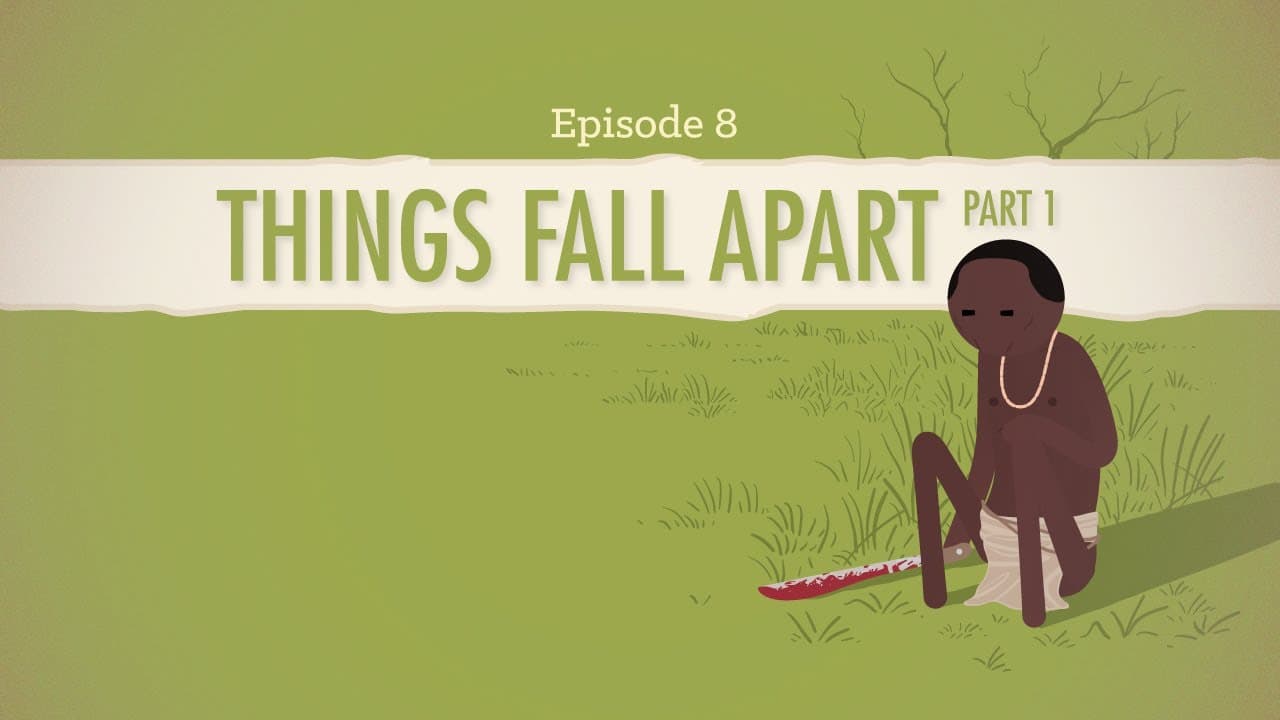
If One Finger Brought Oil - Things Fall Apart Part 1: Crash Course Literature 208
TL;DR
Explores colonialism's impact on Igbo society through Okonkwo's tragic story.
Transcript
Hi I’m John Green, this is Crash Course Literature, and today we’re going to talk about Things Fall Apart by Chinua Achebe. Things Fall Apart is set in what is now Nigeria during the late 19th century, but it was written in 1958, as the colonial system was falling apart in Africa. And one of the reasons Things Fall Apart is so important is that pri... Read More
Key Insights
- Chinua Achebe's 'Things Fall Apart' challenges European narratives by portraying Africans as complex, human characters, emphasizing the importance of humanizing others.
- Okonkwo's fear of weakness, rooted in his father's perceived failures, drives his ambition and ultimately leads to his tragic downfall.
- Achebe weaves African and European storytelling traditions, highlighting cultural intersections and differences, enriching the narrative depth.
- Okonkwo's violent actions, driven by his fear of weakness, result in personal and familial tragedy, illustrating the destructive nature of unaddressed fears.
- The arrival of British missionaries and colonial forces disrupts Igbo society, leading to cultural and social upheaval, mirroring broader colonial impacts.
- Okonkwo's inability to question his community's values and his own beliefs contributes to his downfall, underscoring the danger of rigid ideologies.
- The novel critiques both colonial and traditional Igbo practices, revealing how both systems fail to recognize individual humanity.
- Achebe's work remains relevant, prompting reflections on power, identity, and the necessity of questioning societal norms.
Install to Summarize YouTube Videos and Get Transcripts
Explore YouTube Video Summarizer or Get YouTube Transcript Extractor
Questions & Answers
Q: What is the significance of Achebe's portrayal of Okonkwo in 'Things Fall Apart'?
Achebe's portrayal of Okonkwo is significant because it challenges the stereotypical European narratives of Africans as savages. By presenting Okonkwo as a complex character driven by personal fears and societal pressures, Achebe humanizes the African experience, emphasizing the universality of human struggles and the impact of colonialism on individual identity.
Q: How does 'Things Fall Apart' depict the impact of colonialism on Igbo society?
'Things Fall Apart' depicts the impact of colonialism on Igbo society through the arrival of British missionaries and the subsequent cultural upheaval. The novel shows how traditional structures and values are challenged and disrupted, leading to social instability and identity crises within the community, ultimately illustrating the profound changes brought by colonial rule.
Q: What role does fear play in Okonkwo's life and actions?
Fear plays a central role in Okonkwo's life, driving his ambition and his harsh treatment of others. His fear of weakness, stemming from his father's failures, leads him to reject anything associated with gentleness or idleness. This fear manifests in violent actions and rigid beliefs, ultimately contributing to his tragic downfall and exile.
Q: How does Achebe incorporate African and European storytelling traditions in the novel?
Achebe incorporates African and European storytelling traditions by blending Igbo oral narratives, proverbs, and cultural references with literary techniques common in Western literature. This fusion enriches the narrative, offering a layered exploration of cultural identity and colonial impact, while also challenging Western perceptions and highlighting the richness of African storytelling.
Q: What are the consequences of Okonkwo's rigid beliefs and actions?
The consequences of Okonkwo's rigid beliefs and actions are profound, leading to personal and familial tragedy. His inability to adapt or question his values results in violent outbursts, strained relationships, and ultimately, his exile. These consequences highlight the destructive nature of inflexibility and the importance of self-reflection and adaptability in the face of change.
Q: How does 'Things Fall Apart' address themes of identity and cultural change?
'Things Fall Apart' addresses themes of identity and cultural change by depicting the clash between traditional Igbo society and colonial forces. The novel explores how individuals and communities navigate these changes, often struggling to maintain cultural identity amidst external pressures, ultimately illustrating the complexities and challenges of cultural adaptation and preservation.
Q: What is the significance of the novel's title, 'Things Fall Apart'?
The title 'Things Fall Apart' signifies the disintegration of traditional Igbo society and Okonkwo's personal life in the face of colonial influence and internal conflicts. It reflects the broader theme of societal and individual breakdowns, highlighting the fragility of established systems and the inevitable changes brought by external and internal forces.
Q: How does 'Things Fall Apart' remain relevant in contemporary discussions of power and identity?
'Things Fall Apart' remains relevant in contemporary discussions of power and identity by highlighting the enduring impacts of colonialism and the complexities of cultural identity. The novel prompts reflection on how power dynamics shape societies and individuals, emphasizing the importance of empathy, understanding, and questioning societal norms to address modern challenges of identity and coexistence.
Summary & Key Takeaways
-
Chinua Achebe's 'Things Fall Apart' explores the life of Okonkwo, an Igbo leader, whose fear of weakness leads to personal tragedy. Set against the backdrop of British colonialism, the novel critiques both colonial and traditional Igbo values, highlighting the complexities of identity and cultural change.
-
Okonkwo's tragic story unfolds as his violent actions, fueled by fear and ambition, lead to exile and familial discord. The novel portrays the societal shifts brought by British missionaries, illustrating the broader impacts of colonialism on Igbo society and the challenges of maintaining cultural identity.
-
Achebe's narrative intertwines African and European storytelling traditions, offering a nuanced portrayal of colonial-era Igboland. Through Okonkwo's journey, the novel critiques rigid ideologies and emphasizes the importance of questioning societal norms, making it a timeless reflection on power and human relationships.
Read in Other Languages (beta)
Share This Summary 📚
Summarize YouTube Videos and Get Video Transcripts with 1-Click
Try YouTube Summary with ChatGPT & Claude or YouTube Transcript Generator
Explore More Summaries from CrashCourse 📚





Summarize YouTube Videos and Get Video Transcripts with 1-Click
Try YouTube Summary with ChatGPT & Claude or YouTube Transcript Generator