What Factors Affect Wi-Fi Speed and Distance?
TL;DR
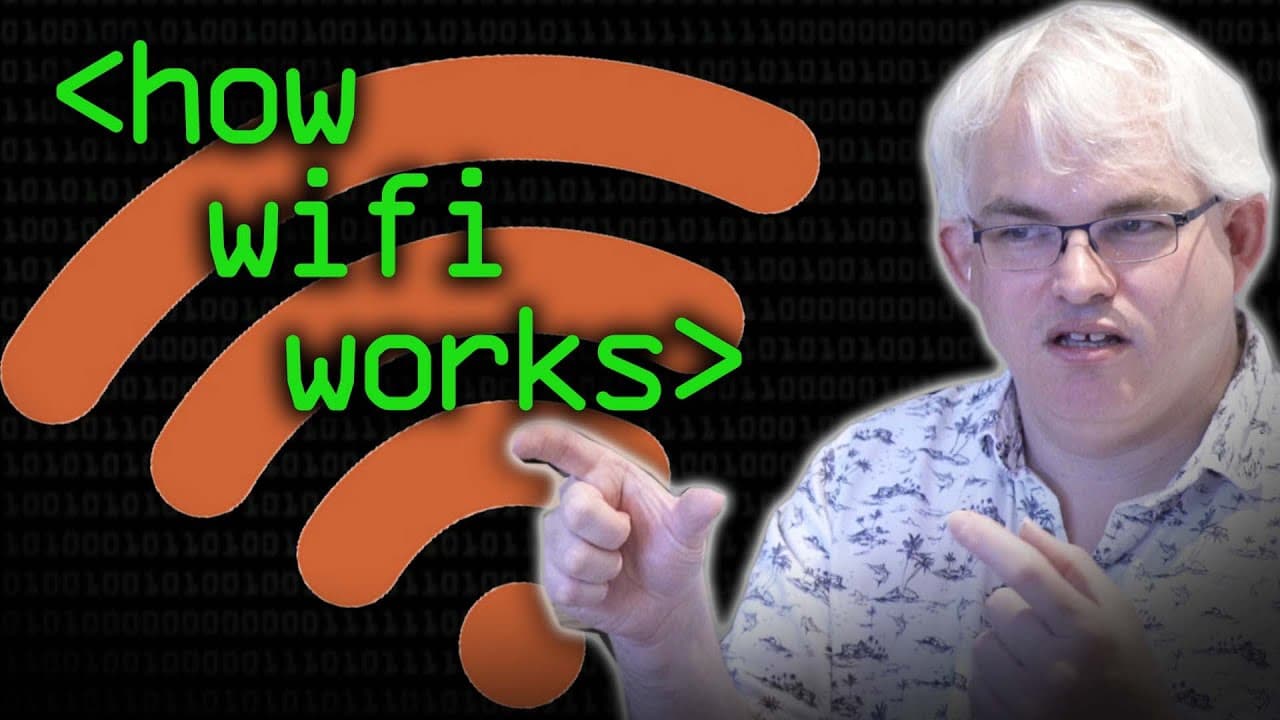
Wi-Fi speed decreases as the distance from the access point increases. To maintain a clear signal, networks transmit data at slower speeds when further away, leading to a compromise in speed. This compromise is necessary to ensure the data can be received accurately despite interference and power loss.
Transcript
steve what what are we looking at today though well i'm slightly concerned by what i'm looking at because you seem to be in a different location have you expanded is there something odd going on and you're stroking something like a bond villain there yeah i'm puppy sitting so this is marley hello hello marley say hello to everyone there we go that'... Read More
Key Insights
- 😚 Wi-Fi speed and distance are inversely related, with faster speeds achieved when closer to the access point.
- 🥺 Radio waves used for Wi-Fi transmission are susceptible to power loss and noise interference, leading to signal degradation over distance.
- 😥 Access points transmit beacon packets at slow speeds for maximum detection, but this reduces overall network performance when combined with other network traffic.
Install to Summarize YouTube Videos and Get Transcripts
Explore YouTube Video Summarizer or Get YouTube Transcript Extractor
Questions & Answers
Q: Why does Wi-Fi speed drop as you move further away from the access point?
Wi-Fi speed drops because the signal strength diminishes with distance, and there is increased interference from noise in the radio spectrum.
Q: How do Wi-Fi networks negotiate a speed for transmission?
Wi-Fi networks negotiate a speed that balances signal clarity and noise by making symbols longer in time, allowing for better reception but slower transmission.
Q: Why do Wi-Fi access points send beacon packets at the slowest speed?
Access points send beacon packets at the slowest speed to ensure they are detectable even at greater distances, enabling devices to identify available Wi-Fi networks.
Q: How can personal hotspots or rogue access points affect Wi-Fi network performance?
Personal hotspots or rogue access points can degrade Wi-Fi network performance by increasing interference, as their beacon packets and transmission times clash with the network's existing traffic.
Summary & Key Takeaways
-
Wi-Fi networks transmit data over radio waves, with the speed and clarity of the signal influenced by the distance from the access point.
-
As distance increases, the signal level and power diminish, causing a drop in Wi-Fi speed.
-
To transmit data clearly, Wi-Fi networks lengthen the symbols representing the data, resulting in slower transmission and reception.
Read in Other Languages (beta)
Share This Summary 📚
Summarize YouTube Videos and Get Video Transcripts with 1-Click
Try YouTube Summary with ChatGPT & Claude or YouTube Transcript Generator
Explore More Summaries from Computerphile 📚





Summarize YouTube Videos and Get Video Transcripts with 1-Click
Try YouTube Summary with ChatGPT & Claude or YouTube Transcript Generator