Products
Features
YouTube Video Summarizer
Summarize YouTube videos
Web & PDF Highlighter
Highlight web pages & PDFs
Chat with PDF
Ask any PDF questions with AI
Ask AI Clone
Chat with your highlights & memories
Audio Transcriber
Transcribe audio files to text
Glasp Reader
Read and highlight articles
Kindle Highlight Export
Export your Kindle highlights
Idea Hatch
Hatch ideas from your highlights
Integrations
Obsidian Plugin
Notion Integration
Pocket Integration
Instapaper Integration
Medium Integration
Readwise Integration
Snipd Integration
Hypothesis Integration
Apps & Extensions
Chrome Extension
Safari Extension
Edge Add-ons
Firefox Add-ons
iOS App
Android App
Discover
Discover
Ideas
Discover new ideas and insights
Articles
Curated articles and insights
Books
Book recommendations by great minds
Posts
Essays and notes from readers
Quotes
Inspiring quotes collection
Videos
Curated videos and summaries
Explore Glasp
Glasp Newsletter
Weekly insights and updates
Glasp Talk
Interview series with great minds
Glasp Blog
Latest news and articles
Glasp Use Cases
Learn how others use Glasp
Build & Support
Glasp API
Access Glasp's API for developers
MCP Connector
Connect Glasp to Claude & ChatGPT
Community
Glasp Reddit Community
Students
Student discount and benefits
FAQs
Frequently Asked Questions
AboutPricing
DashboardLog inSign up

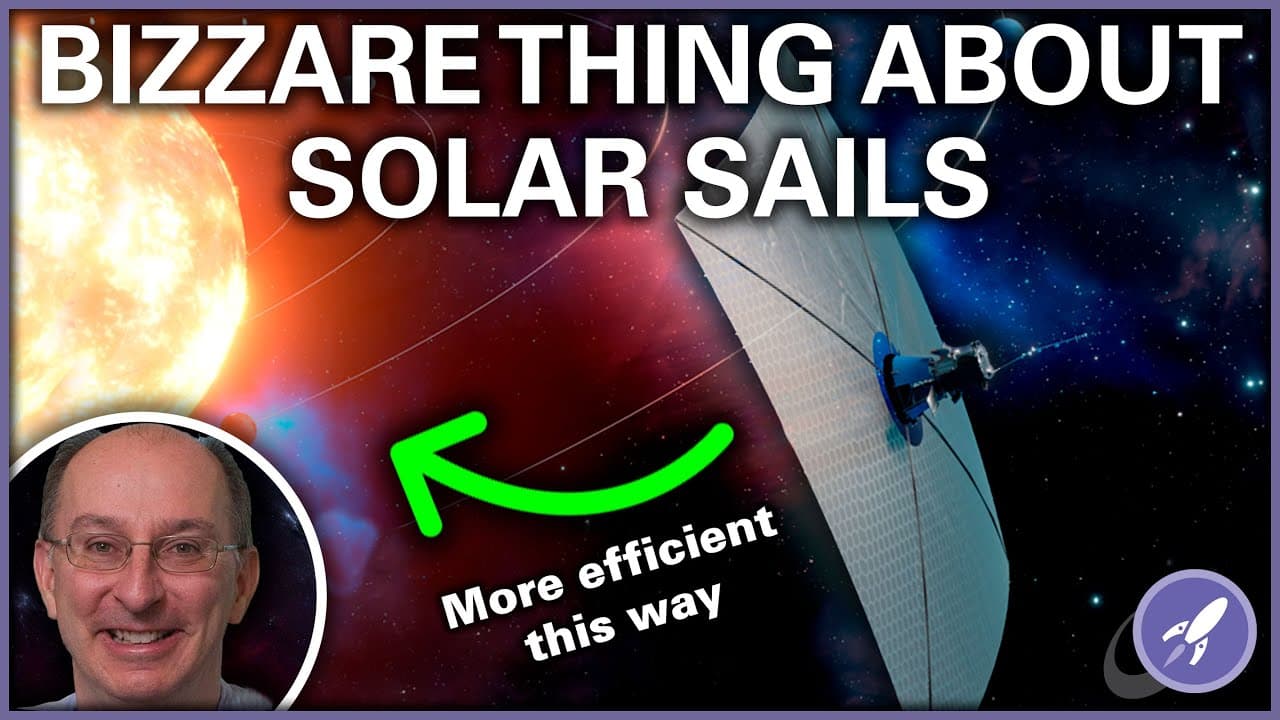
Solar Sail Propulsion: Reality VS Fiction with Les Johnson
16.5K views
•
September 22, 2022
by
Fraser Cain
YouTube video player
Solar Sail Propulsion: Reality VS Fiction with Les Johnson

TL;DR

Exploring the practicalities and possibilities of solar sail propulsion for interstellar travel and beyond.

Transcript

there's an amazing science fiction convention in Atlanta that I used to go to every year called DragonCon have been in a while life's busy coronavirus you know but whenever I do go I'm always put on a panel with les Johnson who is a propulsion engineer from NASA and we have a great time talking about whatever topic the convention organizers want us... Read More

Key Insights

  • 🙂 Solar sail propulsion harnesses light pressure for spacecraft propulsion, enabling fuel-free and sustainable travel.
  • 👾 Practical applications of solar sails include asteroid exploration, interstellar missions, and space station power generation.
  • 👾 Challenges like maneuverability, power generation, and scale hinder widespread adoption of solar sails for space travel.
  • 👾 The fusion of science fiction inspiration with real-world engineering drives advancements in space exploration and technology.

Install to Summarize YouTube Videos and Get Transcripts

Explore YouTube Video Summarizer or Get YouTube Transcript Extractor

Questions & Answers

Q: How does solar sail propulsion work, and what are its potential applications?

Solar sail propulsion utilizes light pressure from the sun to propel spacecraft forward. It could be used for interstellar travel and deep space exploration due to its fuel-free nature.

Q: What are some of the challenges and limitations of solar sail propulsion?

Solar sails face challenges like maneuverability, navigating in orbits, and power generation. They are limited by factors such as the strength of sunlight and the need for effective steering mechanisms.

Q: How does science fiction influence real-world developments in space exploration?

Science fiction often serves as inspiration for astronomers, engineers, and scientists in the space industry. Ideas and concepts from science fiction can drive innovation and shape future technological advancements.

Q: What are the key benefits of using solar sails for space missions?

Solar sails offer fuel-free propulsion, enabling long-term missions without the need for refueling. They are lightweight, scalable, and have the potential for high-speed interstellar travel.

Summary & Key Takeaways

  • Interview with propulsion engineer Les Johnson on solar sail propulsion and its practical application for space travel.

  • Addressing the challenges and potential of solar sails as a propulsion method for interstellar missions.

  • Discussing the role of science fiction in inspiring and shaping advancements in space exploration and technology.


Read in Other Languages (beta)

English

Share This Summary 📚

Summarize YouTube Videos and Get Video Transcripts with 1-Click

Download browser extensions on:

Try YouTube Summary with ChatGPT & Claude or YouTube Transcript Generator

Explore More Summaries from Fraser Cain 📚
What's On The Far Side Of The Moon? thumbnail
What's On The Far Side Of The Moon?
Fraser Cain
Why Did Mars Lose Its Atmosphere? And How Can We Get It Back? thumbnail
Why Did Mars Lose Its Atmosphere? And How Can We Get It Back?
Fraser Cain
Are We Living in a Simulation? Understanding the Simulation Hypothesis thumbnail
Are We Living in a Simulation? Understanding the Simulation Hypothesis
Fraser Cain
Exploring Space Lava Tubes: How To Prepare For It thumbnail
Exploring Space Lava Tubes: How To Prepare For It
Fraser Cain / Universe Today Podcast
Why Isn't the Asteroid Belt a Planet? thumbnail
Why Isn't the Asteroid Belt a Planet?
Fraser Cain

Summarize YouTube Videos and Get Video Transcripts with 1-Click

Download browser extensions on:

Try YouTube Summary with ChatGPT & Claude or YouTube Transcript Generator

Apps & Extensions

  • Chrome Extension
  • Safari Extension
  • Edge Add-ons
  • Firefox Add-ons
  • iOS App
  • Android App

Key Features

  • YouTube Video Summarizer
  • Web & PDF Summarizer
  • Web & PDF Highlighter
  • Chat with PDF
  • Ask AI Clone
  • Audio Transcriber
  • Glasp Reader
  • Kindle Highlight Export
  • Idea Hatch

Integrations

  • Obsidian Plugin
  • Notion Integration
  • Pocket Integration
  • Instapaper Integration
  • Medium Integration
  • Readwise Integration
  • Snipd Integration
  • Hypothesis Integration

More Features

  • APIs
  • MCP Connector
  • Blog & Post
  • Embed Links
  • Image Highlight
  • Personality Test
  • Quote Shots

Company

  • About us
  • Blog
  • Community
  • FAQs
  • Job Board
  • Newsletter
  • Pricing
Terms

•

Privacy

•

Guidelines

© 2026 Glasp Inc. All rights reserved.