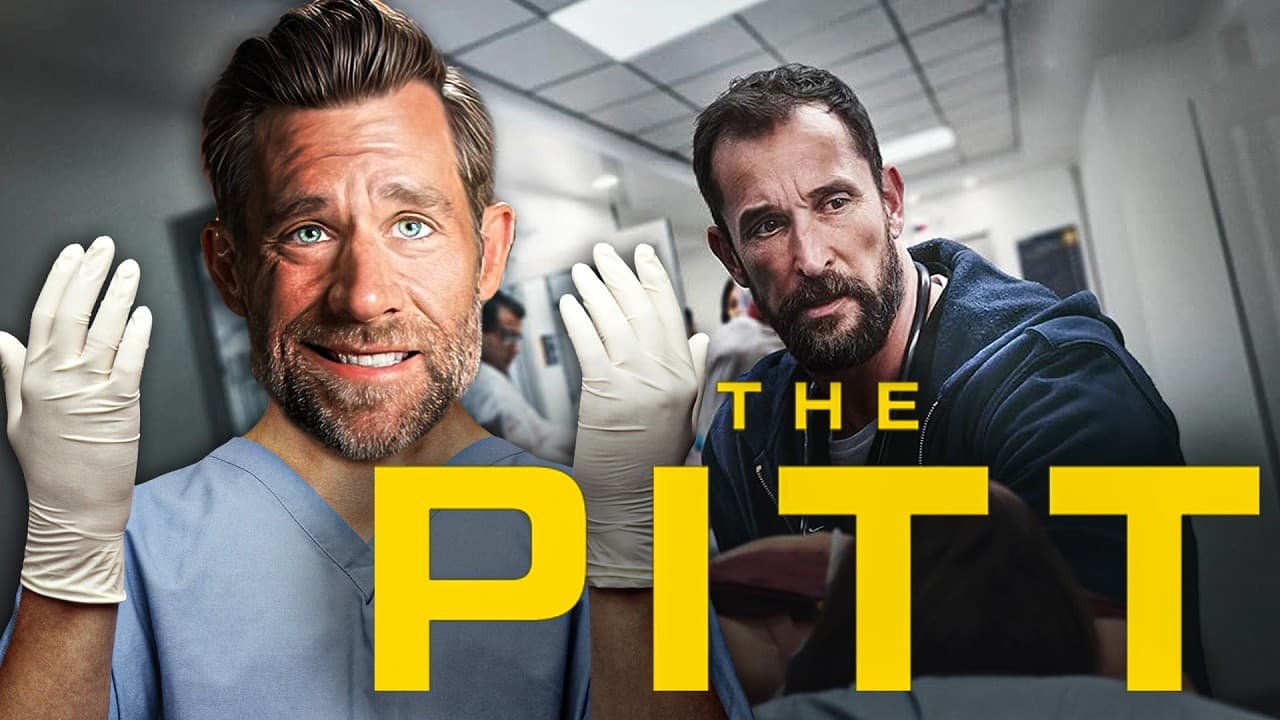
"ER" Sues "The Pitt"
TL;DR
Michael Crichton's estate sues over alleged 'ER' reboot.
Transcript
- I am totally addicted to ""The Pitt" and I can't wait for Season 2. I just hope there is a Season 2 because the estate of Michael Crichton filed a lawsuit against Warner Brothers, alleging that the TV show "The Pitt" is an unauthorized reboot of "ER." Crichton's wife accused producer John Wells and star Noah Wyle of being morally repugnant, peddl... Read More
Key Insights
- Michael Crichton's estate has filed a lawsuit against Warner Brothers, alleging that 'The Pitt' is an unauthorized reboot of 'ER,' violating a Frozen Rights Clause.
- The lawsuit accuses producer John Wells and actor Noah Wyle of concealing their reboot plans and betraying Crichton's legacy.
- The Defendants argue that 'The Pitt' is a new show and not a derivative of 'ER,' despite sharing a medical drama setting.
- The case hinges on whether 'The Pitt' is a derivative work, with the estate claiming it shares significant similarities with 'ER.'
- Copyright law protects specific expressions, not ideas, making the determination of 'derivative work' complex in this case.
- The court denied the Defendants' Anti-SLAPP motion, allowing the case to proceed on the merits of whether 'The Pitt' infringes 'ER.'
- The Defendants claim they moved on to create 'The Pitt' after failing to reach a deal for an 'ER' reboot.
- The estate alleges that Warner Brothers has a pattern of diminishing Crichton's contributions, citing previous issues with 'Westworld.'
Install to Summarize YouTube Videos and Get Transcripts
Explore YouTube Video Summarizer or Get YouTube Transcript Extractor
Questions & Answers
Q: What is the main legal issue in the lawsuit?
The main legal issue in the lawsuit is whether 'The Pitt' is a derivative work of 'ER,' which would violate the Frozen Rights Clause in Michael Crichton's original contract with Warner Brothers. The estate claims 'The Pitt' is essentially an unauthorized reboot, while the Defendants argue it is a new and distinct show.
Q: What is the Frozen Rights Clause?
The Frozen Rights Clause is a contractual provision that restricts the development of derivative works without the original creator's approval. In this case, it means that Warner Brothers would need the Crichton estate's consent to create any sequels, remakes, or adaptations of 'ER,' which the estate argues 'The Pitt' violates.
Q: How do the Defendants justify 'The Pitt' as a separate work?
The Defendants justify 'The Pitt' as a separate work by arguing that it does not share plot points, characters, or settings with 'ER.' They claim it is a new show with different names, iconography, plot lines, and themes, and that similarities are due to the common medical drama genre rather than direct copying.
Q: What role does copyright law play in this case?
Copyright law plays a crucial role in this case by determining whether 'The Pitt' is a derivative work of 'ER.' Copyright protects specific expressions of ideas but not the ideas themselves, making it important to assess whether the similarities between the two shows are protectable or merely common elements of the genre.
Q: What are the Defendants' arguments regarding the Anti-SLAPP motion?
The Defendants filed an Anti-SLAPP motion, arguing that the lawsuit is an attempt to prohibit their creative work from being published, which they claim is a violation of their free speech rights. They contend that 'The Pitt' is a new creation and not a derivative work of 'ER,' thus the lawsuit should be dismissed.
Q: What does the estate allege about Warner Brothers' treatment of Crichton's legacy?
The estate alleges that Warner Brothers has a pattern of diminishing Michael Crichton's contributions, citing previous issues with the 'Westworld' series. They claim the studio has failed to adequately celebrate Crichton's legacy and has tried to erase his contributions from his creations, including 'ER.'
Q: How did the court rule on the Anti-SLAPP motion?
The court denied the Defendants' Anti-SLAPP motion, allowing the case to proceed. The court concluded that the estate had met its burden to demonstrate that its claims have at least minimal merit, particularly regarding whether 'The Pitt' is a derivative work or otherwise infringes the copyright of 'ER.'
Q: What impact does the Frozen Rights Clause have on the ability to create derivative works?
The Frozen Rights Clause significantly impacts the ability to create derivative works by requiring the original creator's or their estate's approval before any sequels, remakes, or adaptations can be developed. This clause gives the creator control over how their work is used and prevents unauthorized derivatives.
Summary & Key Takeaways
-
Michael Crichton's estate has filed a lawsuit against Warner Brothers, alleging that the TV show 'The Pitt' is an unauthorized reboot of 'ER,' violating a Frozen Rights Clause. The estate accuses producer John Wells and actor Noah Wyle of concealing their reboot plans and betraying Crichton's legacy.
-
The Defendants argue that 'The Pitt' is a new show and not a derivative of 'ER,' despite sharing a medical drama setting. The case hinges on whether 'The Pitt' is a derivative work, with the estate claiming it shares significant similarities with 'ER.'
-
The court denied the Defendants' Anti-SLAPP motion, allowing the case to proceed on the merits of whether 'The Pitt' infringes 'ER.' The Defendants claim they moved on to create 'The Pitt' after failing to reach a deal for an 'ER' reboot, while the estate alleges a pattern of diminishing Crichton's contributions.
Read in Other Languages (beta)
Share This Summary 📚
Summarize YouTube Videos and Get Video Transcripts with 1-Click
Try YouTube Summary with ChatGPT & Claude or YouTube Transcript Generator
Explore More Summaries from LegalEagle 📚





Summarize YouTube Videos and Get Video Transcripts with 1-Click
Try YouTube Summary with ChatGPT & Claude or YouTube Transcript Generator