What Led Manal al-Sharif to Drive Despite Saudi Laws?
TL;DR
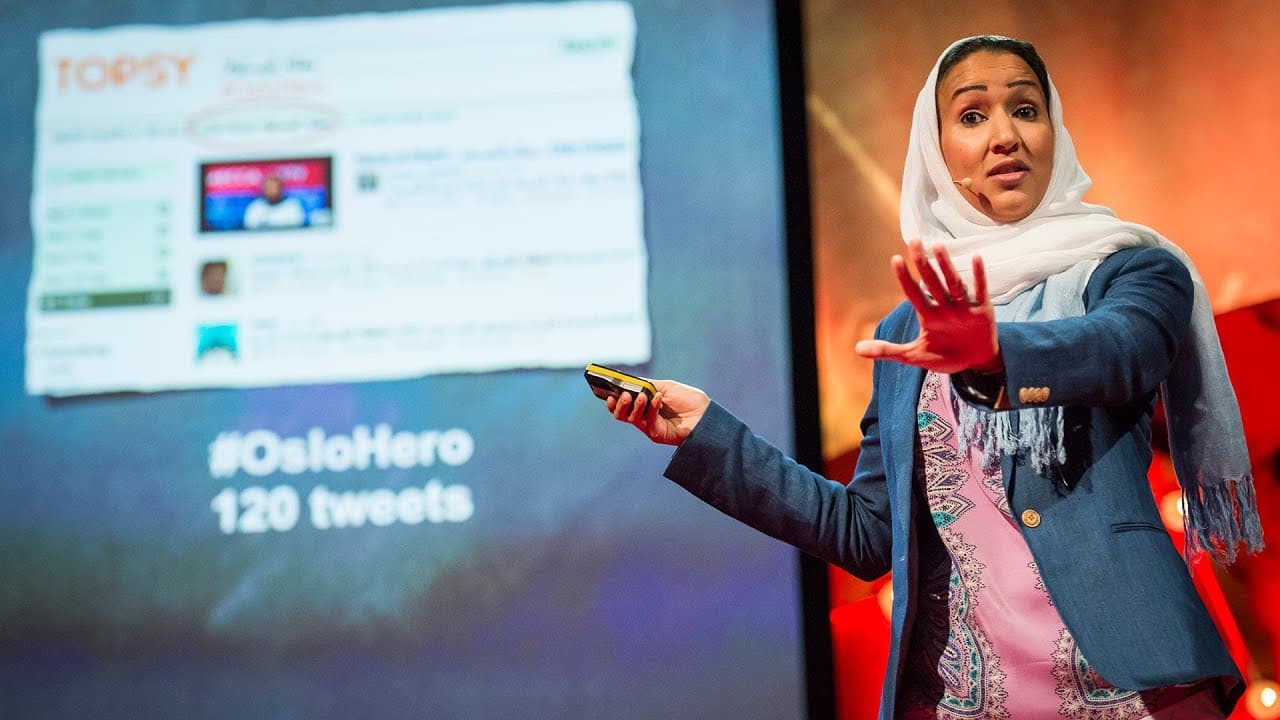
Manal al-Sharif defied Saudi Arabia's unofficial ban on women driving, facing imprisonment and societal backlash for her actions. She revealed that the ban was not based on law but on custom and oppressive societal norms. Her activism sparked significant dialogue, leading to incremental progress in women's rights, including the eventual acceptance of petitions to lift the driving ban.
Transcript
Translator: Joseph Geni Reviewer: Morton Bast Allow me to start this talk with a question to everyone. You know that all over the world, people fight for their freedom, fight for their rights. Some battle oppressive governments. Others battle oppressive societies. Which battle do you think is harder? Allow me to try to answer this question in the f... Read More
Key Insights
- 👦 The societal and cultural battle against oppressive traditions and customs, particularly towards women, can be just as challenging and impactful as fighting against oppressive governments.
- 🚗 Saudi Arabia's ban on women driving is not a law but rather a social norm ingrained in religious fatwas and enforced by societal pressure.
- ♀️ Speaking up and taking action to challenge societal norms can lead to backlash, threats, and even imprisonment, but it is crucial for progress and freedom.
- 🌐 Mocking oppression and challenging fear through social media can be a powerful tool in dismantling oppressive systems.
- 🔒 Ultra-conservative traditions and customs in Saudi Arabia treat women as inferior, requiring permission from male guardians throughout their lives.
- 👥 There are two distinct perceptions of women like Manal al-Sharif, the hero outside her home country and the villain within Saudi Arabia.
- 📢 Activism requires listening to opposing viewpoints, taking action, and utilizing legal means to advocate for change.
- 🚗 Small steps towards women's rights, such as appointing women to the Shura Council and accepting petitions advocating for women's right to drive, signify progress in Saudi Arabia.
Install to Summarize YouTube Videos and Get Transcripts
Explore YouTube Video Summarizer or Get YouTube Transcript Extractor
Questions & Answers
Q: Why did the speaker's son ask if they were bad people?
The speaker's son asked if they were bad people because he had been bullied at school after his classmates saw his mother on Facebook and believed that she should be put in jail for breaking the law by driving as a Saudi woman.
Q: How did the speaker and her campaign for women's right to drive face opposition?
The speaker faced opposition and threats during her campaign for women's right to drive in Saudi Arabia. She received threats to be killed and raped, and the Saudi authorities remained quiet, which added to the fear and uncertainty surrounding the movement.
Q: What reasons were given to justify the ban on women driving in Saudi Arabia?
One reason given to justify the ban on women driving in Saudi Arabia was a study that claimed countries where women drive have higher rates of rape, adultery, illegitimate children, drug abuse, and prostitution. This study was criticized and mocked, as it presented a false and unfair portrayal of women's autonomy and rights.
Q: How did the speaker's perception differ in her home country and internationally?
The speaker's perception was drastically different in her home country compared to internationally. While she received support and was seen as an inspiration by many internationally, in her home country, she faced negative labels, defamation, and accusations of being a traitor for speaking out against the ban on women driving.
Q: What progress has been made in women's rights in Saudi Arabia?
There have been some small steps taken to enhance women's rights in Saudi Arabia. For example, 30 women were appointed to the Shura Council, accounting for 20% of its members. Additionally, the Council finally accepted a petition to lift the ban on women driving. However, there are still significant challenges and opposition to overcome.
Summary & Key Takeaways
-
The speaker shares her personal experience of being put in jail for driving a car in Saudi Arabia, a country where women are not allowed to drive.
-
She discusses the social and cultural pressures that contribute to the ban on women driving and the negative perception of women who challenge societal norms.
-
The speaker also highlights the progress and small steps towards enhancing women's rights in Saudi Arabia, including the appointment of women to the Shura Council and the acceptance of a petition to lift the ban on women driving.
Read in Other Languages (beta)
Share This Summary 📚
Summarize YouTube Videos and Get Video Transcripts with 1-Click
Try YouTube Summary with ChatGPT & Claude or YouTube Transcript Generator
Explore More Summaries from TED 📚




Summarize YouTube Videos and Get Video Transcripts with 1-Click
Try YouTube Summary with ChatGPT & Claude or YouTube Transcript Generator