The One Event That Solves Most Dog Training Problems!
TL;DR
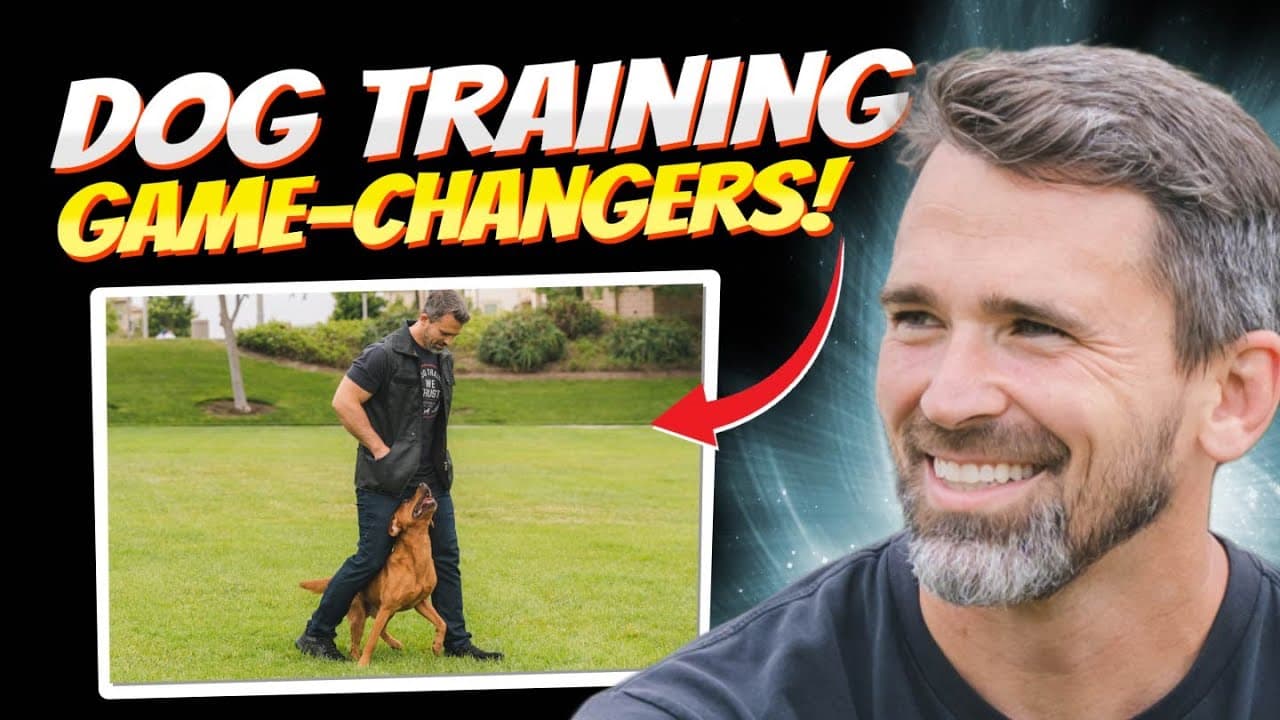
Reinforcement events simplify dog training by improving communication and behavior.
Transcript
owned the verbal the verbal must come before the physical so I have to do this sit then lift down then lure heal then guide the dog into the position a good way to look at it is your verbal commands are questions to your dog you're going hey buddy do you know what to do when I tell you down and your dog goes nah I don't know what to do and you go h... Read More
Key Insights
- Reinforcement events are divided into three types: reinforcement, reward, and punishment, each with specific timing and purpose to enhance dog training.
- Verbal commands should precede physical guidance, acting as questions to the dog, allowing them to recognize and respond to cues.
- Dogs excel at pattern recognition, making it crucial to maintain consistency in training methods and cues for effective learning.
- Positive punishment should only be introduced after the dog understands the rules, ensuring they are not punished for mistakes during the learning phase.
- The 'implied stay' technique involves commanding the dog to stay in a position until released, reinforcing obedience and patience.
- Using markers for positive and negative reinforcement helps dogs quickly associate behaviors with outcomes, streamlining the training process.
- Consistency in verbal cues and physical actions is essential for dogs to understand commands and expectations, reducing confusion.
- Training environments should be gradually made more challenging, allowing dogs to adapt and learn effectively at their own pace.
Install to Summarize YouTube Videos and Get Transcripts
Explore YouTube Video Summarizer or Get YouTube Transcript Extractor
Questions & Answers
Q: What are reinforcement events in dog training?
Reinforcement events are structured interactions in dog training designed to encourage desired behaviors. They consist of reinforcement, reward, and punishment events, each occurring at specific times to guide the dog. Reinforcement events help dogs associate commands with actions, making training more effective and communication clearer between the trainer and the dog.
Q: Why should verbal commands precede physical guidance?
Verbal commands should precede physical guidance because they act as questions to the dog, prompting them to recognize and respond to the cue. This approach allows dogs to learn through auditory signals first, enhancing their ability to understand and perform the desired behavior without relying solely on physical manipulation, thereby improving their cognitive engagement.
Q: How do dogs use pattern recognition in training?
Dogs use pattern recognition to identify and predict outcomes based on consistent cues and actions. By maintaining consistency in training methods and cues, dogs can quickly learn the associations between commands and behaviors. This ability to recognize patterns allows them to anticipate what is expected, making the learning process more efficient and effective.
Q: When should positive punishment be introduced in training?
Positive punishment should be introduced only after the dog has a clear understanding of the rules and expectations. It is crucial to ensure that the dog is not punished for mistakes made during the learning phase. Once the dog consistently demonstrates understanding, positive punishment can be used to reinforce reliability and discourage undesired behaviors.
Q: What is the 'implied stay' technique?
The 'implied stay' technique involves commanding a dog to remain in a specific position until explicitly released. This method reinforces obedience and patience by teaching the dog that they are expected to hold the position without needing constant reminders. It simplifies training by reducing the need for repeated commands and helps establish clear expectations.
Q: How do markers aid in dog training?
Markers aid in dog training by providing clear signals that predict outcomes, such as rewards or corrections. Positive markers indicate a forthcoming reward, reinforcing desired behaviors, while negative markers signal a correction, guiding the dog away from undesired actions. This clarity helps dogs quickly associate behaviors with consequences, enhancing their learning experience.
Q: Why is consistency important in dog training?
Consistency is crucial in dog training because it helps dogs understand and predict the outcomes of their actions. By using the same verbal cues and physical actions consistently, trainers reduce confusion and reinforce learning. Consistency ensures that dogs receive clear, unambiguous signals, making it easier for them to learn and adhere to desired behaviors.
Q: How should training environments be structured?
Training environments should be structured progressively, starting from simple, distraction-free settings and gradually introducing more complex scenarios. This approach allows dogs to adapt and learn effectively at their own pace, building confidence and reliability. By incrementally increasing the difficulty, dogs can handle more challenging situations while maintaining their training foundation.
Summary & Key Takeaways
-
The video introduces reinforcement events as a key strategy for resolving most dog training issues by improving communication and behavior understanding. It emphasizes the importance of verbal commands preceding physical guidance and how dogs learn through pattern recognition.
-
Consistency and timing are crucial in dog training, with reinforcement, reward, and punishment events playing distinct roles. The video highlights the importance of positive punishment only after the dog understands the rules and the use of markers for reinforcement.
-
Training should progress from simple to complex environments, allowing dogs to adapt and learn effectively. The video also discusses the 'implied stay' technique and the importance of clear, consistent cues for successful dog training.
Read in Other Languages (beta)
Share This Summary 📚
Summarize YouTube Videos and Get Video Transcripts with 1-Click
Try YouTube Summary with ChatGPT & Claude or YouTube Transcript Generator
Explore More Summaries from Nate Schoemer 📚




Summarize YouTube Videos and Get Video Transcripts with 1-Click
Try YouTube Summary with ChatGPT & Claude or YouTube Transcript Generator