Pirates, nurses and other rebel designers | Alice Rawsthorn
TL;DR
Design is a powerful tool that has been used throughout history by both rebels and professionals to achieve ambitious and noble objectives.
Transcript
Design is a slippery and elusive phenomenon, which has meant different things at different times. But all truly inspiring design projects have one thing in common: they began with a dream. And the bolder the dream, the greater the design feat that will be required to achieve it. And this is why the greatest designers are almost always the biggest d... Read More
Key Insights
- 🔮 All truly inspiring design projects begin with a bold dream, and the greatest designers are often the biggest dreamers and rebels.
- 🔫 Ying Zheng's design skills, unknowingly and instinctively used in his military conquest, played an essential role in his kingdom's success.
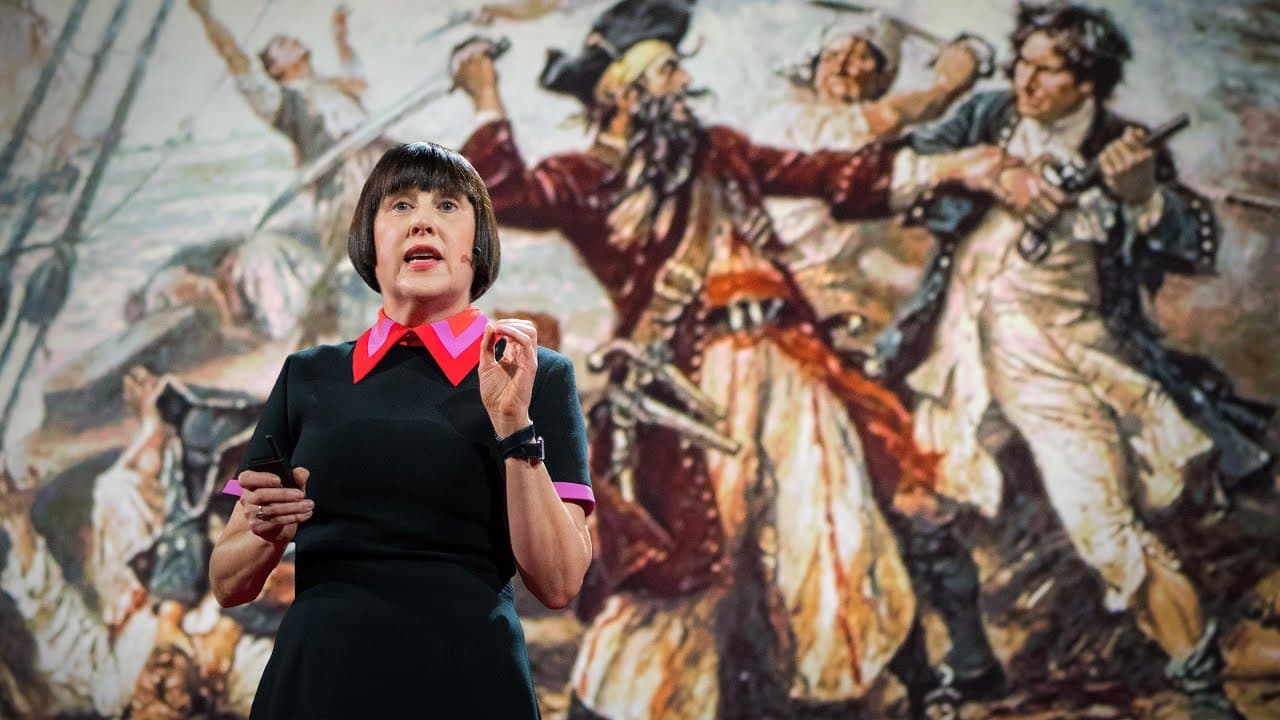
- ☠️ Edward Teach, also known as Blackbeard, used design to intimidate his enemies and maximize his piracy spoils, showcasing the power of effective communication design.
- ⚕️ Florence Nightingale used design principles to transform healthcare settings and reduce infections, leaving a lasting impact on hospital design today.
- 💡 László Moholy-Nagy and Richard Buckminster Fuller were design visionaries who faced resistance from the design establishment for their experimental and unconventional approaches.
- 🌍 Advances in digital technology have empowered both professional designers and improvisational rebels to pursue ambitious and eclectic design objectives, leading to remarkable achievements.
- 💗 African designers, such as Arthur Zang and the Peek Vision group, are utilizing innovative design solutions to improve healthcare access and save lives.
- ✨ Design combines the discipline of professionals with the resourcefulness of rebels and renegades, resulting in projects that benefit society as a whole.
Install to Summarize YouTube Videos and Get Transcripts
Explore YouTube Video Summarizer or Get YouTube Transcript Extractor
Questions & Answers
Q: What is the common characteristic of all truly inspiring design projects?
All truly inspiring design projects begin with a dream. The bolder the dream, the greater the design feat that will be required to achieve it. The greatest designers are usually the biggest dreamers, rebels, and renegades.
Q: Give an example of how design was unknowingly and instinctively used to achieve certain goals.
One example is Ying Zheng, who became the king of a remote and poor Asian country at the age of 13. He dreamt of acquiring land, riches, and power through military conquest. Ying used design instinctively and unknowingly by insisting that all weapons, including bows and arrows, be designed identically, making them interchangeable. This led to his formidably equipped army winning battles and eventually conquering larger and more powerful neighbors.
Q: How did Blackbeard, the British pirate, use design in his piracy activities?
Blackbeard, or Edward Teach, redesigned himself by playing the part of a merciless brute to maximize his spoils as a pirate. He wore heavy jackets and big hats to accentuate his height, grew a bushy black beard that obscured his face, and slung braces of pistols on his shoulders. He even attached matches to the brim of his hat and set them alight to create a menacing effect. His design choices, including the use of the skull and crossbones flag, were communication tools to instill fear and force enemy ships to surrender without wasting ammunition.
Q: How did Florence Nightingale use design to improve healthcare?
Florence Nightingale realized during the Crimean War that more patients were dying from infections caught in filthy hospitals than from battle wounds. She campaigned for cleaner, lighter, and airier clinics to be designed and built. She also insisted on these design principles being applied to civilian hospitals, leading to the dominance of the "Nightingale ward" in hospital design for decades to come. Her design interventions aimed to reduce infections and provide better healthcare for everyone.
Q: Why were radical designers like László Moholy-Nagy and Richard Buckminster Fuller sometimes seen as cranks?
László Moholy-Nagy and Richard Buckminster Fuller were seen as cranks by many in the design establishment because of their experimental approaches to design that deviated from the commercial ethos of the time. Moholy-Nagy's ideas on the impact of technology on daily life and the Bauhaus Design School faced rejection when he tried to open a new Bauhaus in Chicago. Similarly, Fuller's commitment to designing a sustainable society and his emphasis on environmentalism in design were often mocked. Despite this, both designers had significant impacts on the field of design.
Summary & Key Takeaways
-
Design projects begin with a dream, and the more ambitious the dream, the greater the design feat needed to achieve it.
-
Throughout history, great designers have been rebels and renegades, using design to achieve their goals, from building an empire to terrorizing the high seas.
-
Design is a powerful tool that can be used for both commercial and humanitarian purposes, and the merging of professional and improvisational designers can lead to innovative and impactful projects.
Read in Other Languages (beta)
Share This Summary 📚
Summarize YouTube Videos and Get Video Transcripts with 1-Click
Try YouTube Summary with ChatGPT & Claude or YouTube Transcript Generator
Explore More Summaries from TED 📚






Summarize YouTube Videos and Get Video Transcripts with 1-Click
Try YouTube Summary with ChatGPT & Claude or YouTube Transcript Generator