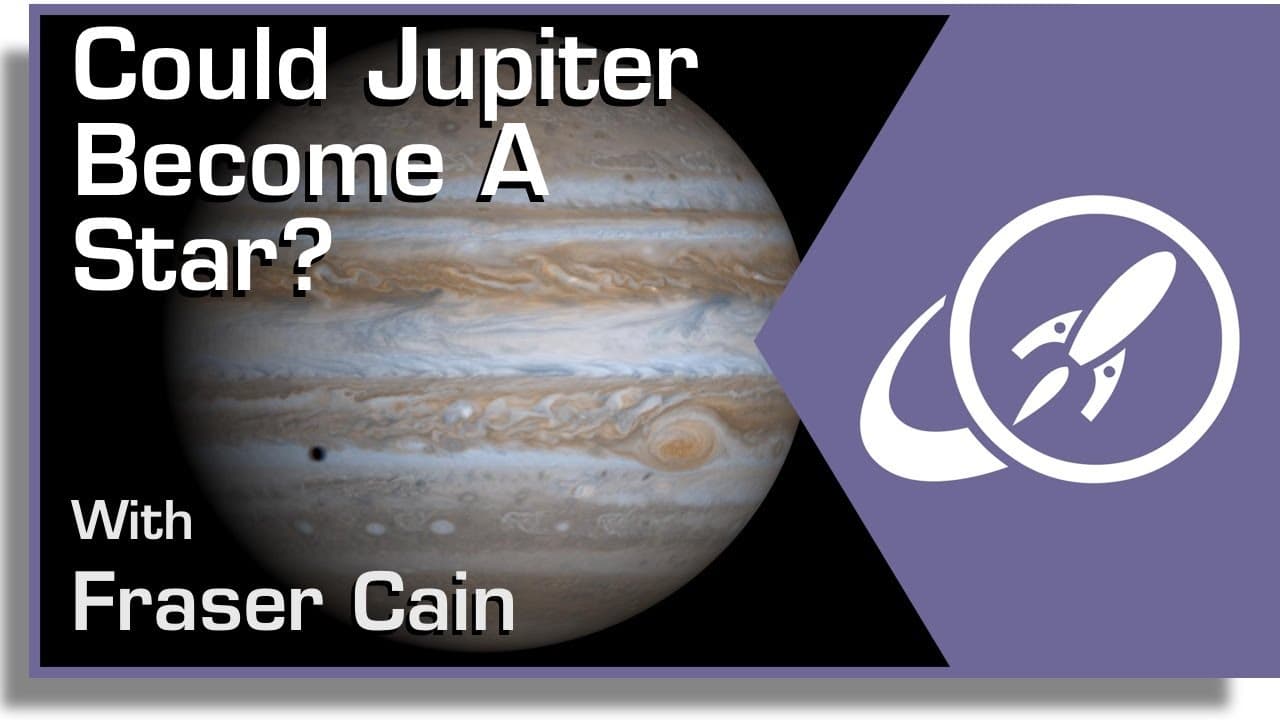
Could Jupiter Become A Star? What it Takes For Stellar Fusion
TL;DR
NASA considered crashing Galileo into Jupiter to prevent contamination, sparking concerns of igniting Jupiter into a star, but it's highly improbable.
Transcript
- Could Jupiter Become a Star? NASA's Galileo spacecraft arrived at Jupiter on December 7, 1995, and proceeded to study the giant planet for almost 8 years. It sent back a tremendous amount of scientific information that revolutionized our understanding of the Jovian system. By the end of its mission, Galileo was worn down. Instruments were faili... Read More
Key Insights
- 🥮 NASA crashed Galileo into Jupiter to safeguard the Jovian moons from potential contamination.
- 🤩 Igniting Jupiter into a star would require an immense amount of hydrogen for fusion reactions, making it highly improbable.
- 🤩 Stars generate energy through fusion reactions that compress hydrogen into helium under high pressures and temperatures.
- 🤩 Forming a second star in our Solar System would require combining a significant mass of hydrogen, which is not feasible with existing planetary bodies.
- 🤩 Brown dwarfs are objects less massive than stars yet can fuse deuterium, requiring about 13 times the mass of Jupiter for their formation.
- 🤩 The theoretical process of transforming Jupiter into a star involves complex scientific and astronomical principles.
- 🤩 Catastrophic collisions in the Solar System would be necessary to form a second star, posing significant challenges and potential threats.
Install to Summarize YouTube Videos and Get Transcripts
Explore YouTube Video Summarizer or Get YouTube Transcript Extractor
Questions & Answers
Q: Why did NASA crash Galileo into Jupiter?
NASA crashed Galileo into Jupiter to prevent potential contamination of the Jovian moons by Earth bacteria carried onboard the spacecraft.
Q: Could Jupiter have been ignited into a star by crashing Galileo into it?
The ignition of Jupiter into a star by crashing Galileo was considered but deemed highly improbable due to the enormous amount of hydrogen required for fusion.
Q: What is the main difference between how stars produce energy compared to combustion?
Stars produce energy through fusion, where high pressure and temperatures compress hydrogen into helium, generating excess energy and brightness.
Q: What would be necessary to create a second star in our Solar System?
To create a second star, approximately 1000 Jupiters would need to be crashed together to provide the massive amounts of hydrogen required for fusion reactions.
Summary & Key Takeaways
-
NASA's Galileo spacecraft studied Jupiter for 8 years, eventually crashing into the planet to avoid contaminating its moons.
-
The idea of igniting Jupiter into a star by crashing Galileo, with its plutonium reactor, is debunked due to the massive amount of hydrogen needed for fusion.
-
Theoretically, it would take about 1000 Jupiters crashing together to form a second Sun in our Solar System.
Read in Other Languages (beta)
Share This Summary 📚
Summarize YouTube Videos and Get Video Transcripts with 1-Click
Try YouTube Summary with ChatGPT & Claude or YouTube Transcript Generator
Explore More Summaries from Fraser Cain 📚

Summarize YouTube Videos and Get Video Transcripts with 1-Click
Try YouTube Summary with ChatGPT & Claude or YouTube Transcript Generator