What If the Galactic Habitable Zone LIMITS Intelligent Life?
TL;DR
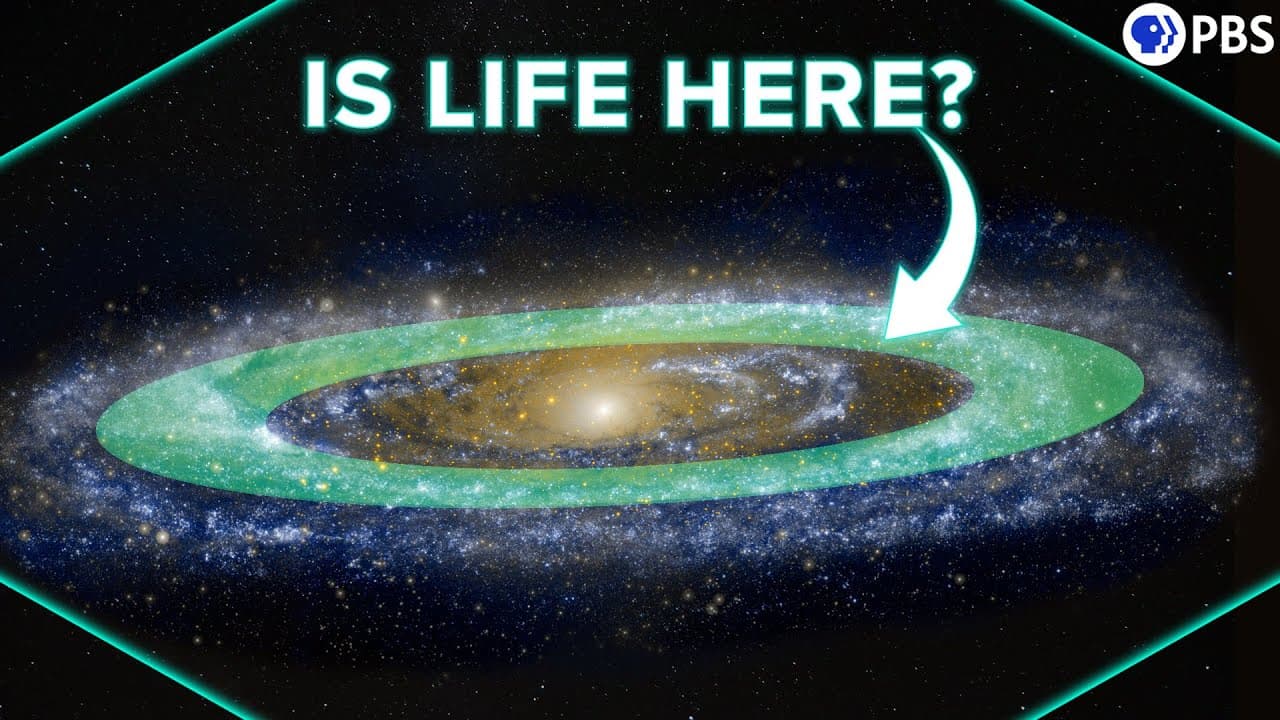
The galactic habitable zone may limit intelligent life.
Transcript
Our solar system is a tiny bubble of habitability suspended in a vast universe that mostly wants to kill us. In fact, a good fraction of our own galaxy turns out to be utterly uninhabitable, even for sun—like stellar systems. So is this why .. most of us .. haven’t seen aliens? Our planet has a number of remarkable qualities that seem to make it... Read More
Key Insights
- The solar system is a unique bubble of habitability in a largely hostile universe, which may explain the lack of alien contact.
- The Sun's characteristics are ideal for life, but it is not unique, with many similar stars in the galaxy.
- Dr. Moiya McTier discusses the galactic habitable zone, where certain regions are more suitable for life based on metallicity and supernova activity.
- The galactic core's high metallicity and star density make it less likely for life to form due to frequent supernovae and disruption by gas giants.
- The outer regions of the Milky Way have low metallicity, making them less suitable for planet formation and life.
- The galactic habitable zone lies between these extremes, where conditions are more favorable for life to emerge.
- Research indicates that fewer than 10% of stars in the Milky Way have optimal conditions for life, complicating the Fermi Paradox.
- Most life-supporting stars are older than the Sun, suggesting civilizations may not have had enough time to make themselves known.
Install to Summarize YouTube Videos and Get Transcripts
Explore YouTube Video Summarizer or Get YouTube Transcript Extractor
Questions & Answers
Q: What makes our solar system unique in terms of habitability?
Our solar system is a small bubble of habitability in a universe that is largely hostile to life. The Sun's characteristics—such as its mass, age, and metallicity—are ideal for supporting life. However, the Sun is not unique; many similar stars exist in the galaxy, which contributes to the Fermi Paradox, questioning why we haven't encountered aliens.
Q: What is the galactic habitable zone?
The galactic habitable zone is a region of the galaxy where conditions are more favorable for life to emerge. Factors such as metallicity, supernova activity, and the density of stars influence this zone. Regions with too high or too low metallicity, or excessive supernova activity, are less likely to support life.
Q: Why is the galactic core less suitable for life?
The galactic core is less suitable for life due to its high metallicity and dense star population, which result in frequent supernovae. These supernovae can disrupt planetary systems and lead to excessive mutation or atmospheric degradation. Additionally, the presence of many gas giants can hinder the formation of Earth-like planets.
Q: How does the outer region of the Milky Way affect habitability?
The outer region of the Milky Way is less suitable for life due to its low metallicity. This lack of heavy elements makes it difficult for planets to form, reducing the likelihood of life emerging. The outer regions are still accreting ancient Big Bang gas, which further limits planet formation.
Q: What does research suggest about the number of life-supporting stars in the Milky Way?
Research suggests that fewer than 10% of stars in the Milky Way have optimal conditions for life. This number decreases further when considering the erratic nature of red dwarf stars. Despite this, billions of potential life-supporting stars still exist, complicating the Fermi Paradox by implying that life should be more common.
Q: Why haven't we encountered alien civilizations despite many potential life-supporting stars?
Most life-supporting stars are older than the Sun, suggesting that civilizations may not have had enough time to become apparent on a galactic scale. While it should take less than a million years for a species to colonize the galaxy, many Earth-analogs have a billion-year head start, yet no galactic empires are evident.
Q: How does the metallicity of the universe affect planet formation?
Metallicity, or the abundance of heavy elements, is crucial for planet formation. Stars with low metallicity cannot form planets, while those with high metallicity may form too many gas giants, disrupting terrestrial planet formation. The right balance is needed for Earth-like planets to emerge, influencing the galactic habitable zone.
Q: What role do supernovae play in the galactic habitable zone?
Supernovae play a dual role in the galactic habitable zone. While they spread heavy elements necessary for planet formation, excessive supernova activity can disrupt emerging biospheres by causing atmospheric degradation or excessive mutation. The right level of supernova activity is needed for life to thrive without being obliterated.
Summary & Key Takeaways
-
Our solar system is a small habitable bubble in a mostly hostile universe. The Sun's characteristics are ideal for life, yet not unique, as many similar stars exist in the galaxy. This may contribute to the Fermi Paradox, questioning why we haven't seen aliens.
-
The galactic habitable zone, discussed by Dr. Moiya McTier, defines regions more suitable for life based on metallicity and supernova activity. The galactic core and outer regions are less promising for life due to high metallicity and low metallicity, respectively.
-
Research suggests that fewer than 10% of stars in the Milky Way have optimal conditions for life. Most life-supporting stars are older than the Sun, implying civilizations may not have had enough time to become apparent, complicating the Fermi Paradox.
Read in Other Languages (beta)
Share This Summary 📚
Summarize YouTube Videos and Get Video Transcripts with 1-Click
Try YouTube Summary with ChatGPT & Claude or YouTube Transcript Generator
Explore More Summaries from PBS Space Time 📚



Summarize YouTube Videos and Get Video Transcripts with 1-Click
Try YouTube Summary with ChatGPT & Claude or YouTube Transcript Generator