How to Use Retrograde Analysis to Solve Problems
TL;DR
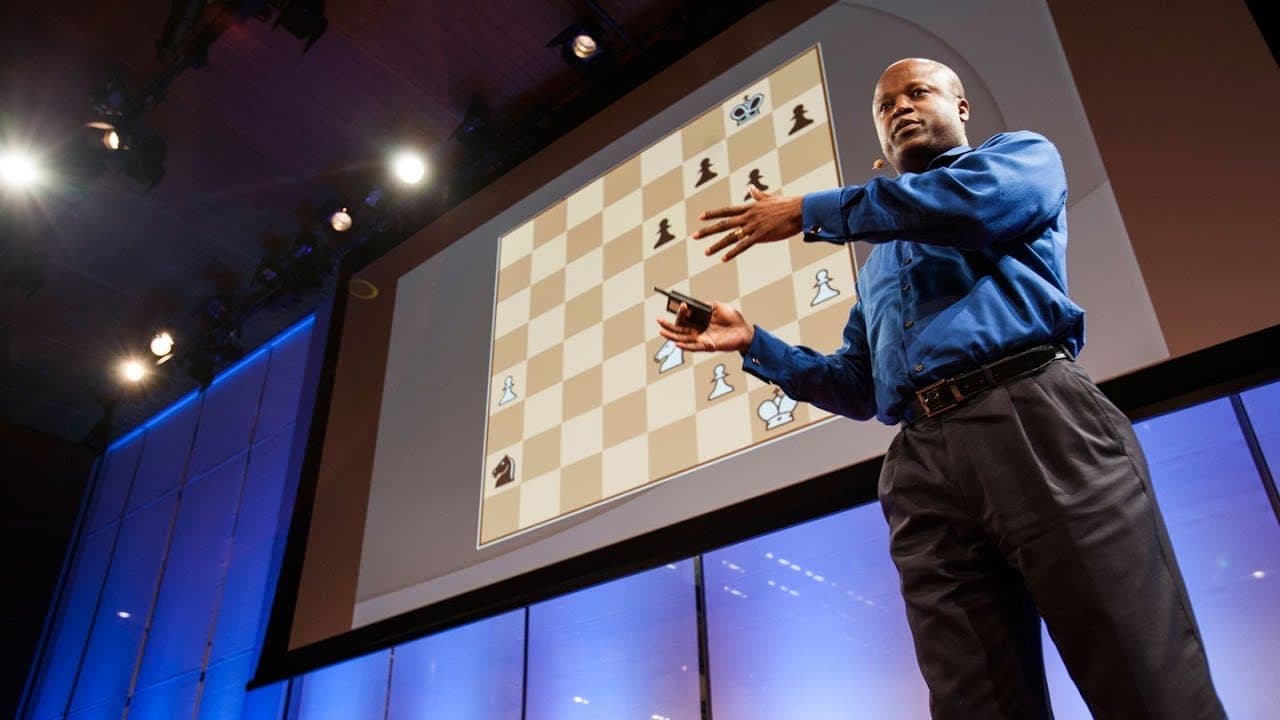
Retrograde analysis involves looking backward to simplify complex problems and identify solutions more effectively. This technique, commonly used by chess grandmasters, allows individuals to navigate challenges in various fields, including law and science. By approaching problems from the end goal, one can enhance decision-making and avoid common pitfalls.
Transcript
Transcriber: Andrea McDonough Reviewer: Bedirhan Cinar There's a myth that grandmasters can see ten, fifteen, twenty moves ahead. And it's a great myth because I'm a grandmaster and it makes me look like a super freaking genius. But the truth is, in just the first four moves, there are 318 billion ways you could play. Now, that would be cool if I c... Read More
Key Insights
- 😒 Grandmasters use techniques like chunking, pattern recognition, and retrograde analysis in chess to strategize effectively.
- 👀 Retrograde analysis involves looking backward to simplify complex situations and steer them towards a favorable outcome.
- 👮 This method is not only used in chess but also in various fields like law, science, and medicine.
- 🫠 Retrograde analysis can help in proofreading by identifying errors that might be missed when reading forward.
- 🦻 Approaching problems backward can simplify complex situations and aid in problem-solving in various areas.
- 😒 The use of retro-analysis extends to fields like law, science, medicine, insurance, stock market, politics, and career planning.
- 👾 Understanding the end game can prevent wasting opportunities in youth, as highlighted in "The Curious Case of Benjamin Button."
Install to Summarize YouTube Videos and Get Transcripts
Explore YouTube Video Summarizer or Get YouTube Transcript Extractor
Questions & Answers
Q: How do grandmasters use retrograde analysis in chess?
Grandmasters use retrograde analysis in chess by looking backward to simplify complex positions, ultimately steering the game towards a favorable outcome. This technique allows them to anticipate moves and strategize effectively.
Q: In what other fields is retrograde analysis used besides chess?
Retrograde analysis is used in various fields such as law, science, medicine, insurance, stock market, politics, and career planning. It helps professionals analyze situations backward to understand complex scenarios better and make informed decisions.
Q: How does retrograde analysis help in proofreading?
Retrograde analysis helps in proofreading by reading sentences backward to catch errors that might be missed when read forward. This technique can be valuable in identifying grammatical mistakes or inconsistencies in writing.
Q: Can retrograde analysis be applied to everyday problem-solving?
Yes, retrograde analysis can be applied to everyday problem-solving by approaching issues backward to simplify complex problems. This method can help individuals break down challenges into manageable steps and find effective solutions.
Summary & Key Takeaways
-
Grandmasters use techniques like chunking, pattern recognition, and retrograde analysis to look ahead in chess.
-
Retrograde analysis involves looking backward to simplify complex situations.
-
This method is not only used in chess but also in various fields like law, science, and medicine.
Read in Other Languages (beta)
Share This Summary 📚
Summarize YouTube Videos and Get Video Transcripts with 1-Click
Try YouTube Summary with ChatGPT & Claude or YouTube Transcript Generator
Explore More Summaries from TED-Ed 📚




Summarize YouTube Videos and Get Video Transcripts with 1-Click
Try YouTube Summary with ChatGPT & Claude or YouTube Transcript Generator