How Does the Power Grid Function?
TL;DR
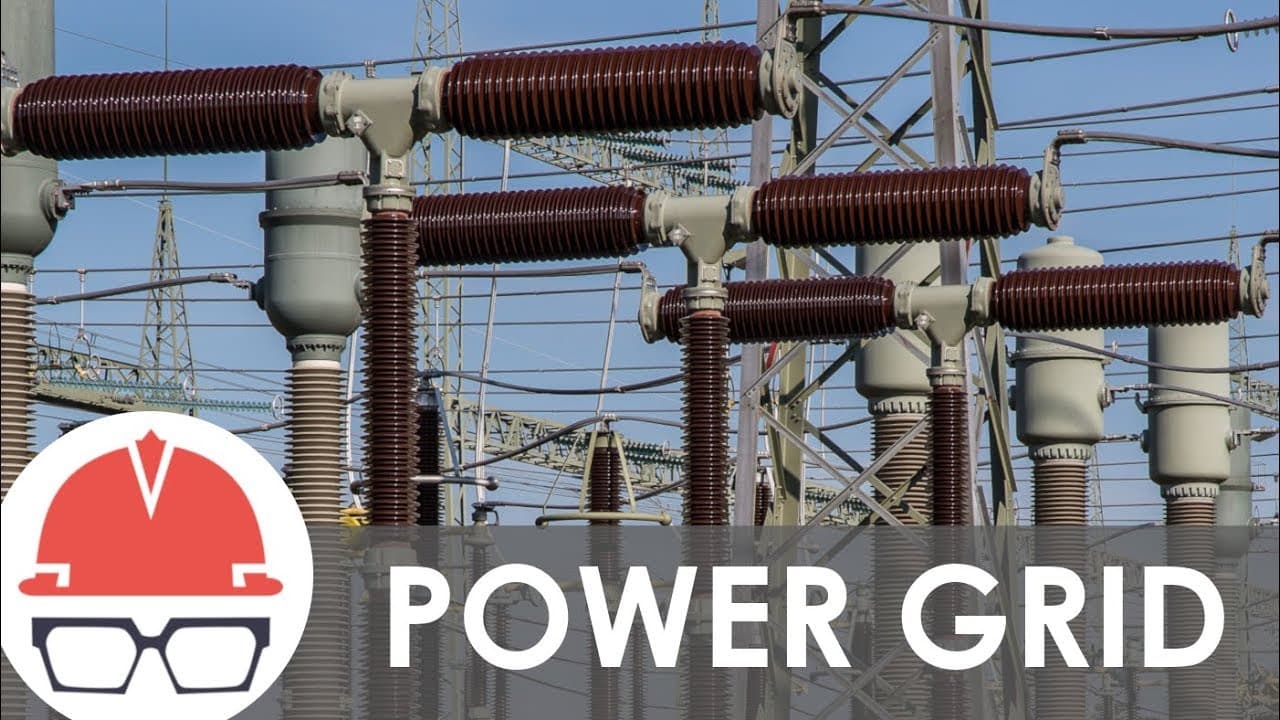
The power grid is a complex system that generates electricity and delivers it to consumers in real-time. It consists of generation, transmission, and distribution components. Engineers design the grid to ensure power quality, reliability, and a balance between supply and demand. A smarter grid can enhance efficiency through advanced technology.
Transcript
The modern world depends on electricity. It’s not just a luxury we use to power our devices and enjoy our free time. It’s not even just a convenience of having light, heating, and cooling in our buildings. Electricity is a crucial resource, especially in urban areas, providing public security, safety, and health and making possible everything from ... Read More
Key Insights
- Electricity is consumed instantly upon production, unlike other utilities.
- The power grid is one of humanity's largest engineering achievements.
- North America has four main electrical grids: Western, Eastern, Quebec, and Texas.
- Power grids use alternating current (AC) to easily step up and down voltages.
- Transformers play a crucial role in adjusting voltage levels for efficient power transport.
- The grid operates like a marketplace, balancing supply and demand in real-time.
- Grid reliability is achieved through redundancy and fault management.
- Smart grids use technology to optimize power management and consumer usage.
Install to Summarize YouTube Videos and Get Transcripts
Explore YouTube Video Summarizer or Get YouTube Transcript Extractor
Questions & Answers
Q: How does the power grid work?
The power grid works by generating electricity at power plants, transmitting it over high-voltage lines, and distributing it to consumers. It uses alternating current (AC) to facilitate voltage adjustments via transformers, ensuring efficient and safe power delivery. The grid balances supply and demand in real-time, maintaining power quality and reliability.
Q: What are the main components of the power grid?
The main components of the power grid are generation, transmission, and distribution. Generation involves producing electricity at power plants. Transmission uses high-voltage lines to transport electricity over long distances. Distribution involves stepping down the voltage for delivery to consumers, ensuring the power is safe and usable for homes and businesses.
Q: Why is alternating current (AC) used in the power grid?
Alternating current (AC) is used in the power grid because it allows for easy voltage adjustment through transformers, which is essential for efficient power transmission. AC power can be stepped up to high voltages for long-distance transmission, reducing losses, and then stepped down to safe levels for distribution to consumers.
Q: What is the role of transformers in the power grid?
Transformers in the power grid adjust voltage levels to facilitate efficient power transport. At power plants, transformers step up voltage for transmission over long distances. At substations, they step down voltage for distribution to consumers. This process minimizes losses and ensures the electricity is safe and practical for end users.
Q: How does the power grid ensure reliability?
The power grid ensures reliability through redundancy and fault management. It is designed to reroute electricity when equipment is out-of-service, preventing blackouts. The grid's complexity allows for continuous power supply, even during maintenance or unexpected faults, ensuring consumers experience minimal disruptions in service.
Q: What challenges do grid operators face in balancing supply and demand?
Grid operators face challenges in balancing supply and demand due to real-time consumption, unpredictable factors like weather, and the variability of renewable energy sources. They must manage generation capacity, dispatching power from various sources, and adjusting to fluctuations, ensuring demand is met without overloading the system.
Q: How can a smart grid improve power management?
A smart grid improves power management by using technology like software, sensors, and communication devices to optimize operations. It enables real-time data analysis, enhancing decision-making for supply and demand management. Consumers benefit from better insights into usage, allowing for informed decisions and more efficient electricity consumption.
Q: What are the benefits of a large interconnected power grid?
A large interconnected power grid offers benefits such as electrical inertia, which smooths out fluctuations, and redundancy, which enhances reliability. It allows for efficient resource sharing, reducing the impact of localized issues. The grid also provides a marketplace for electricity, balancing supply and demand across vast areas, ensuring consistent power availability.
Summary & Key Takeaways
-
The power grid is a vast interconnected system that generates and distributes electricity in real-time. It includes generation, transmission, and distribution components, each playing a critical role in delivering power efficiently. Engineers ensure power quality, reliability, and balance between supply and demand, making the grid a shared resource that requires careful management.
-
Electricity is produced and consumed instantaneously, necessitating a complex infrastructure to manage it. The grid uses alternating current (AC) to facilitate voltage adjustments, ensuring efficient power transport. Transformers are key to this process, stepping up voltage for transmission and stepping it down for distribution to consumers.
-
A smarter grid can enhance efficiency and reliability through advanced technology, allowing for better management of supply and demand. By using software, sensors, and communication devices, the grid can respond to real-time data, improving decision-making and enabling consumers to make informed choices about electricity usage.
Read in Other Languages (beta)
Share This Summary 📚
Summarize YouTube Videos and Get Video Transcripts with 1-Click
Try YouTube Summary with ChatGPT & Claude or YouTube Transcript Generator
Explore More Summaries from Practical Engineering 📚




Summarize YouTube Videos and Get Video Transcripts with 1-Click
Try YouTube Summary with ChatGPT & Claude or YouTube Transcript Generator