Problem Operating Principles of Microwave Bipolar Transistors - Microwave Engineering
TL;DR
Solving a problem on bipolar transistor operating principles in microwave applications using given parameters.
Transcript
click the bell icon to get latest videos from equator hello parents I welcome you all to this video with this video we are going to solve a problem the problem is based on the operating principles of microbio bipolar transistors up till now in the chapter of microbio transistors and tunnel diode we started the introduction to how exactly the bipola... Read More
Key Insights
- ⚾ Parameters like base width, diffusion lengths, and resistivities are crucial for calculating impurity densities in different transistor regions.
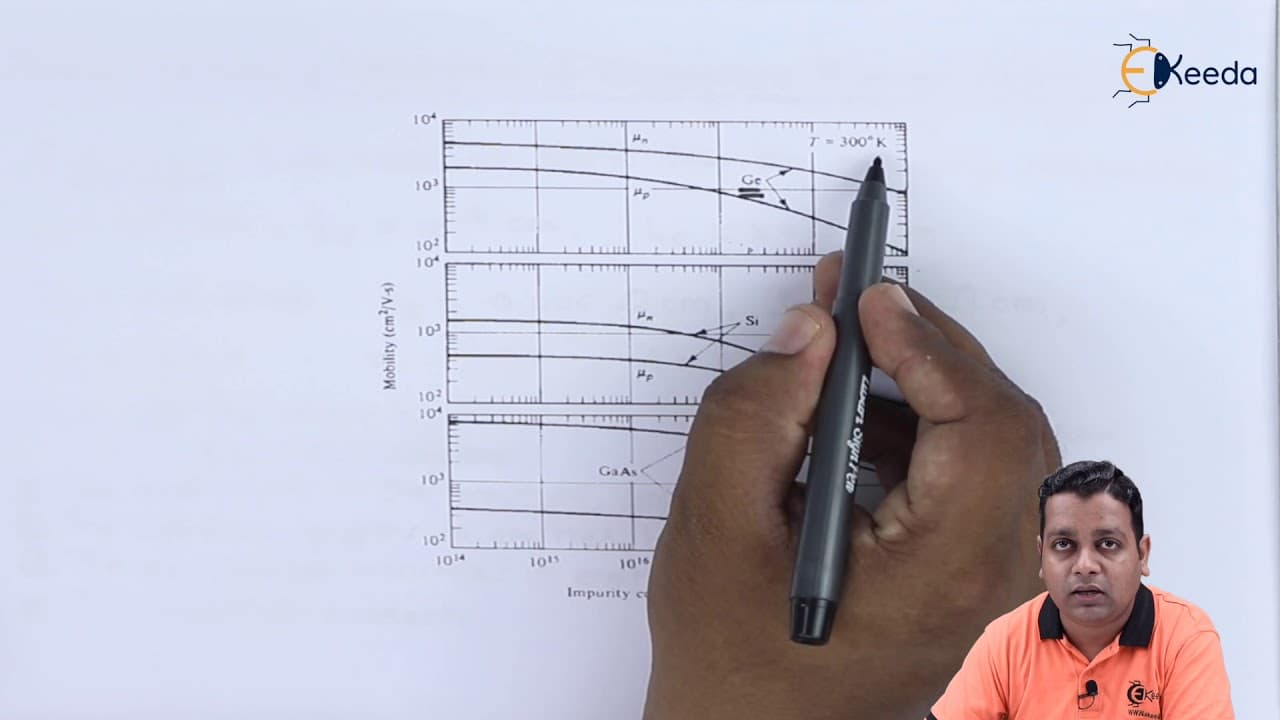
- ❓ The mobility values provide insights into the carrier transport capabilities of the transistor regions.
- ⚾ Diffusion lengths are essential for understanding the spatial distribution of charge carriers in emitter, base, and collector regions.
- ❓ Equilibrium densities are significant for analyzing the stable operating conditions of the transistor.
- 💐 Terminal currents reflect the flow of charge carriers in the transistor and are essential for performance evaluation.
- 🎨 Proper understanding of these parameters and calculations is essential for efficient design and operation of bipolar transistors.
- 🤩 Graphical representations aid in visualizing the relationship between impurity concentrations, resistivities, and other key parameters.
Install to Summarize YouTube Videos and Get Transcripts
Explore YouTube Video Summarizer or Get YouTube Transcript Extractor
Questions & Answers
Q: What are the key parameters provided for solving the problem on bipolar transistors?
The key parameters include base width, diffusion lengths, resistivities, impurity densities, mobilities, and terminal currents for different transistor regions.
Q: How are the impurity densities in emitter, base, and collector regions calculated?
The impurity densities are calculated using intrinsic concentration, impurity concentrations, and specific formulas based on the given parameters.
Q: How are the mobilities determined for the emitter, base, and collector regions?
The mobilities are calculated using specific formulas involving impurity concentrations, intrinsic concentration, and temperature values for each transistor region.
Q: What is the significance of diffusion lengths in the emitter, base, and collector regions?
Diffusion lengths play a crucial role in determining the performance of bipolar transistors by influencing carrier transport and current flow in different transistor regions.
Summary & Key Takeaways
-
Problem solving based on the operating principles of bipolar transistors in microwave applications.
-
Key parameters like base width, diffusion lengths, resistivities, and impurity densities are provided and used to find solution.
-
Calculation of impurity densities, mobilities, diffusion lengths, equilibrium densities, and terminal currents for emitter, base, and collector regions.
Read in Other Languages (beta)
Share This Summary 📚
Summarize YouTube Videos and Get Video Transcripts with 1-Click
Try YouTube Summary with ChatGPT & Claude or YouTube Transcript Generator
Explore More Summaries from Ekeeda 📚






Summarize YouTube Videos and Get Video Transcripts with 1-Click
Try YouTube Summary with ChatGPT & Claude or YouTube Transcript Generator