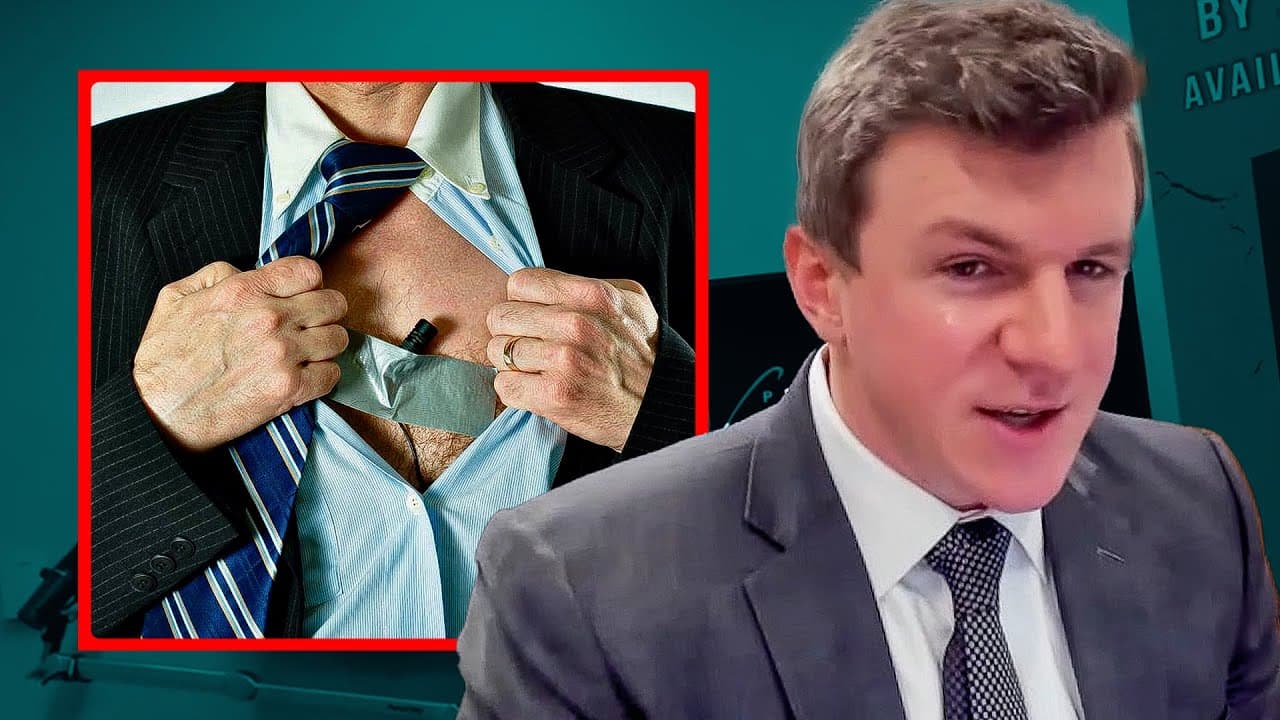
James O’Keefe Defends The Ethics Of Undercover Recording
TL;DR
It is generally legal to record conversations with the consent of at least one party, but there are variations across states. Ethically, recording can be seen as situational and necessary in certain circumstances.
Transcript
are there no legalities about recording people without their consent i don't know how the law works in america in the united states in 38 states it's perfectly legal so so long as one party is consenting what does that mean it means that you know that i'm speaking to you you are with the person that is recording you and if you think about it that m... Read More
Key Insights
- 🇺🇸 It is generally legal to record conversations with the consent of at least one party in 38 states in the United States.
- 👻 Courts have considered recording devices as an extension of a pencil and paper, allowing for accurate renditions of events.
- 👮 Project Veritas has successfully challenged and overturned recording laws in Massachusetts on the grounds of unconstitutionality.
- 💁 Journalism often involves causing harm through the publication of unauthorized information, but it is protected by the First Amendment.
- 🗯️ Ethical concerns arise with recording conversations, and the balance between harm caused and the public's right to information must be considered.
- 😒 The use of hidden cameras is not inherently deceptive, as long as the subject is aware they are being recorded.
- 💁 Leaks and authorized leaks can be seen as forms of deception, as those in power may manipulate journalists through controlled information.
Install to Summarize YouTube Videos and Get Transcripts
Explore YouTube Video Summarizer or Get YouTube Transcript Extractor
Questions & Answers
Q: What are the legalities regarding recording conversations without consent?
In the United States, it is generally legal to record conversations with the consent of at least one party. However, different states have different laws, and some require all parties to consent.
Q: Can conversations be recorded in public places without consent?
Yes, in most cases, if conversations can be overheard by others, recording them in public places without consent is permitted. However, laws may vary depending on the state.
Q: Does recording conversations raise ethical concerns?
Yes, journalism involving recording raises ethical concerns. While recording may be legal, it may still be seen as an invasion of privacy. Journalists must consider the balance between harm caused and the public's right to information.
Q: Is using hidden cameras considered deceptive?
Using hidden cameras is not necessarily considered deceptive or eavesdropping if the person being interviewed is aware they are being recorded. However, it is a form of deception towards the subject, but it allows for truthful reporting to the audience.
Summary & Key Takeaways
-
In the United States, it is legal to record conversations with the consent of at least one party in 38 states. However, some states, like California, have stricter laws.
-
Courts consider recording devices as an extension of a pencil and paper, allowing for accurate renditions of events. Written accounts may be less accurate.
-
Project Veritas has successfully challenged the constitutionality of recording laws and overturned them in Massachusetts. Ethical concerns are considered, but journalism often involves harming people with published information.
Read in Other Languages (beta)
Share This Summary 📚
Summarize YouTube Videos and Get Video Transcripts with 1-Click
Try YouTube Summary with ChatGPT & Claude or YouTube Transcript Generator
Explore More Summaries from Chris Williamson 📚



Summarize YouTube Videos and Get Video Transcripts with 1-Click
Try YouTube Summary with ChatGPT & Claude or YouTube Transcript Generator