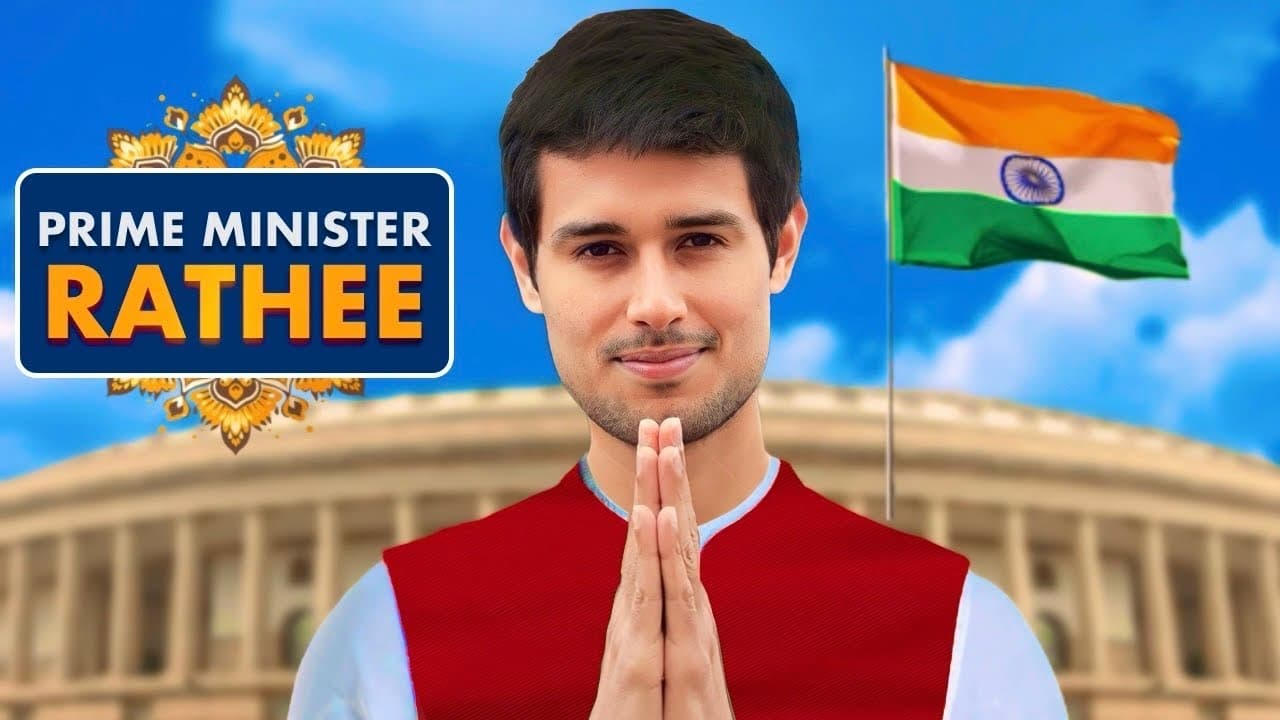
What if I become India's Prime Minister? | Dhruv Rathee
TL;DR
Dhruv Rathee outlines his vision for enhancing safety and prosperity in India.
Transcript
Hello friends! What would have happened if I was the Prime Minister of the country? I have criticised the government on different issues in many videos. Wherever I felt that something was wrong, I have raised questions. But one question also arises that if I was in the government's place, what would I do? Look, for now, I don't have any such desire... Read More
Key Insights
- ✌️ Safety is paramount for national prosperity, as the foundation for development is rooted in peace.
- ❓ A proactive approach to understanding and addressing societal problems is crucial for effective governance.
- 🇨🇫 Police reform must prioritize better compensation, hiring standards, and accountability to enhance public trust.
- 🧑⚕️ Mental health support for armed forces personnel is critical for maintaining operational effectiveness and reducing suicides.
- 🫡 Changing societal mindsets towards equality and respect for every life is essential for cultural transformation.
- 😨 Urban planning must prioritize human-centric models, reducing dependency on cars to improve quality of life.
- 🥶 A free media is vital in a democracy, providing checks and balances on governance and amplifying public issues.
Install to Summarize YouTube Videos and Get Transcripts
Explore YouTube Video Summarizer or Get YouTube Transcript Extractor
Questions & Answers
Q: What specific safety issues does Dhruv Rathee outline regarding terrorism?
Dhruv Rathee highlights the alarming frequency of terrorist attacks in India, citing incidents like the 2001 Parliament attack and the 2019 Pulwama attack. He emphasizes the need for a robust defense force capable of countering threats and ensuring border security to prevent such attacks and maintain peace.
Q: How does Rathee suggest addressing religious riots and communal violence in India?
Rathee discusses the prevalence of communal riots in India, particularly between 2017 and 2021, and emphasizes the necessity of ensuring safety from ethnic clashes. He proposes a systematic approach to promote unity and discourage political exploitation of religious sentiments, thereby fostering a peaceful society.
Q: In what ways does Rathee plan to improve the mental health of Indian soldiers?
Rathee suggests hiring around 1,800 mental health practitioners to support the approximately 1.2 million active personnel in the Indian Army. He argues that mental well-being is vital for effective defense capabilities and promises to extend these services to paramilitary forces and police officers to improve overall morale.
Q: What are Rathee's views on police reforms in India, and how does he address corruption?
Rathee calls for substantial police reforms, citing the overburdened and underpaid status of police officers. He advocates for increasing personnel and ensuring fair compensation. To combat corruption, he stresses that leadership accountability is necessary to break the existing chain of corruption and enhance public trust in law enforcement.
Q: How does Rathee propose to make cities more human-centric instead of car-centric?
Rathee believes that current infrastructural investments prioritize car-based infrastructure over the needs of most citizens. He argues for redirecting funds from highways to education and urban development, promoting greener cities that prioritize pedestrians and cyclists, thereby reducing pollution and enhancing urban livability.
Q: What insights does Rathee provide on crime rates and safety in India?
Rathee shares alarming crime statistics, indicating averages of 78 murders daily and thousands of road fatalities due to accidents. He argues for comprehensive strategies to address these issues through preventive and punitive measures, focusing on systemic changes to improve safety nationwide.
Q: How does Dhruv Rathee envision the role of media in ensuring accountability and problem awareness?
Rathee emphasizes the importance of a robust media as a cornerstone of democracy. He advocates for media freedom to investigate and report on safety issues without fear of reprisal, suggesting that a fearless press can drive public dialogue and policy changes for social betterment.
Q: What steps does Rathee recommend for fostering safety and prosperity in light of historical context?
Looking at historical examples, Rathee believes that it is possible to learn from nations like Singapore, which transformed itself through focused governance and community engagement. He feels that with clear intentions and systematic changes, India can aspire to become a safe and prosperous nation as well.
Summary & Key Takeaways
-
Dhruv Rathee discusses the various pressing issues facing India, including terrorism, crimes, and accidents, emphasizing the need for safety and security.
-
He proposes actionable solutions like improved police accountability, mental health support for armed forces, and infrastructure investments to address the root causes of safety concerns in India.
-
Rathee advocates for a shift in the mindset towards equality in valuing every person's life and urges greater media freedom to highlight critical societal issues.
Read in Other Languages (beta)
Share This Summary 📚
Summarize YouTube Videos and Get Video Transcripts with 1-Click
Try YouTube Summary with ChatGPT & Claude or YouTube Transcript Generator
Explore More Summaries from Dhruv Rathee 📚


Summarize YouTube Videos and Get Video Transcripts with 1-Click
Try YouTube Summary with ChatGPT & Claude or YouTube Transcript Generator