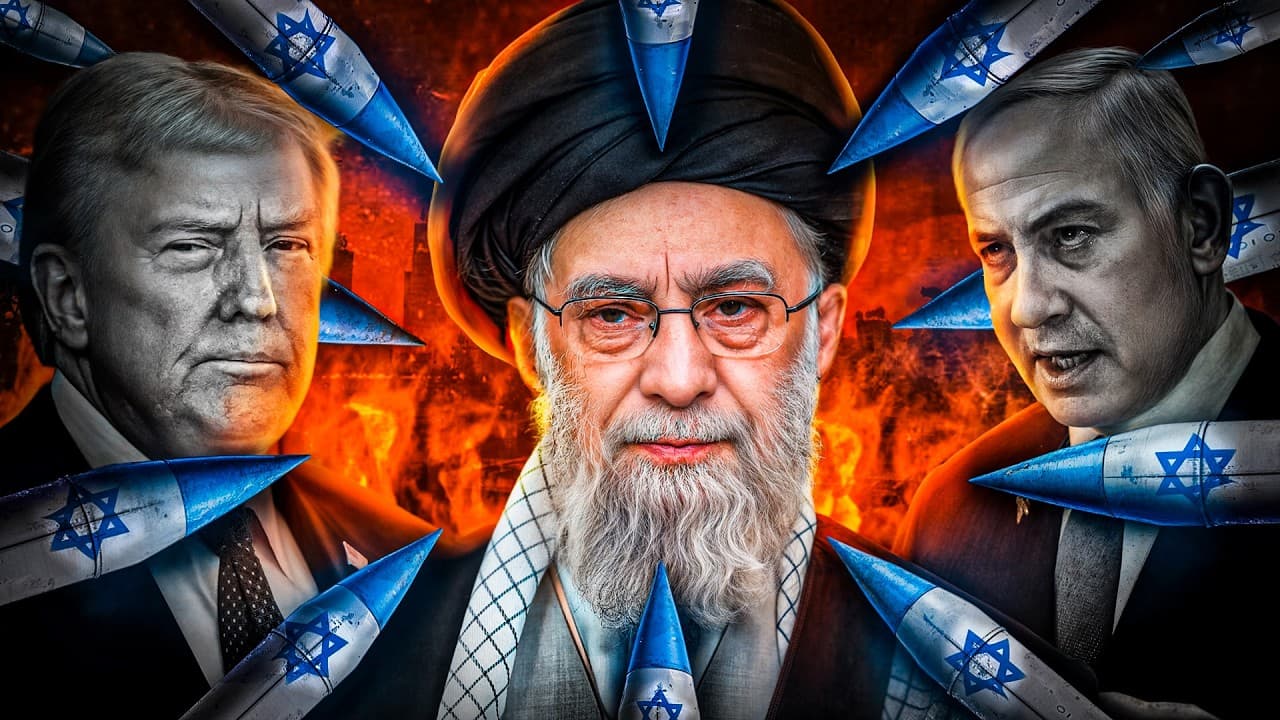
Iran vs Israel War | Does Iran REALLY Have Nukes? | Dhruv Rathee
TL;DR
A sudden 12-day war between Iran and Israel raises nuclear concerns.
Transcript
Read and summarize the transcript of this video on Glasp Reader (beta).
Key Insights
- The 12-day war between Iran and Israel was initiated by a surprise attack from Israel, targeting Iran's nuclear facilities, raising global concerns about nuclear proliferation.
- Israel's Operation Rising Lion targeted over 100 sites in Iran, including nuclear scientists and military infrastructure, with no initial provocation from Iran.
- Trump's administration played a significant role in escalating tensions by canceling the Iran nuclear deal, which had previously limited Iran's nuclear capabilities.
- The war resulted in significant casualties, including the assassination of key Iranian military and scientific figures, yet both Iran and Israel claimed victory.
- Geopolitical motives behind the conflict include Netanyahu's corruption trials and Trump's desire to portray himself as a peacemaker, influencing their respective domestic politics.
- The ceasefire was brokered with the help of Qatar, highlighting the complexity of Middle Eastern geopolitics and the influence of external powers like the United States.
- Iran's retaliation to the attacks was limited, indicating a strategic decision to avoid prolonged conflict, despite the severe damage to its nuclear infrastructure.
- The conflict underscores the fragile nature of international nuclear agreements and the potential for escalation based on perceived threats rather than concrete evidence.
Install to Summarize YouTube Videos and Get Transcripts
Explore YouTube Video Summarizer or Get YouTube Transcript Extractor
Questions & Answers
Q: What triggered the Iran-Israel war?
The Iran-Israel war was triggered by a surprise attack from Israel, known as Operation Rising Lion, targeting Iran's nuclear facilities and military infrastructure. Israel justified the attack as self-defense against Iran's suspected nuclear weapons development, despite no immediate provocation from Iran at the time.
Q: Why did Trump demand a ceasefire?
Trump demanded a ceasefire to portray himself as a peacemaker and possibly to deflect criticism from his supporters who were unhappy with US involvement in a new conflict. His administration sought to end the hostilities quickly to prevent further escalation and maintain regional stability.
Q: Did the war destroy Iran’s nuclear program?
While the war caused significant damage to Iran's nuclear infrastructure, particularly the above-ground facilities, it did not completely destroy Iran's nuclear program. The core components, such as centrifuges and enriched uranium, were not entirely obliterated, and the program was only delayed by a few months.
Q: What was the role of Netanyahu's corruption trials in the conflict?
Netanyahu's corruption trials played a significant role in the conflict, as it is speculated that the war was used as a distraction from his legal troubles. The timing of the attack coincided with the beginning of his cross-examinations, suggesting a possible motive to shift public focus and maintain political power.
Q: How did Iran respond to Israel's attack?
Iran responded to Israel's attack by launching missiles and drones targeting Israel, with some strikes hitting locations in Tel Aviv and Jerusalem. However, Iran's retaliation was limited, possibly to avoid further escalation and demonstrate to its citizens that it had responded adequately to the aggression.
Q: What was the international reaction to the conflict?
The international reaction to the conflict was one of concern, with fears of a broader regional war. The sudden escalation highlighted the fragile nature of Middle Eastern geopolitics, and countries like Qatar played a key role in mediating a ceasefire to prevent further violence.
Q: What impact did the conflict have on Iran's nuclear ambitions?
The conflict may have reinforced Iran's resolve to pursue nuclear capabilities, as the attack demonstrated the vulnerability of being suspected of developing nuclear weapons. The situation draws parallels to North Korea, where having nuclear weapons is seen as a deterrent against foreign aggression.
Q: What are the potential solutions to prevent future conflicts like this?
A potential solution to prevent future conflicts is to re-establish a nuclear deal with Iran, similar to the one brokered by Obama in 2015. Such an agreement would limit Iran's nuclear enrichment and allow for international inspections, reducing the perceived threat and fostering regional stability.
Summary & Key Takeaways
-
The conflict between Iran and Israel erupted unexpectedly, with Israel launching Operation Rising Lion, targeting Iran's nuclear facilities and assassinating key figures, under the pretext of self-defense against Iran's suspected nuclear ambitions.
-
Trump's cancellation of the Iran nuclear deal and subsequent demands for a ceasefire after the conflict began highlight the geopolitical maneuvering and domestic political agendas influencing the war.
-
Despite significant destruction and casualties, the war ended abruptly with a ceasefire brokered by Qatar, leaving questions about the future of Iran's nuclear program and the region's stability.
Read in Other Languages (beta)
Share This Summary 📚
Summarize YouTube Videos and Get Video Transcripts with 1-Click
Try YouTube Summary with ChatGPT & Claude or YouTube Transcript Generator
Explore More Summaries from Dhruv Rathee 📚





Summarize YouTube Videos and Get Video Transcripts with 1-Click
Try YouTube Summary with ChatGPT & Claude or YouTube Transcript Generator