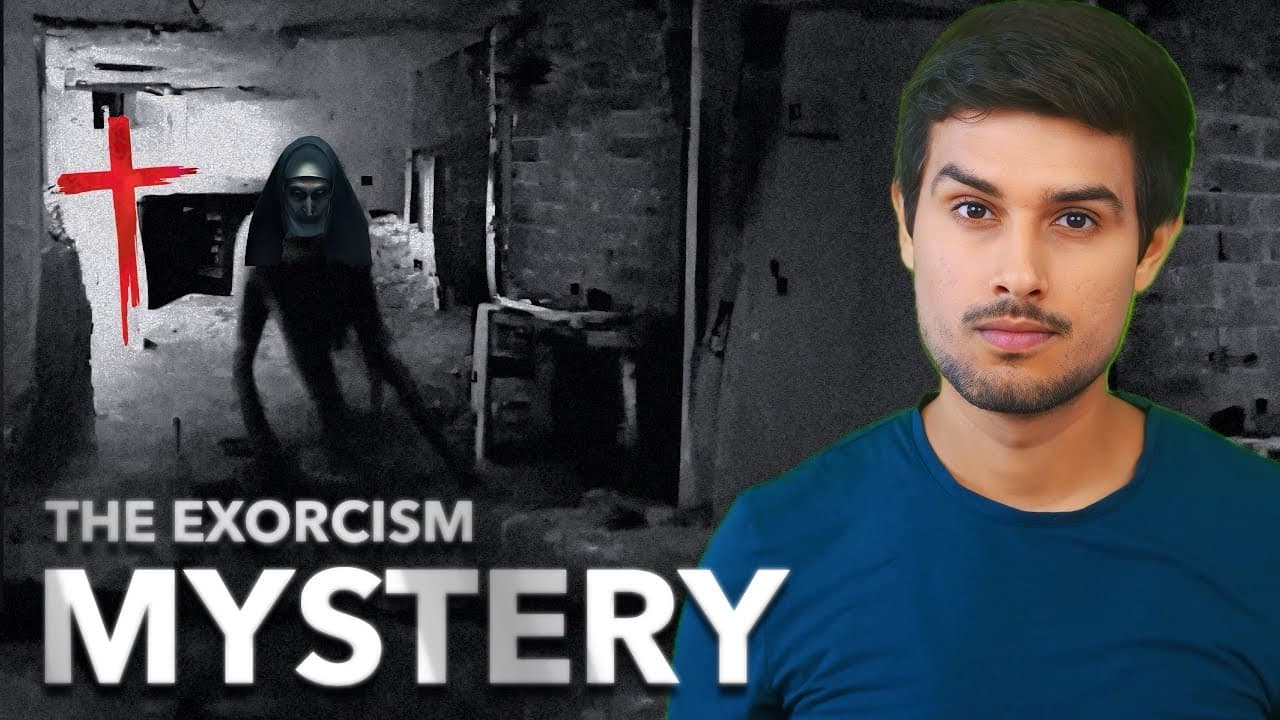
The Science behind Exorcism | Is Demonic Possession Possible? | Dhruv Rathee
TL;DR
Anneliese Michel's exorcism case explores mental health disorders versus supernatural beliefs.
Transcript
Hello, friends! In 2005 a popular Hollywood film was released, The Exorcism of Emily Rose. Although there are many horror films in Hollywood, there was something special about this film. Look at the poster of this film, what's written? "Based on a true story," it was based on a true incident. It was based on the story of Anneliese Michel. One of th... Read More
Key Insights
- 💀 Anneliese Michel's case serves as a cautionary tale illustrating the dangers of neglecting mental health in favor of superstitious beliefs.
- 😣 The video highlights the misconception that religious or spiritual explanations are viable solutions for severe psychological distress.
- 🪡 Dissociative Identity Disorder can manifest from traumatic experiences, emphasizing the need for compassionate understanding and proper treatment.
- 😀 Cultural perceptions of mental illness are heavily influenced by media representations, which often sensationalize or distort the realities faced by individuals with disorders.
- 🚨 The legal ramifications of Anneliese Michel's death showcase society's need to reconcile religious practices with emerging psychological understandings.
- 🧑⚕️ Mental health should be treated with the same seriousness as physical health, with professionals trained to address these intricacies.
- 🙊 The prevalence of dissociation and related phenomena speaks to a broader societal issue in recognizing and addressing the complexities of mental health.
Install to Summarize YouTube Videos and Get Transcripts
Explore YouTube Video Summarizer or Get YouTube Transcript Extractor
Questions & Answers
Q: What sparked Anneliese Michel's troubling symptoms?
Anneliese's symptoms began with fainting and progressed to severe hallucinations, which her parents perceived as demonic possession. Medical professionals diagnosed her with temporal lobe epilepsy, but her condition deteriorated as her mental state worsened, leading to the decision for an exorcism. Due to her upbringing, she believed these spiritual delusions rather than addressing her mental health effectively.
Q: Why did Anneliese's parents turn to exorcism instead of medical help?
Anneliese's parents, raised in a deeply religious environment, were convinced that her symptoms were manifestations of evil spirits. When traditional medical approaches failed to alleviate her distress, they sought help from the church, interpreting her hallucinations as a need for exorcism rather than recognizing the psychological issues she was facing.
Q: How does Dissociative Identity Disorder (DID) relate to Anneliese's case?
DID may manifest through distinct personalities that arise as coping mechanisms in response to trauma. Anneliese's case illustrates how her mental struggles were framed as demonic possession, overshadowing the possibility of a psychological disorder. This misunderstanding potentially led to her fatal neglect of necessary medical care.
Q: What does the video say about the portrayal of mental health in films?
The video critiques the sensationalized portrayal of mental illnesses like DID in movies, often depicting patients as violent or dangerous. This reinforces societal stigma and misconceptions about mental health. The content advocates for realistic representations and a deeper understanding of such conditions to promote awareness and empathy.
Q: What were the consequences following Anneliese’s death?
Anneliese Michel's tragic death led to a national scandal and legal action against her parents and the priests who performed the exorcisms. They were charged with negligent homicide, highlighting the failure to recognize and treat her mental health issues instead of resorting to religious explanations.
Q: How prevalent is Dissociative Identity Disorder in society?
The prevalence of DID is linked to past trauma, with studies showing that a substantial percentage of those suffering from it have experienced significant abuse in childhood. Understanding this context is crucial to destigmatize such disorders and promote support for individuals seeking treatment.
Q: What is the recommended approach for individuals experiencing mental health issues?
The video emphasizes the importance of seeking professional help for mental health struggles instead of relying on spiritual or religious interventions. Consultation with qualified therapists is encouraged to address underlying issues effectively and sensitively.
Q: How does the video connect Anneliese Michel's case to modern understanding of psychology?
By examining Anneliese's narrative through a psychological lens, the video illustrates how symptoms once attributed to possession can be understood as manifestations of mental health disorders. It advocates for scientific perspectives over superstition, urging societal recognition of the complexities within mental health.
Summary & Key Takeaways
-
The video discusses the harrowing case of Anneliese Michel, a young woman who underwent numerous exorcisms before her death, which was attributed to severe malnutrition rather than demonic possession.
-
It delves into the scientific explanation of her symptoms, linking them to Dissociative Identity Disorder and emphasizing how trauma and mental illness are often misinterpreted as supernatural phenomena.
-
The content challenges societal stigmas regarding mental health, encouraging viewers to seek professional help for psychological issues rather than resorting to spiritual explanations.
Read in Other Languages (beta)
Share This Summary 📚
Summarize YouTube Videos and Get Video Transcripts with 1-Click
Try YouTube Summary with ChatGPT & Claude or YouTube Transcript Generator
Explore More Summaries from Dhruv Rathee 📚






Summarize YouTube Videos and Get Video Transcripts with 1-Click
Try YouTube Summary with ChatGPT & Claude or YouTube Transcript Generator