How to Solve Common Google Search Issues
TL;DR
John Mueller addresses common webmaster concerns, including traffic drops, content duplication, and structured data issues. He emphasizes that shared IP addresses generally don't affect search rankings and suggests improving low-quality pages rather than deleting them. For content theft, he advises using DMCA complaints and provides insights into Google's handling of redirects and crawl frequency.
Transcript
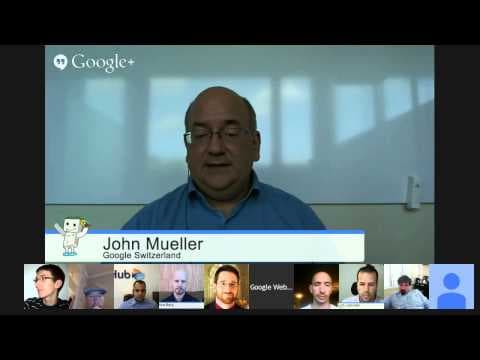
JOHN MUELLER: All right. Welcome, everyone, to today's Webmaster Central Office Hours Hangout. My name is John Mueller. I am a webmaster trends analysts here at Google in Switzerland. And part of what we do are these office hour Hangouts, where webmasters, [INAUDIBLE],, SEOs can jump in and ask any web search-related questions that might come [INAU... Read More
Key Insights
- Shared IP addresses are not usually a problem for search rankings.
- Google's algorithm changes can affect traffic, even if a site has performed well historically.
- Google prefers improving low-quality pages over deleting them.
- Content theft can be addressed with DMCA complaints.
- Google treats structured data differently based on the format and consistency across site versions.
- Crawl frequency is not a ranking factor; it's based on content change frequency.
- Manual actions are resolved directly but may affect rankings if unnatural links were removed.
- Google Ads do not influence organic search rankings.
Install to Summarize YouTube Videos and Get Transcripts
Explore YouTube Video Summarizer or Get YouTube Transcript Extractor
Questions & Answers
Q: How can shared IP addresses affect Google search rankings?
Shared IP addresses do not generally impact Google search rankings. In the early days, they were used to identify spammy hosts, but this is no longer the case. Google understands that shared IP addresses are common with CDNs and large hosters, and they do not penalize sites for having shared IPs unless there is a significant spam signal associated with them.
Q: What should I do if my website traffic drops significantly?
If your website experiences a significant drop in traffic, consider potential factors such as algorithm updates, changes in user expectations, or technical issues. Investigate recent changes to your site, review Google Search Console for any manual actions, and ensure that your content aligns with current user needs and search engine guidelines. Improving content quality and relevance can help recover traffic.
Q: How does Google handle content theft and duplicate content?
Google recommends addressing content theft by filing DMCA complaints to prevent copied content from outranking the original. While Google's algorithms try to determine the original content creator, manual intervention may be necessary. Ensuring your content is well-linked and clearly the original can help Google's algorithms recognize the rightful owner.
Q: How should I handle low-quality pages on my website?
Instead of deleting low-quality pages, consider improving them to meet user expectations and search quality guidelines. This could involve updating content, combining similar pages, or enhancing the user experience. Deleting pages should be a last resort, as improving content can lead to better search performance and user satisfaction.
Q: What is the impact of using different structured data formats across site versions?
Using different structured data formats, such as microdata and JSON-LD, across site versions is acceptable. However, ensure consistency in the structured data provided to Google. Some structured data types are only available in JSON-LD, so verify the compatibility of the formats you use with Google's guidelines to ensure proper indexing and display.
Q: Does using Google Ads affect my organic search rankings?
Using Google Ads does not affect organic search rankings. Google's search algorithms are independent of its advertising services, and using or not using Google Ads will not influence your site's position in organic search results. Focus on optimizing your content and website for search to improve organic performance.
Q: How can I improve the crawl frequency of important pages on my site?
To improve the crawl frequency of important pages, ensure they are prominently linked within your site, included in your sitemap, and frequently updated with relevant content. Google prioritizes crawling based on the likelihood of content changes and the importance of pages, so providing clear signals of relevance and updates can help increase crawl frequency.
Q: What should I do if my site receives a manual action for spammy structured data?
If your site receives a manual action for spammy structured data, review the affected pages and correct any issues with the structured data markup. Ensure the markup accurately represents the content and follows Google's guidelines. After making necessary corrections, submit a reconsideration request to Google, explaining the changes made to resolve the issue.
Summary & Key Takeaways
-
John Mueller discusses issues like traffic drops and content duplication. Shared IP addresses don't usually impact search rankings, and algorithm changes can affect traffic. He advises improving low-quality pages instead of deleting them and suggests using DMCA complaints for content theft. Structured data handling depends on format consistency, and crawl frequency is based on content changes, not a ranking factor.
-
Manual actions are resolved directly, but rankings may change if unnatural links were removed. Google Ads do not influence organic search rankings. Mueller emphasizes understanding user expectations and improving content quality to align with algorithm updates.
-
For SEO success, focus on user experience and adapting to algorithm changes. Use structured data effectively, address content theft proactively, and ensure technical aspects like redirects and crawl settings are optimized. Google's algorithms prioritize relevance and quality over historical performance.
Read in Other Languages (beta)
Share This Summary 📚
Summarize YouTube Videos and Get Video Transcripts with 1-Click
Try YouTube Summary with ChatGPT & Claude or YouTube Transcript Generator
Explore More Summaries from Google Search Central 📚
Summarize YouTube Videos and Get Video Transcripts with 1-Click
Try YouTube Summary with ChatGPT & Claude or YouTube Transcript Generator