What Is Futurism and Constructivism in Theater?
TL;DR
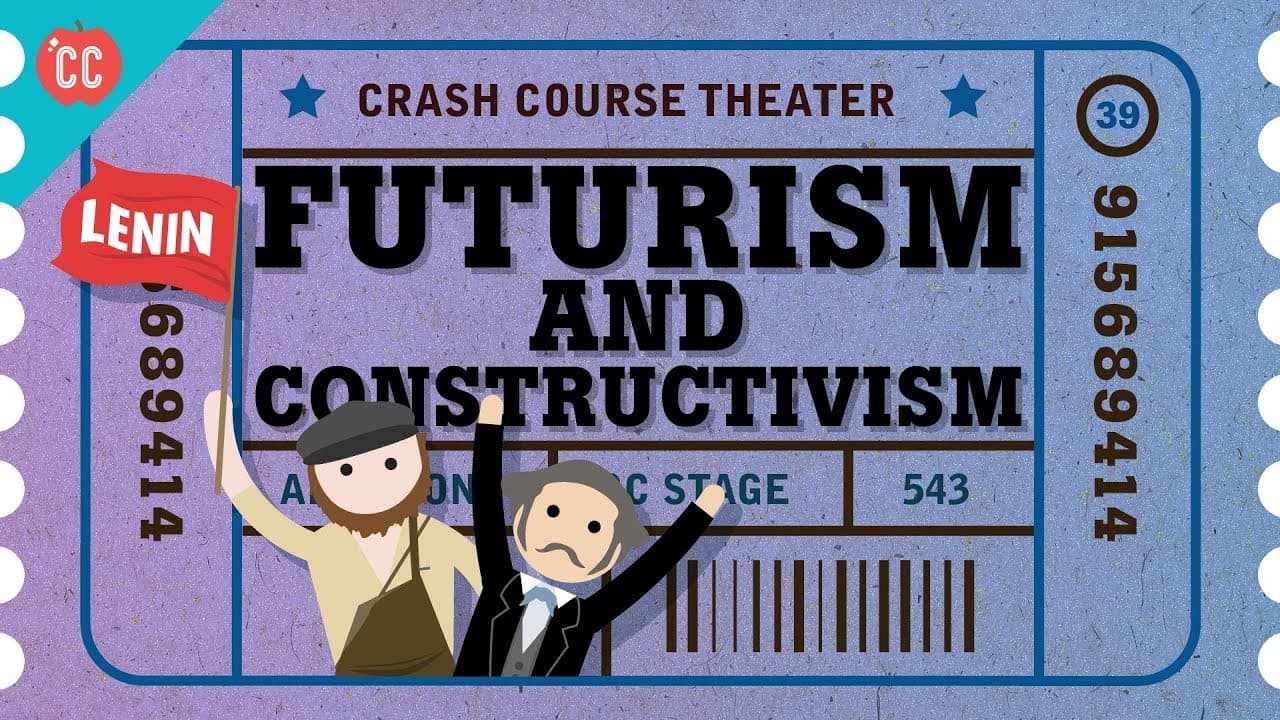
Futurism, initiated by Filippo Tomasso Marinetti, sought a radical break from the past, emphasizing speed, technology, and even violence, aligning with Italian fascism. In Russia, Futurism took a more literary and philosophical approach, influenced by communism. Vsevolod Meyerhold, a key figure in constructivism, focused on theatrical innovation and biomechanics, opposing realism in favor of a more expressive, mechanical style.
Transcript
Hey there, I’m Mike Rugnetta, this is Crash Course Theater, and today futurism’s so bright… the manifestoes continue! So does the grudge match between realism and newer forms which argue that, if you really want to show how weird and visceral and terrifying contemporary life is, a bourgeois family arguing in a living room just. doesn’t. cut it. Th... Read More
Key Insights
- Futurism was an Italian movement initiated by Filippo Tomasso Marinetti in 1909, advocating for art that embraced speed, technology, and violence.
- Marinetti's futurism was politically aligned with fascism, emphasizing a complete break from the past and glorifying war and militarism.
- Russian Futurism, while also seeking modernity, was more literary and philosophical, drawing influences from communism rather than fascism.
- Vsevolod Meyerhold was a prominent Russian director who embraced constructivism, focusing on theatrical innovation and biomechanics.
- Meyerhold opposed psychological realism, instead promoting a theatrical style that was expressive, mechanical, and acrobatic.
- Futurist theater involved audience participation, often in disruptive ways, to challenge traditional theater norms.
- Constructivism in theater glorified industrialization and mechanization, transforming stage designs into theatrical assembly lines.
- Meyerhold's opposition to socialist realism in Soviet Russia led to his persecution and execution, highlighting the political risks of artistic expression.
Install to Summarize YouTube Videos and Get Transcripts
Explore YouTube Video Summarizer or Get YouTube Transcript Extractor
Questions & Answers
Q: What is Futurism in theater?
Futurism in theater was an avant-garde movement initiated by Filippo Tomasso Marinetti, emphasizing a radical break from the past and embracing speed, technology, and violence. It rejected traditional realism and sought to engage audiences in unconventional ways, often through disruptive participation. Futurism became associated with Italian fascism, glorifying war and militarism.
Q: How did Russian Futurism differ from Italian Futurism?
Russian Futurism, while also advocating for a break from the past, was more literary and philosophical compared to its Italian counterpart. It was influenced by communism rather than fascism and sought to create new words and forms. Russian Futurists, like Vladimir Mayakovsky, opposed the glorification of war and focused on modernity without the militaristic undertones of Italian Futurism.
Q: Who was Vsevolod Meyerhold and what was his contribution to theater?
Vsevolod Meyerhold was a prominent Russian theater director known for his contributions to constructivism and biomechanics. He opposed psychological realism, promoting a theatrical style that was expressive, mechanical, and acrobatic. Meyerhold emphasized the director's role over the play itself, seeking to transport audiences to a world of make-believe through innovative staging and actor training.
Q: What is constructivism in theater?
Constructivism in theater was a movement that glorified industrialization and mechanization, transforming stage designs into theatrical assembly lines. It emphasized the use of modern technology and machinery, aligning with early Russian revolutionary goals. Constructivism sought to create a 'meaning-factory' on stage, focusing on spectacle and astonishment rather than psychological depth.
Q: How did Meyerhold's approach to theater differ from Stanislavski's?
Meyerhold's approach to theater differed from Stanislavski's in that he rejected realism and naturalism, instead promoting a style that was theatrical, fantastical, and acrobatic. Meyerhold believed that the truth of life was found beneath realistic surfaces and emphasized the director's creative vision over the play's text. He incorporated elements of circus and commedia dell’arte into his productions.
Q: What risks did Meyerhold face due to his artistic beliefs?
Meyerhold faced significant risks due to his opposition to socialist realism, the favored style of Soviet Russia. His emphasis on constructivism and formalism was seen as bourgeois, leading to the liquidation of his theater. Ultimately, Meyerhold was arrested, tortured, and executed by firing squad, illustrating the political dangers of deviating from state-approved artistic expressions.
Q: How did Futurist theater engage audiences?
Futurist theater engaged audiences through unconventional and often disruptive means. Techniques included spreading glue on seats, overcrowding with multiple ticket sales, and inviting eccentric individuals to provoke uproars. These methods aimed to break the fourth wall and challenge traditional theater norms, making the audience an active, albeit often unwilling, participant in the performance.
Q: What lasting impact did Futurism have on modern theater?
Futurism's lasting impact on modern theater can be seen in multimedia and multifocal performances that mix actors and audiences, as well as works that veer away from psychological realism. The movement's emphasis on speed, technology, and spectacle continues to influence contemporary theatrical productions, encouraging innovation and experimentation beyond conventional storytelling and staging.
Summary & Key Takeaways
-
Futurism, led by Filippo Tomasso Marinetti, was an art movement that sought a radical break from historical traditions, emphasizing speed, technology, and even violence. It became associated with Italian fascism, glorifying war and militarism. In contrast, Russian Futurism was more literary and philosophical, influenced by communism and rejecting war.
-
Vsevolod Meyerhold, a key figure in Russian theater, embraced constructivism, focusing on theatrical innovation and biomechanics. He opposed realism, favoring a more expressive and mechanical style. Meyerhold's work highlighted the tension between artistic freedom and political ideology in Soviet Russia.
-
Futurist theater involved unconventional audience participation and rejected traditional theater norms. Constructivism glorified industrialization, transforming stage designs into assembly lines. Meyerhold's opposition to socialist realism led to his persecution, illustrating the political risks faced by artists in Soviet Russia.
Read in Other Languages (beta)
Share This Summary 📚
Summarize YouTube Videos and Get Video Transcripts with 1-Click
Try YouTube Summary with ChatGPT & Claude or YouTube Transcript Generator
Explore More Summaries from CrashCourse 📚





Summarize YouTube Videos and Get Video Transcripts with 1-Click
Try YouTube Summary with ChatGPT & Claude or YouTube Transcript Generator