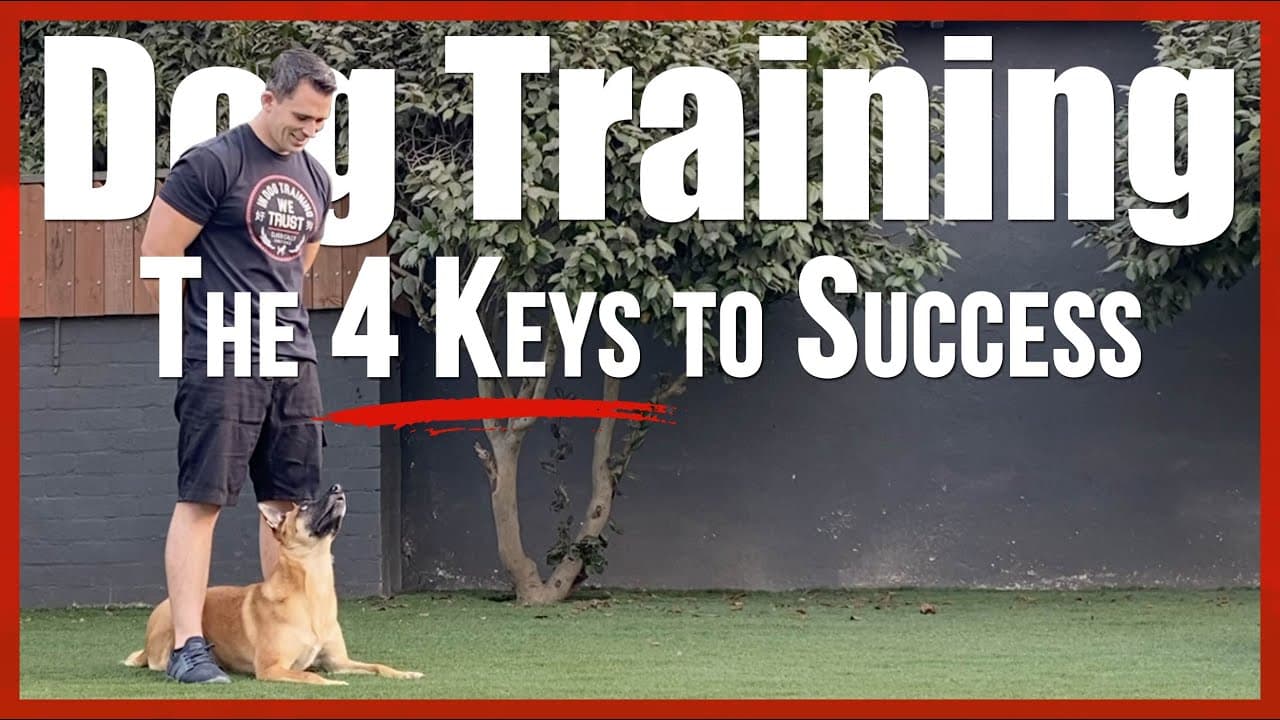
Dog Training - The 4 Keys to Success
TL;DR
Nate Shomer explains scientific methods for effective dog training.
Transcript
hey everyone nate shomer here and in today's video i'm going to break down the science you need to know to teach your dog any command first we must understand that everything our dogs do is based on motivation they're either motivated to access something pleasant they're motivated to prevent something unpleasant or the behavior itself is fun this i... Read More
Key Insights
- Understanding a dog's motivation is crucial for training; they act based on accessing pleasure, avoiding discomfort, or finding the behavior itself fun.
- Reward-based training requires offering a desirable reward, such as a treat or toy, to encourage the desired behavior.
- Leash pressure involves using a leash to guide the dog into specific positions, aiding in teaching commands.
- Escape avoidance training is not recommended as it relies on the dog avoiding corrections by performing the desired behavior.
- Free shaping rewards spontaneous desirable behaviors, while fixed shaping places the dog in situations where they naturally perform the desired task.
- Timing is critical; trainers have one second to reinforce or discourage a behavior using primary or conditioned reinforcers.
- Ivan Pavlov's classical conditioning theory is fundamental, using sounds to predict rewards and condition dogs to respond to cues.
- The training process involves commands, motivation, marking/rewarding, and delivering the primary reward, which can be physical or verbal.
Install to Summarize YouTube Videos and Get Transcripts
Explore YouTube Video Summarizer or Get YouTube Transcript Extractor
Questions & Answers
Q: What is the primary motivation behind a dog's behavior?
Dogs are primarily motivated by the desire to access something pleasant, avoid something unpleasant, or engage in a behavior that is inherently fun. Understanding these motivations is crucial for effective training, as it allows trainers to use appropriate rewards and reinforcements to encourage desired behaviors.
Q: How does reward-based training work?
Reward-based training involves offering a dog a desirable reward, such as a treat or toy, to encourage them to perform a desired behavior. This method is effective only if the dog values the reward being offered, making it important for trainers to select rewards that are appealing to the dog.
Q: What is leash pressure in dog training?
Leash pressure is a training technique where a leash is used to guide a dog into specific positions. This method helps teach commands by providing physical cues that direct the dog to perform the desired behavior. It is one of several techniques discussed by Nate Shomer for effective dog training.
Q: Why is escape avoidance training not recommended?
Escape avoidance training is not recommended because it relies on the dog performing a desired behavior to avoid a correction or unpleasant outcome. This approach can create stress and anxiety in dogs, making it less effective and potentially harmful compared to other positive reinforcement techniques.
Q: What is the difference between free shaping and fixed shaping?
Free shaping involves rewarding a dog for spontaneously performing a desirable behavior without any specific guidance. In contrast, fixed shaping places the dog in situations where they are likely to perform the desired task naturally. Both methods focus on reinforcing positive behaviors but differ in their approach to guidance.
Q: How important is timing in dog training?
Timing is critical in dog training, as trainers have approximately one second to reinforce or discourage a behavior. This involves using primary reinforcers, such as food or toys, or conditioned reinforcers, like sounds, to communicate to the dog whether the behavior should be repeated or avoided.
Q: How does classical conditioning apply to dog training?
Classical conditioning, as demonstrated by Ivan Pavlov, involves using sounds to predict rewards, conditioning dogs to respond to cues. In dog training, this means using a consistent sound, like a click, followed by a reward, to teach dogs to associate the sound with positive outcomes, reinforcing desired behaviors.
Q: What are the steps in the dog training process?
The dog training process involves several steps: giving a command, providing motivation through physical cues, marking or rewarding the behavior, and delivering the primary reward. This process can involve verbal or physical commands and requires repetition to ensure the dog performs the behavior on command alone.
Summary & Key Takeaways
-
Nate Shomer discusses the science behind effective dog training, focusing on motivation and different training techniques. Reward-based training, leash pressure, and shaping are key methods. Timing and classical conditioning are essential for reinforcing desired behaviors.
-
The video emphasizes the importance of understanding a dog's motivations and using appropriate rewards to encourage desired behaviors. Shomer explains various training techniques, including reward-based, leash pressure, and shaping methods, highlighting the role of timing in reinforcement.
-
Classical conditioning, as demonstrated by Ivan Pavlov, is a cornerstone of dog training. Shomer explains how to use sounds as conditioned reinforcers to predict rewards, ensuring dogs associate specific cues with positive outcomes.
Read in Other Languages (beta)
Share This Summary 📚
Summarize YouTube Videos and Get Video Transcripts with 1-Click
Try YouTube Summary with ChatGPT & Claude or YouTube Transcript Generator
Explore More Summaries from Nate Schoemer 📚




Summarize YouTube Videos and Get Video Transcripts with 1-Click
Try YouTube Summary with ChatGPT & Claude or YouTube Transcript Generator