What Caused the East Palestine Train Derailment?
TL;DR
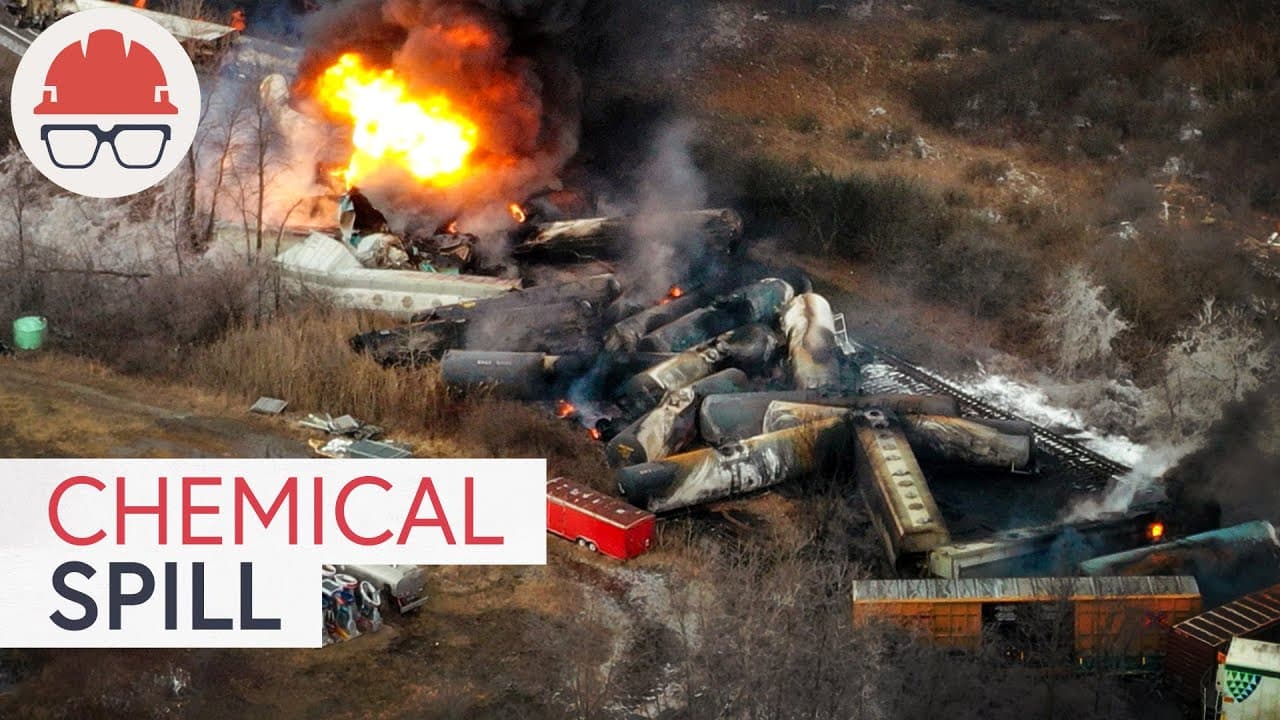
The East Palestine train derailment involved 38 cars of a Norfolk Southern Railway freight train, with five carrying hazardous vinyl chloride. The pressure buildup led to a controlled burn to prevent an explosion, resulting in a fireball and environmental concerns. This incident highlighted rail industry regulations and the need for improved safety measures.
Transcript
On the evening of Friday, February 3, 2023, 38 of 149 cars of a Norfolk Southern Railway freight train derailed in East Palestine, Ohio. Five of the derailed cars were carrying vinyl chloride, a hazardous material that built up pressure in the resulting fires, eventually leading Norfolk Southern to vent and burn it in a bid to prevent an explos... Read More
Key Insights
- The East Palestine train derailment involved 38 out of 149 cars, with five carrying vinyl chloride.
- Vinyl chloride is a hazardous material that built up pressure, necessitating a controlled burn to prevent an explosion.
- Modern trains rely on defect detectors to monitor conditions such as overheating axles and bearings.
- The suspected wheel bearing responsible for the crash registered increasing temperatures before the derailment.
- The derailment led to significant environmental concerns, including chemical pollutants reaching local waterways.
- The controlled burn was a preventive measure to convert hazardous vinyl chloride into less dangerous byproducts.
- The incident raised questions about rail industry safety regulations and federal involvement in chemical spill management.
- The cleanup and environmental monitoring efforts are ongoing, with a focus on air and water quality assessments.
Install to Summarize YouTube Videos and Get Transcripts
Explore YouTube Video Summarizer or Get YouTube Transcript Extractor
Questions & Answers
Q: What caused the East Palestine train derailment?
The East Palestine train derailment was caused by a suspected wheel bearing failure on the 23rd car of the train. The bearing registered increasing temperatures as the train passed defect detectors, but it was too late to stop the train before the derailment occurred. The incident involved 38 cars, including five carrying hazardous vinyl chloride.
Q: Why was a controlled burn conducted during the East Palestine derailment?
A controlled burn was conducted to prevent an explosion due to the pressure buildup in the vinyl chloride tanks. The chemical was undergoing a reaction that increased temperature and pressure, raising concerns of an uncontrolled explosion. The controlled burn was intended to convert the hazardous material into less dangerous byproducts and mitigate the risk to nearby areas.
Q: What are defect detectors and how do they work?
Defect detectors are computerized systems used by railways to monitor passing trains for potential issues such as dragging equipment, overheating axles, and bearings. These systems transmit automated messages to the train crew, alerting them to any detected problems. They are typically spaced every 10 to 20 miles along railway lines to ensure continuous monitoring.
Q: What environmental impacts resulted from the train derailment?
The train derailment led to chemical pollutants being released into the air and local waterways. Hazardous substances reached the Ohio River, resulting in the death of approximately 40,000 small fish and other aquatic life. The contamination of water and soil raised concerns about long-term ecological impacts, prompting extensive cleanup and monitoring efforts by state and federal agencies.
Q: What measures are being taken for cleanup and monitoring after the derailment?
Cleanup efforts include the removal of over 5,000 tons of contaminated soil and the collection of approximately 7 million gallons of contaminated water. State and federal agencies are monitoring air quality and water samples from wells and the city’s fresh water supply. The EPA has ordered Norfolk Southern to conduct all cleanup actions, and the company has pledged to meet or exceed regulatory requirements.
Q: How did the derailment affect rail industry regulations and policies?
The derailment sparked discussions on rail industry regulations and safety practices. The NTSB opened a special investigation into Norfolk Southern's safety culture. The incident prompted congressional testimonials and public statements from various officials, indicating potential changes to safety regulations to prevent similar incidents in the future.
Q: What role does vinyl chloride play in industrial applications?
Vinyl chloride is a key component in the production of PVC (polyvinyl chloride), which is widely used in various applications such as pipes, cables, and packaging materials. It is produced in large quantities and transported via railways due to its bulk nature. Despite its industrial importance, vinyl chloride is a toxic, volatile, and flammable liquid, necessitating careful handling during transportation.
Q: What are the challenges of transporting hazardous materials by rail?
Transporting hazardous materials by rail involves significant challenges, including the potential for accidents and spills. Railways must use defect detectors and other safety measures to monitor train conditions. Tank cars carrying hazardous materials must meet specific safety standards, such as puncture-resistant systems and pressure relief devices. Despite these precautions, incidents like the East Palestine derailment highlight the need for continuous improvements in safety regulations and practices.
Summary & Key Takeaways
-
The East Palestine train derailment involved 38 cars, including five carrying hazardous vinyl chloride. The pressure buildup in these cars led to a controlled burn to prevent an explosion, resulting in a fireball and environmental concerns. The incident highlighted the importance of rail industry regulations and the need for improved safety measures.
-
Defect detectors play a crucial role in monitoring train conditions, such as overheating axles and bearings. In this case, the suspected wheel bearing responsible for the derailment showed increasing temperatures, but the train failed to stop in time. The derailment led to significant environmental concerns, including chemical pollutants reaching local waterways.
-
The controlled burn of vinyl chloride was a preventive measure to convert the hazardous material into less dangerous byproducts. Despite being deemed a success, the incident raised questions about rail industry safety regulations and federal involvement in chemical spill management. Cleanup and environmental monitoring efforts are ongoing, focusing on air and water quality assessments.
Read in Other Languages (beta)
Share This Summary 📚
Summarize YouTube Videos and Get Video Transcripts with 1-Click
Try YouTube Summary with ChatGPT & Claude or YouTube Transcript Generator
Explore More Summaries from Practical Engineering 📚



Summarize YouTube Videos and Get Video Transcripts with 1-Click
Try YouTube Summary with ChatGPT & Claude or YouTube Transcript Generator