How Animals Are Rapidly Evolving Because of Climate Change | WIRED
TL;DR
Animals, such as lizards, squid, and birds, are adapting to climate change through changes in their physical characteristics and behaviors.
Transcript
squids are shrinking birds are migrating lizards are getting blown away by hurricanes the signs are everywhere animals are changing because of climate change but few people expected it to happen so fast we asked biologists Tor Hansen to walk us through three animal adaptation experiments we know that climate change is making hurricanes stronger in ... Read More
Key Insights
- 💱 Animals are adapting to climate change through changes in physical characteristics and behaviors.
- 🍰 Natural selection and evolution can occur over a short period of time in response to climate change.
- 🖐️ Plasticity, the ability to change physical traits in response to environmental conditions, plays a significant role in adaptation.
- 💱 Some species have greater plasticity than others, providing them with an advantage in a changing environment.
Install to Summarize YouTube Videos and Get Transcripts
Explore YouTube Video Summarizer or Get YouTube Transcript Extractor
Questions & Answers
Q: How did the anole lizards in the Turks and Caicos islands adapt to hurricanes?
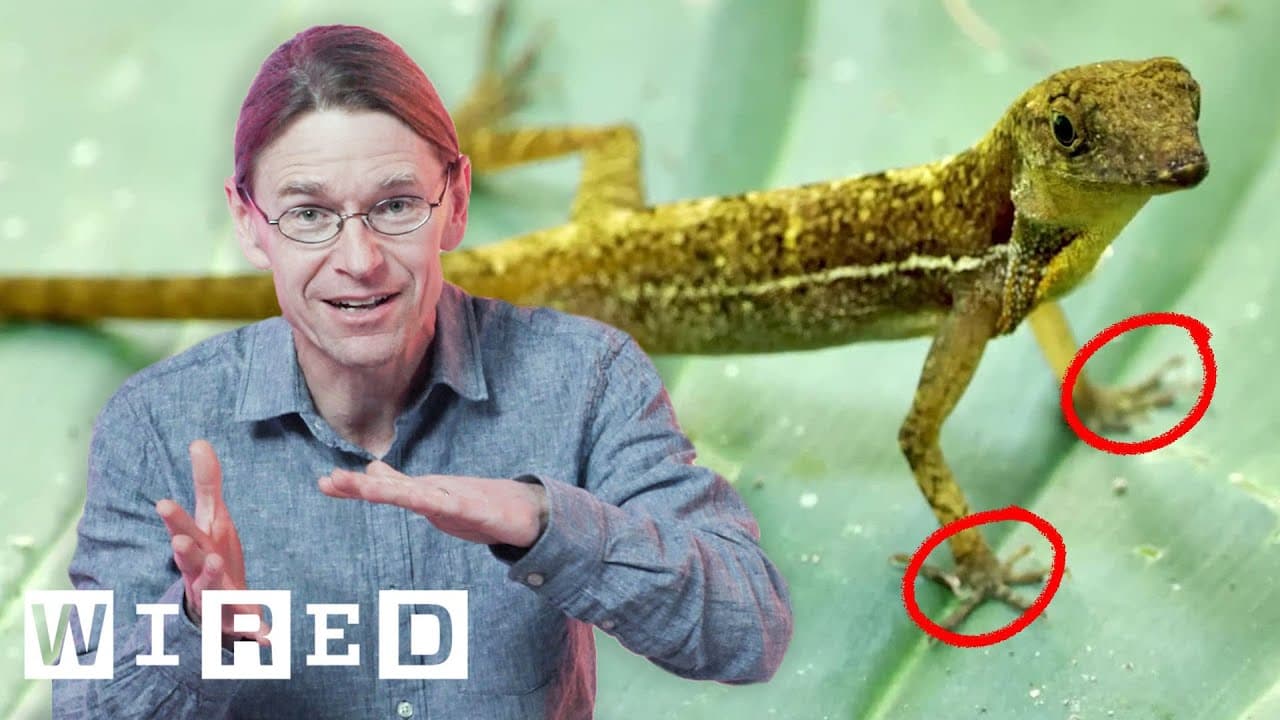
The surviving lizards had larger toe pads and shorter back legs, allowing them to hold on during strong winds caused by hurricanes.
Q: What change did the Humboldt squid undergo in response to higher water temperatures?
The squid reduced their body size by 50% or more, demonstrating plasticity as an adaptation to the stress of warmer waters.
Q: How did the Dove Keys adapt to shrinking icebergs in the Arctic?
The birds found a new food source at the mouth of the Fjord, where the meltwater from glaciers met the cold currents of the Arctic Ocean. They adjusted their feeding patterns to this change.
Q: Are all species capable of adapting to climate change?
Not all species can adapt quickly enough to climate change. Some species, like the Bramble Cay melomys, have already become casualties of climate change.
Summary & Key Takeaways
-
In the Turks and Caicos islands, anole lizards adapted to hurricanes by developing larger toe pads and shorter back legs, allowing them to hold on during strong winds.
-
Humboldt squid in the Gulf of California reduced their body size by 50% or more in response to higher water temperatures caused by climate change.
-
Dove Keys, little seabirds in the Arctic, adjusted their feeding patterns to adapt to shrinking icebergs, finding a new food source at the mouth of the Fjord.
Read in Other Languages (beta)
Share This Summary 📚
Summarize YouTube Videos and Get Video Transcripts with 1-Click
Try YouTube Summary with ChatGPT & Claude or YouTube Transcript Generator
Explore More Summaries from WIRED 📚






Summarize YouTube Videos and Get Video Transcripts with 1-Click
Try YouTube Summary with ChatGPT & Claude or YouTube Transcript Generator