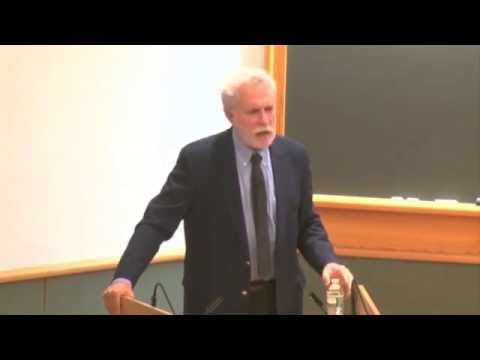
Michael Wigler, Ph.D. - "Fighting Cancer, One Cell at a Time"

TL;DR
Michael Wigler discusses advancing cancer detection through single-cell genome sequencing.
Transcript
my name is Bruce Stillman i'm president of Cold Spring Harbor Laboratory and welcome to the lab so my job is to introduce today's speaker who is Michael Wigler who's been here at the laboratory for a slightly longer than I have which is well over 30 years Mike was not atypical but was one of the first scientists that Jim Watson hired straight out o... Read More
Key Insights
- Michael Wigler's pioneering work in cancer genetics began with isolating the first cancer gene from a human tumor, laying the foundation for decades of cancer research.
- Wigler's research focuses on detecting cancer at its earliest stages using advanced single-cell sequencing technologies to identify cancerous mutations.
- The development of recombinant DNA technology was crucial in Wigler's early career, enabling significant advancements in biotechnology and cancer research.
- Wigler's team has developed methods to sequence DNA from single cells, allowing for detailed analysis of cancer genomes and aiding in early diagnosis and treatment planning.
- Single-cell sequencing can potentially lead to minimally invasive cancer diagnostics, reducing the need for large biopsies and enabling early detection of metastasis.
- The technology holds promise for identifying circulating cancer cells in the bloodstream, even before primary tumors are detectable through traditional methods.
- Wigler emphasizes the importance of historical perspective in understanding scientific progress and the role of technological advances in driving breakthroughs.
- Collaboration and innovation at Cold Spring Harbor Laboratory have been instrumental in advancing cancer research, supported by investments in state-of-the-art sequencing technology.
Install to Summarize YouTube Videos and Get Transcripts
Explore YouTube Video Summarizer or Get YouTube Transcript Extractor
Questions & Answers
Q: What was Michael Wigler's early contribution to biotechnology?
Michael Wigler's early contribution to biotechnology was the development of a crucial technique during his graduate studies at Columbia University. This technique became foundational for the biotechnology industry, leading to the creation of important drugs like recombinant insulin and human growth hormone, and significantly impacting companies such as Genentech and Biogen.
Q: How does single-cell sequencing technology aid in cancer research?
Single-cell sequencing technology aids in cancer research by allowing scientists to analyze the genome of individual cancer cells. This provides detailed insights into the mutations present in cancerous cells, enabling early detection of cancer, understanding of tumor heterogeneity, and the identification of potential therapeutic targets, thereby improving diagnosis and treatment strategies.
Q: What potential applications does single-cell sequencing have in cancer diagnostics?
Single-cell sequencing has potential applications in cancer diagnostics by enabling the detection of cancerous mutations from tiny biopsies, reducing the need for invasive procedures. It can also identify circulating cancer cells in the bloodstream, offering a method for early detection of metastasis and potentially diagnosing cancers before physical symptoms or tumors are detectable.
Q: How did Michael Wigler's work influence the field of cancer genetics?
Michael Wigler's work significantly influenced the field of cancer genetics by isolating the first cancer gene from a human tumor, which set the stage for extensive research into oncogenes and tumor suppressor genes. His contributions have advanced the understanding of cancer at the genetic level, leading to the development of new diagnostic and therapeutic approaches.
Q: What role did technological advancements play in Wigler's research?
Technological advancements played a crucial role in Wigler's research by providing the tools necessary for groundbreaking discoveries. The recombinant DNA technology and genome sequencing advancements enabled detailed analysis of cancer genomes, while the development of single-cell sequencing technology allowed for precise examination of individual cancer cells, facilitating early detection and personalized treatment strategies.
Q: What are the implications of detecting cancer cells in the bloodstream?
Detecting cancer cells in the bloodstream has significant implications, as it could allow for the identification of cancer at a very early stage, even before primary tumors are detectable through traditional methods. This early detection could improve prognosis by enabling timely intervention and treatment, potentially reducing cancer mortality rates and improving patient outcomes.
Q: How does historical perspective contribute to understanding scientific progress?
Historical perspective contributes to understanding scientific progress by providing context for how discoveries are made and how technological advancements build upon previous knowledge. It highlights the iterative nature of scientific research and the importance of past breakthroughs in shaping current and future innovations, as exemplified by Wigler's work in cancer genetics.
Q: What is the significance of collaboration at Cold Spring Harbor Laboratory in advancing cancer research?
Collaboration at Cold Spring Harbor Laboratory is significant in advancing cancer research as it fosters an environment of shared knowledge and resources. The lab's investment in cutting-edge sequencing technology and interdisciplinary collaboration among scientists has been instrumental in driving innovations in cancer detection and treatment, exemplified by the partnership between Michael Wigler and Jim Hicks.
Summary & Key Takeaways
-
Michael Wigler's research at Cold Spring Harbor Laboratory focuses on cancer genetics and the development of technologies for early cancer detection. His pioneering work includes isolating the first cancer gene from a human tumor and advancing single-cell sequencing methods.
-
Single-cell sequencing technology allows for detailed analysis of cancer genomes, providing insights into mutations and aiding in early diagnosis and treatment planning. This approach has the potential to revolutionize cancer diagnostics by detecting cancer cells in the bloodstream.
-
Wigler's work emphasizes the importance of technological advancements in biotechnology and genomics, highlighting the role of recombinant DNA technology and genome sequencing in enabling breakthroughs in cancer research and treatment strategies.
Read in Other Languages (beta)
Share This Summary 📚
Summarize YouTube Videos and Get Video Transcripts with 1-Click
Try YouTube Summary with ChatGPT & Claude or YouTube Transcript Generator
Explore More Summaries from Cold Spring Harbor Laboratory 📚
Summarize YouTube Videos and Get Video Transcripts with 1-Click
Try YouTube Summary with ChatGPT & Claude or YouTube Transcript Generator