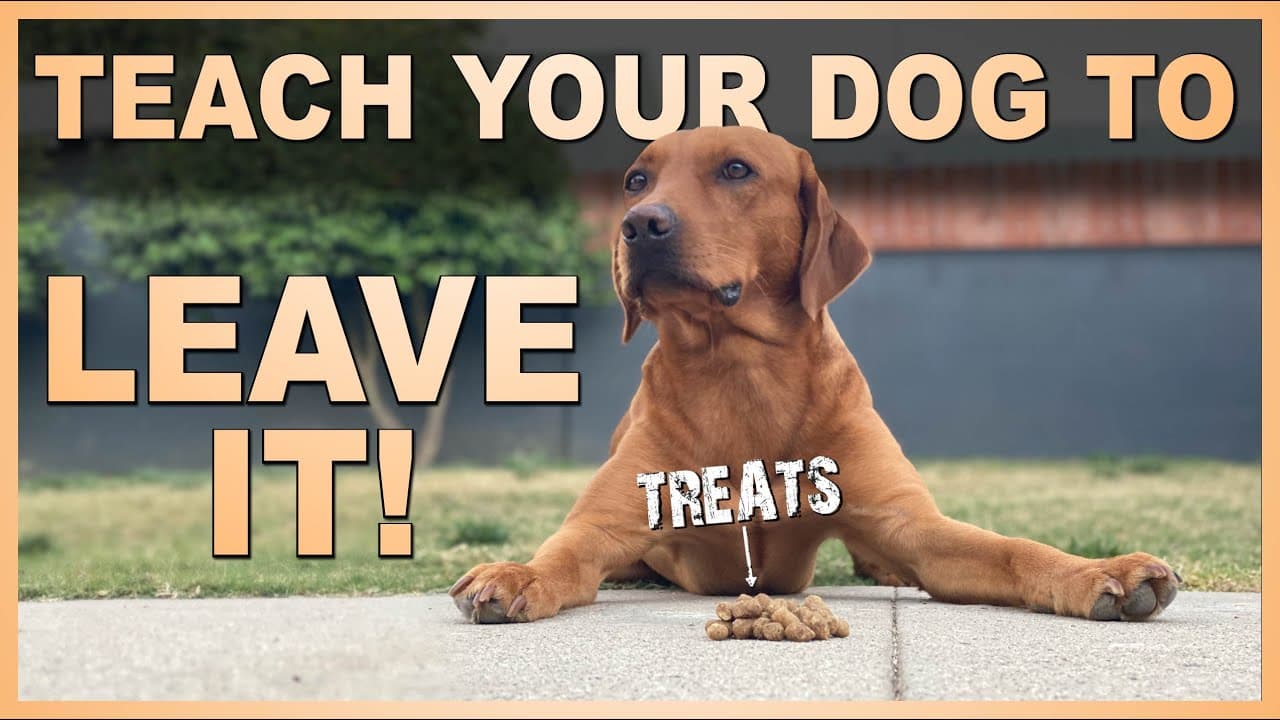
How to Teach Your Dog the Leave it Command.
TL;DR
Learn how to teach your dog the 'leave it' command effectively.
Transcript
hey everybody Nate shomer here and today we're gonna be teaching our dogs believe it come in now I have Charlie here I never taught him to leave it command because I don't teach leave it to my dogs I simply use the condition correction which would be know if they're going to do something that I don't like however if you want to teach your dog a lea... Read More
Key Insights
- Using a back tie can prevent human error during dog training, ensuring the dog doesn't reach the reward prematurely.
- The 'leave it' command helps dogs learn not to pick up items they are about to grab, enhancing obedience.
- A predictable pattern, such as saying 'leave it' before tossing a treat, helps dogs understand the command better.
- Marking correct behavior with a positive cue like 'yes' reinforces the desired action and encourages repetition.
- Covering the treat with a hand or foot is another effective technique to prevent dogs from reaching the reward.
- Transitioning from structured training to real-life scenarios helps dogs apply the 'leave it' command more naturally.
- Leash pressure should be applied after the 'leave it' command to reinforce the behavior without confusion.
- Rewarding dogs by hand after they obey the command prevents them from constantly sniffing the ground for treats.
Install to Summarize YouTube Videos and Get Transcripts
Explore YouTube Video Summarizer or Get YouTube Transcript Extractor
Questions & Answers
Q: What is the primary purpose of the 'leave it' command?
The primary purpose of the 'leave it' command is to teach dogs not to pick up items they are about to grab. This command enhances obedience and safety by preventing dogs from ingesting harmful objects or engaging in undesirable behaviors. It is a fundamental part of dog training that promotes better control and communication.
Q: How does the back tie technique help in dog training?
The back tie technique helps in dog training by preventing human error during the exercise. It ensures that even if the trainer makes a mistake, the dog cannot reach the reward prematurely. This method provides a safety net, allowing the trainer to focus on teaching the command without worrying about the dog breaking the rule unexpectedly.
Q: Why is it important to use a predictable pattern in training?
Using a predictable pattern in training is crucial because it helps dogs learn and understand commands more effectively. By consistently saying 'leave it' before tossing a treat, dogs can anticipate the expected behavior and respond appropriately. Predictability reinforces learning, making it easier for dogs to grasp the command and repeat the desired action.
Q: What role does positive reinforcement play in this training?
Positive reinforcement plays a significant role in this training by encouraging the dog to repeat the desired behavior. When a dog successfully obeys the 'leave it' command, marking the behavior with a positive cue like 'yes' and providing a reward reinforces the action. This approach builds a positive association with the command, motivating the dog to comply consistently.
Q: What are some alternative methods to prevent dogs from reaching the reward?
Some alternative methods to prevent dogs from reaching the reward include covering the treat with a hand or foot. These techniques physically block the dog from accessing the reward, reinforcing the 'leave it' command. They are useful for trainers who want to ensure the dog doesn't accidentally grab the treat during the learning process.
Q: How can trainers transition from structured training to real-life scenarios?
Trainers can transition from structured training to real-life scenarios by setting up situations that mimic everyday environments. For example, placing a treat outside without the dog's knowledge and practicing the 'leave it' command during a casual walk helps the dog apply the learned behavior naturally. This approach helps the dog understand that the command is applicable in various contexts.
Q: Why is it important to apply leash pressure correctly?
Applying leash pressure correctly is important to avoid confusing the dog during training. The pressure should be applied after the 'leave it' command to reinforce the behavior without causing misunderstandings. If done incorrectly, the dog might associate the pressure with the wrong action, hindering the learning process and reducing the effectiveness of the command.
Q: What is the benefit of rewarding dogs by hand instead of letting them find treats on the ground?
Rewarding dogs by hand instead of letting them find treats on the ground prevents them from developing a habit of constantly sniffing for rewards. This approach helps maintain focus during training and reinforces the idea that rewards come from the trainer. It encourages the dog to look to the trainer for guidance and positive reinforcement, enhancing the overall training experience.
Summary & Key Takeaways
-
The video teaches viewers how to effectively train their dogs to follow the 'leave it' command using a back tie and positive reinforcement. The technique involves saying the command before tossing a treat and rewarding the dog when they obey.
-
Alternative methods, such as covering the treat with a hand or foot, are also discussed. These methods prevent dogs from reaching the reward, reinforcing the command. The video emphasizes the importance of consistent practice and transitioning to real-life scenarios.
-
The trainer highlights the importance of using leash pressure correctly and rewarding dogs by hand to prevent them from constantly searching for treats. Overall, the video provides a comprehensive guide to teaching the 'leave it' command.
Read in Other Languages (beta)
Share This Summary 📚
Summarize YouTube Videos and Get Video Transcripts with 1-Click
Try YouTube Summary with ChatGPT & Claude or YouTube Transcript Generator
Explore More Summaries from Nate Schoemer 📚

Summarize YouTube Videos and Get Video Transcripts with 1-Click
Try YouTube Summary with ChatGPT & Claude or YouTube Transcript Generator