Introduction to Electrochemistry
TL;DR
Electrochemistry explores the relationship between chemical reactions and electricity through oxidation-reduction reactions.
Transcript
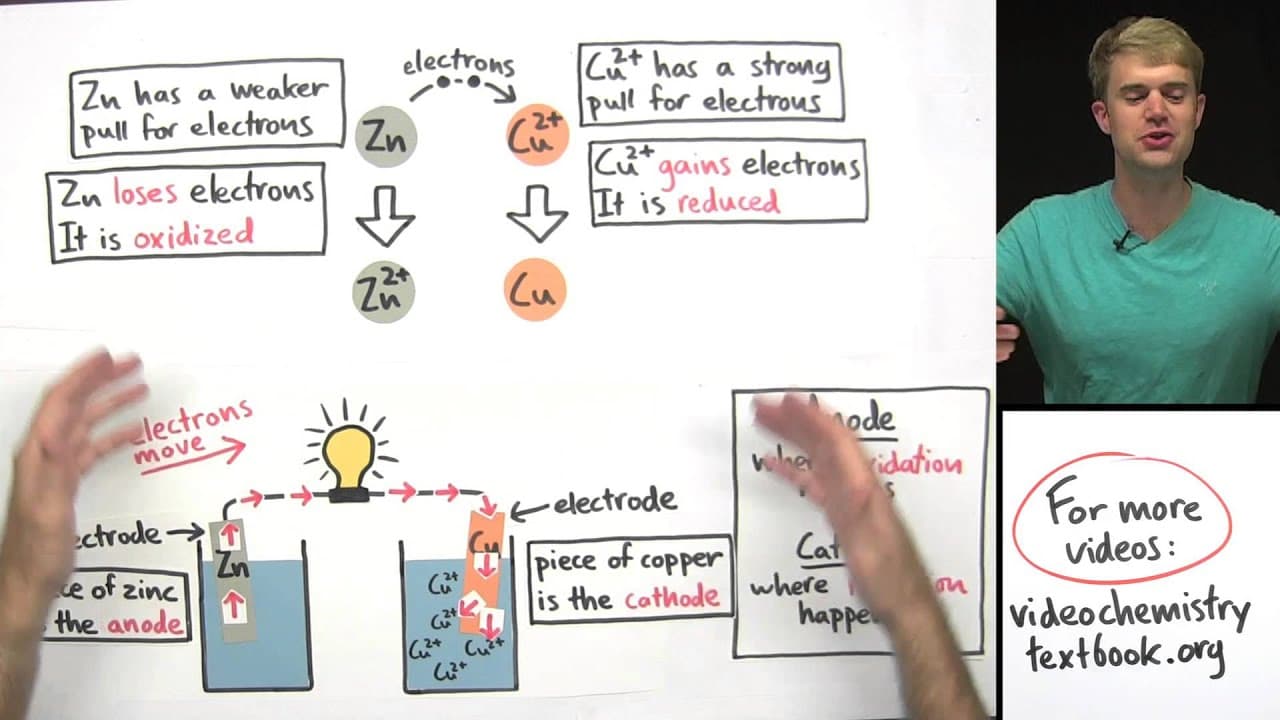
this video is an introduction to electrochemistry so what's electrochemistry well you might have guessed it has something to do with electricity and chemistry and that's exactly right specifically electrochemistry is about the relationship between chemical reactions and electricity when we're studying electrochemistry they're basically two main way... Read More
Key Insights
- ❓ Electrochemistry studies the interplay between electricity and chemical reactions, enabling technological advancements.
- ❓ Galvanic cells convert chemical energy into electrical energy through spontaneous redox reactions.
- 🪛 Electrolytic cells utilize electricity to drive non-spontaneous redox reactions for useful applications.
- ❓ Understanding anodes and cathodes is crucial in distinguishing where oxidation and reduction occur in electrochemical cells.
- 💹 The standard reduction potentials chart aids in predicting electron movement and reaction feasibility in electrochemistry.
- 📪 Mnemonics like "an ox red cat" can help recall which process occurs at the anode and cathode in electrochemical cells.
- ❓ Both galvanic and electrolytic cells showcase how electrochemistry harnesses redox reactions for practical purposes.
Install to Summarize YouTube Videos and Get Transcripts
Explore YouTube Video Summarizer or Get YouTube Transcript Extractor
Questions & Answers
Q: What is electrochemistry and why is it significant?
Electrochemistry is the study of the relationship between chemical reactions and electricity, essential for understanding energy transformations and industrial processes.
Q: How do chemical reactions create electricity in galvanic cells?
Galvanic cells use a spontaneous reaction, like zinc reacting with copper, to generate electricity as electrons flow from the anode (oxidation site) to the cathode (reduction site).
Q: How does electrolysis leverage electricity for non-spontaneous reactions?
Electrolysis in an electrolytic cell uses electrical energy to force a reaction, like splitting water into hydrogen and oxygen, by pulling and pushing electrons between electrodes.
Q: Can standard reduction potentials help predict reactions in electrochemistry?
Yes, comparing reduction potentials informs which element or compound has a stronger pull for electrons, guiding reactions like those in galvanic and electrolytic cells.
Summary & Key Takeaways
-
Electrochemistry studies how chemical reactions and electricity interact by either creating or facilitating reactions.
-
Electricity can cause certain chemical reactions to occur, and vice versa, leading to useful applications.
-
Galvanic cells create electricity from chemical reactions, while electrolytic cells use electricity to trigger reactions.
Read in Other Languages (beta)
Share This Summary 📚
Summarize YouTube Videos and Get Video Transcripts with 1-Click
Try YouTube Summary with ChatGPT & Claude or YouTube Transcript Generator
Explore More Summaries from Tyler DeWitt 📚



Summarize YouTube Videos and Get Video Transcripts with 1-Click
Try YouTube Summary with ChatGPT & Claude or YouTube Transcript Generator