Q&A 69: Can We Detect Random Particles With The LHC? And More With Dr. Pamela Gay
TL;DR
Discussing dark matter, space junk disposal, gravitational waves, dwarf planets, and the theory of everything in astronomy.
Transcript
hey everyone welcome to this week's question show I know I'm in a strange location with someone beside me what's going on so this is dr. Pamela Gay my co-host on astronomy cast and this week we're in front of a live audience as part of our 500th episode of astronomy cast celebration we're here in Edwardsville Illinois and we're doing all kinds of s... Read More
Key Insights
- 🖤 LHC's limitations in Dark Matter detection due to lack of interaction with electromagnetic spectrum.
- 💥 Various experiments like IceCube for particle detection and LHC for collision-generated particles.
- 👾 Challenges in space junk disposal due to costs and prioritization against scientific missions.
- 🪐 Complexity in defining planets and dwarf planets based on geophysical characteristics.
- ❓ Umbrella concept of the theory of everything unifying fundamental forces in the universe.
- ℹ️ Importance of using reliable sources and experts to ensure accurate information.
- 🪐 Impact of emotional reactions in scientific debates like Pluto's planet classification.
Install to Summarize YouTube Videos and Get Transcripts
Explore YouTube Video Summarizer or Get YouTube Transcript Extractor
Questions & Answers
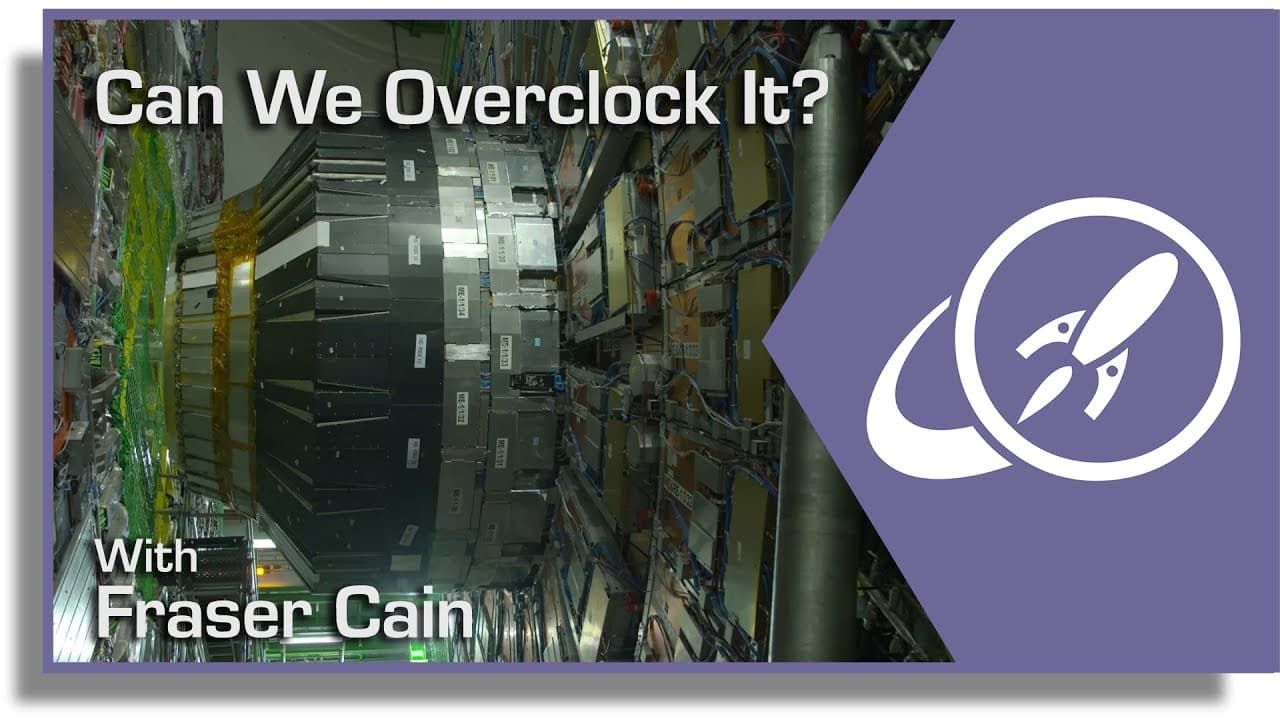
Q: Can the LHC catch Dark Matter particles by running at full speed?
Dark Matter particles don't interact with electromagnetic spectrum, making it unlikely for LHC to catch them even at full power.
Q: Are WIMPs the only viable contender for Dark Matter?
While WIMPs are a leading contender, other theories like modified gravity and massive particles are under consideration for Dark Matter.
Q: How do gravitational waves reach Earth before gamma-ray bursts?
Gravitational waves travel at the speed of light, but visible radiation is generated after the shockwave, causing a delay in arrival.
Q: Why do planets in images appear black and white?
Images are taken in different filters for higher resolution and later combined to create full-color images, prioritizing science over aesthetics.
Q: How would the Solar System change if Jupiter ignited as a second sun?
A binary star system with Jupiter as a second sun would have dramatic effects, changing orbits and planetary dynamics fundamentally.
Q: Can a vessel be created to kick space junk back to Earth?
Efforts exist to clean up space junk, but challenges like costs and competing priorities hinder progress in launching debris removal missions.
Q: Will the theory of everything explain everything in the universe?
The theory aims to unify various forces, but chaos theory and uncertainties ensure that not every outcome can be predicted, leaving room for unknowns.
Q: Why do people ask questions easily googled?
Trusted sources and verification of information online are crucial, leading people to seek answers from reliable sources like experts in the field.
Summary & Key Takeaways
-
Discussion on running Large Hadron Collider at full speed for Dark Matter detection.
-
Explanation on various experiments to detect particles, including IceCube and LHC.
-
Insights on black and white planet images, gravity theory, and Pluto's classification debate.
Read in Other Languages (beta)
Share This Summary 📚
Summarize YouTube Videos and Get Video Transcripts with 1-Click
Try YouTube Summary with ChatGPT & Claude or YouTube Transcript Generator
Explore More Summaries from Fraser Cain 📚




Summarize YouTube Videos and Get Video Transcripts with 1-Click
Try YouTube Summary with ChatGPT & Claude or YouTube Transcript Generator