NEW Tax Bill Targets Landlords: Big Problem for Investors?
TL;DR
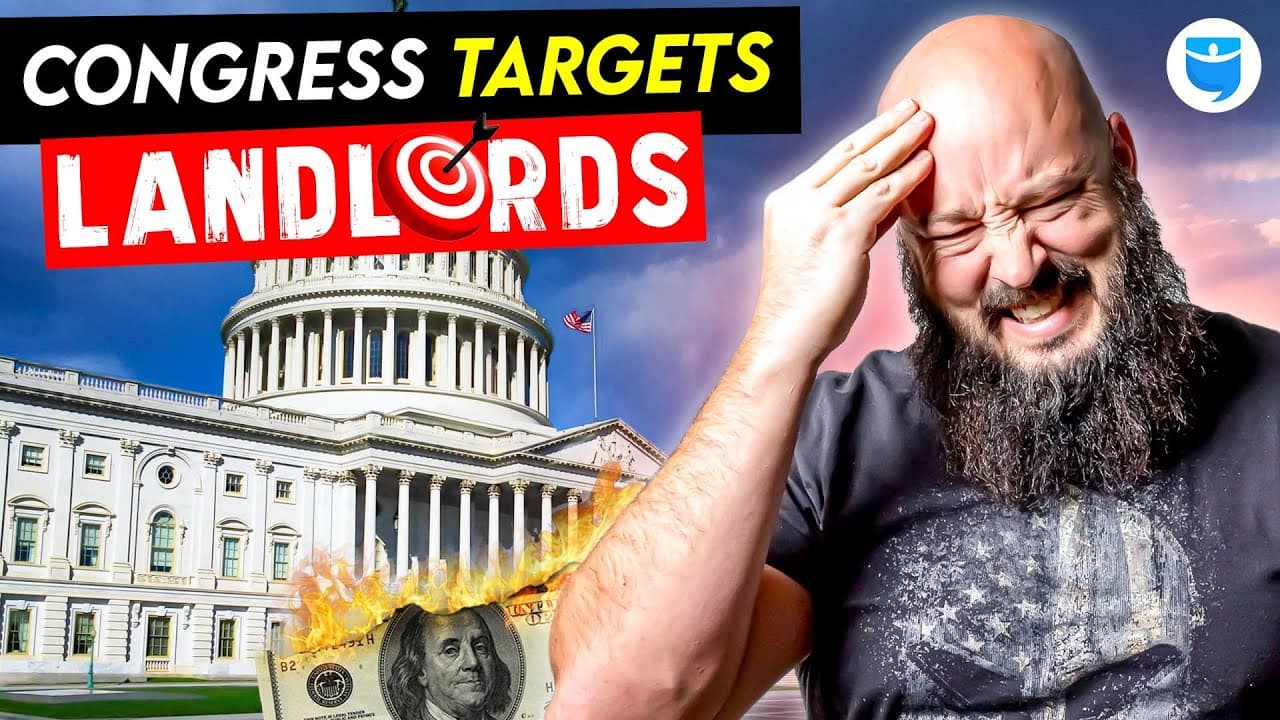
Proposed bill could heavily tax real estate investors, impacting small landlords.
Transcript
extra extra Read All About It Real Estate invest is targeted by Congress you're not going to want to miss today's episode of mortgage Mondays we got all the hot Deeds for you right here right off the presses what's going on everyone this is David Green your host of the Bigger Pockets real estate podcast and mortgage Mondays here today with my busin... Read More
Key Insights
- The proposed Affordable Housing and Homeownership Protection Act aims to make housing more affordable by taxing investors with more than 15 properties.
- The bill proposes a tax of 1% for 16-25 properties, 3% for 26-100 properties, and 5% for over 100 properties, which could deter investors from buying low-value homes.
- There is concern that this bill targets small landlords rather than large hedge funds, which own a significant portion of rental properties.
- The legislation could lead to unintended consequences, such as investors focusing on higher-value properties, leaving low-income areas underserved.
- The bill could inadvertently cause a shift towards fractionalized property ownership, where multiple investors co-own properties to avoid higher taxes.
- Real estate builders face significant regulatory costs, which contribute to high housing prices; reducing these could be a more effective solution than taxing investors.
- The current market dynamics, with high interest rates and limited supply, complicate the effectiveness of the proposed bill in achieving its goals.
- The bill may increase the cost of obtaining a mortgage for investors with more than 15 properties, impacting their ability to finance new purchases.
Install to Summarize YouTube Videos and Get Transcripts
Explore YouTube Video Summarizer or Get YouTube Transcript Extractor
Questions & Answers
Q: What is the main goal of the Affordable Housing and Homeownership Protection Act?
The main goal of the Affordable Housing and Homeownership Protection Act is to make housing more affordable for first-time buyers by imposing taxes on real estate investors with more than 15 properties. The idea is to disincentivize investors from buying up all the housing, thereby increasing inventory and reducing housing prices.
Q: How does the proposed bill affect real estate investors?
The proposed bill affects real estate investors by imposing additional taxes on those who own more than 15 properties. The tax rates are 1% for 16-25 properties, 3% for 26-100 properties, and 5% for over 100 properties. This could deter investors from purchasing low-value homes and lead them to focus on higher-value properties instead.
Q: What are some potential unintended consequences of the bill?
Some potential unintended consequences of the bill include investors avoiding low-income areas, leading to a lack of investment and improvement in these neighborhoods. Additionally, it could result in more investors seeking fractionalized property ownership to avoid higher taxes, and it may increase housing inequalities as resources are directed towards higher-value properties.
Q: Why might the bill not effectively address housing affordability?
The bill might not effectively address housing affordability because it targets small landlords rather than large hedge funds, which own a significant portion of rental properties. Additionally, the high regulatory costs faced by builders contribute significantly to housing prices, and addressing these costs could be a more effective solution than taxing investors.
Q: How could the bill impact mortgage costs for investors?
The bill could impact mortgage costs for investors by adding a new tax line item to their closing costs. For investors with more than 15 properties, this additional tax could increase their cash-to-close requirements, making it more difficult to finance new property purchases and potentially reducing their ability to invest in the market.
Q: What is the current market context affecting the bill's potential impact?
The current market context includes high interest rates and a limited housing supply, which complicate the effectiveness of the proposed bill. Despite higher rates, housing prices have not significantly decreased, and there is still significant competition for properties. This environment may limit the bill's ability to achieve its goals of increasing affordability and inventory.
Q: Could the bill lead to changes in property ownership structures?
Yes, the bill could lead to changes in property ownership structures by encouraging fractionalized ownership, where multiple investors co-own properties to avoid higher taxes. This shift could result in a more complex real estate market, with new lending products potentially needed to accommodate group ownership arrangements.
Q: What alternative solutions could address housing affordability more effectively?
Alternative solutions that could address housing affordability more effectively include reducing regulatory costs for builders, which currently account for a significant portion of home prices. By incentivizing home construction and making it easier for builders to develop properties, the supply of housing could increase, potentially leading to lower prices and improved affordability.
Summary & Key Takeaways
-
The Affordable Housing and Homeownership Protection Act proposes taxing real estate investors with more than 15 properties to make housing more affordable for first-time buyers. This could lead to investors avoiding low-value properties, impacting low-income areas.
-
The bill targets small landlords rather than large hedge funds, which own a significant portion of rental properties. It may result in investors focusing on higher-value properties, leaving low-income areas underserved and potentially increasing housing inequalities.
-
Reducing regulatory costs for builders could be a more effective solution to housing affordability than taxing investors. The bill's impact on mortgage costs for investors with more than 15 properties could further complicate the real estate market.
Read in Other Languages (beta)
Share This Summary 📚
Summarize YouTube Videos and Get Video Transcripts with 1-Click
Try YouTube Summary with ChatGPT & Claude or YouTube Transcript Generator
Explore More Summaries from BiggerPockets 📚




Summarize YouTube Videos and Get Video Transcripts with 1-Click
Try YouTube Summary with ChatGPT & Claude or YouTube Transcript Generator