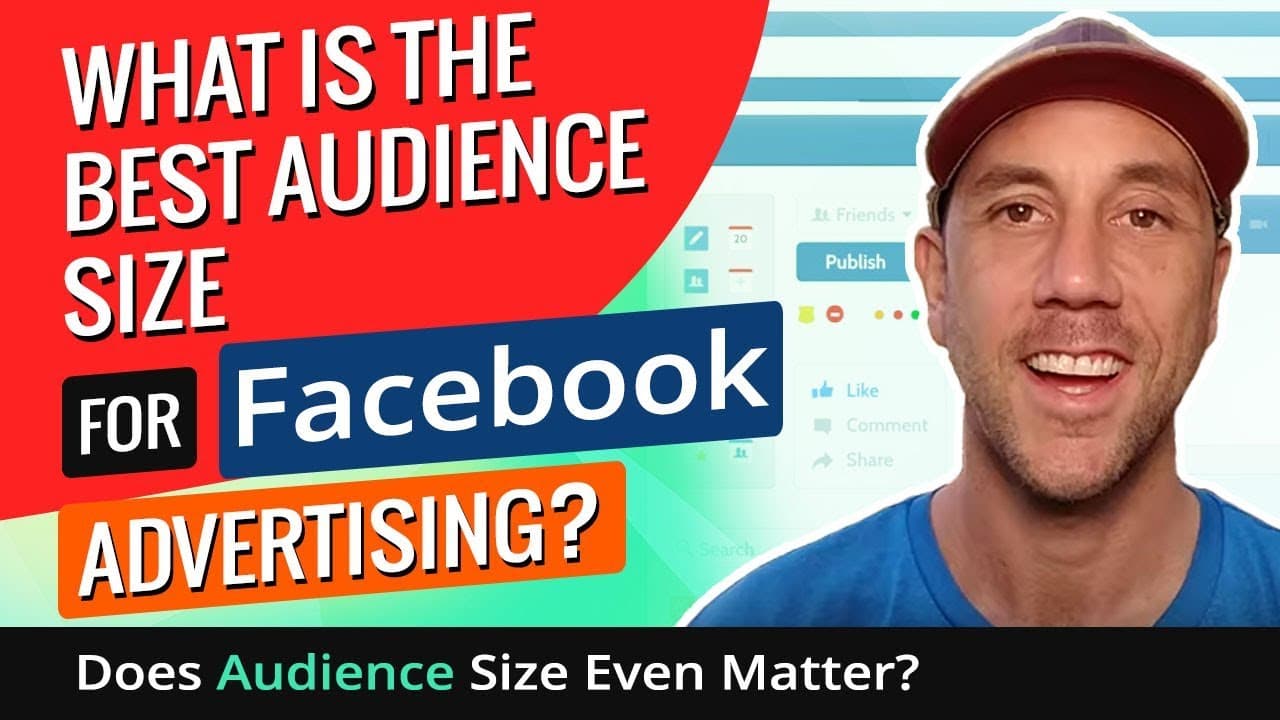
What Is The Best Audience Size For Facebook Advertising? Does Audience Size Even Matter?
TL;DR
Focus on audience relevance over size for Facebook ads.
Transcript
hey miles here miles Becker calm and this video is about Facebook advertising specifically we're gonna talk about audience size now since my last video and in comments I've received kind of over the months for sure one of the big questions is miles what's the best audience size or what audience size are you targeting so I want to answer that and I ... Read More
Key Insights
- Audience size in Facebook advertising is less important than the relevance of the audience to the offer being presented. Relevance ensures better engagement and conversion rates.
- Miles emphasizes using conversion campaigns with one interest per ad set, integrating multiple ad sets into a single campaign to target varied interests.
- The cost per lead is a critical metric, with a personal KPI range of 60 to 80 cents per lead. Audience size does not significantly impact this metric.
- Audience size mainly influences the potential daily ad budget, with a rule of thumb being one dollar per 1,000 people in the audience.
- Relevance of the audience is paramount, focusing on their needs, goals, and challenges as they relate to the offer. This ensures long-term profitability.
- Ad performance can fluctuate based on external factors, and it's crucial to monitor and adjust ad sets that deviate from desired cost per lead metrics.
- Scaling ad budgets should be incremental and based on proven performance, ensuring leads and customers remain within KPIs.
- The ultimate goal is to convert cold traffic into leads and customers at breakeven or better, with profits made on upsells and higher ticket products to existing customers.
Install to Summarize YouTube Videos and Get Transcripts
Explore YouTube Video Summarizer or Get YouTube Transcript Extractor
Questions & Answers
Q: What is the main focus in Facebook advertising according to Miles?
The main focus in Facebook advertising, as per Miles, is the relevance of the audience to the offer being presented. This relevance ensures that the audience is interested in the advertisement, which leads to better engagement and conversion rates. Audience size is secondary to ensuring that the audience's needs, goals, and challenges align with what is being offered.
Q: How does audience size affect the ad budget in Facebook advertising?
Audience size primarily affects the potential daily ad budget in Facebook advertising. Miles follows a rule of thumb where he spends one dollar per 1,000 people in the audience. This means that a larger audience allows for a higher daily budget, but the budget should only be increased incrementally and based on proven performance to ensure leads and customers remain within KPIs.
Q: Why does Miles not prioritize audience size in his Facebook ad strategy?
Miles does not prioritize audience size because he believes that the relevance of the audience to the offer is far more important. A highly targeted and relevant audience is more likely to engage with the ad and convert, regardless of its size. This approach ensures long-term profitability by focusing on the needs and interests of the audience rather than just the number of people.
Q: What is Miles' approach to scaling ad budgets in Facebook advertising?
Miles' approach to scaling ad budgets in Facebook advertising involves incremental increases based on proven performance. He monitors the cost per lead and customer acquisition to ensure that they remain within KPIs. If the ad set is delivering leads and customers at breakeven or better, he gradually increases the budget, pausing after each increase to monitor the ad set's performance.
Q: How does Miles determine the viability of an ad set in Facebook advertising?
Miles determines the viability of an ad set by monitoring its cost per lead and customer acquisition. If these metrics are within his historical KPI range, which is about 60 to 80 cents per lead, he considers the ad set viable. He also evaluates whether the ad set is generating customers within his new customer KPI, ensuring that the ad spend is financially viable in the long term.
Q: What is Miles' ultimate goal in Facebook advertising?
Miles' ultimate goal in Facebook advertising is to convert cold traffic into leads and customers at breakeven or better. He aims to achieve this by targeting hyper-relevant audiences and focusing on the relevance of the offer to the audience's needs and challenges. Profits are then made through upsells and higher ticket products to existing customers, leveraging the long-term value of each customer.
Q: Why does Miles not worry about the fluctuations in ad performance?
Miles does not worry about fluctuations in ad performance because he understands that external factors can impact ad effectiveness. Instead of focusing on these fluctuations, he prioritizes monitoring the cost per lead and customer acquisition. If an ad set becomes financially unviable, he turns it off and reallocates the budget to better-performing ad sets, ensuring that his overall strategy remains profitable.
Q: How does Miles view the advice of Facebook advertising experts on audience size?
Miles is skeptical of Facebook advertising experts who provide definitive rules about audience sizes, such as needing a minimum of 250,000 people. He believes that there are enough scenarios and ways to run ads on Facebook that exceptions to these rules exist. His experience shows that a focus on audience relevance over size leads to better advertising outcomes, regardless of the audience's size.
Summary & Key Takeaways
-
Audience size is not the primary focus in Facebook advertising; relevance to the offer is more important. This ensures better engagement and conversion rates, regardless of audience size.
-
Miles uses conversion campaigns with one interest per ad set, integrating multiple ad sets into a single campaign. The cost per lead is a key metric, with a target range of 60 to 80 cents.
-
Audience size influences the daily ad budget, with a rule of one dollar per 1,000 people. The focus is on converting cold traffic into leads and customers at breakeven or better.
Read in Other Languages (beta)
Share This Summary 📚
Summarize YouTube Videos and Get Video Transcripts with 1-Click
Try YouTube Summary with ChatGPT & Claude or YouTube Transcript Generator
Explore More Summaries from Miles Beckler 📚





Summarize YouTube Videos and Get Video Transcripts with 1-Click
Try YouTube Summary with ChatGPT & Claude or YouTube Transcript Generator