Intro to DIY Raman Spectroscopy
TL;DR
Demonstrates setting up Raman spectroscopy at home using a DIY setup to collect data and analyze molecular structures.
Transcript
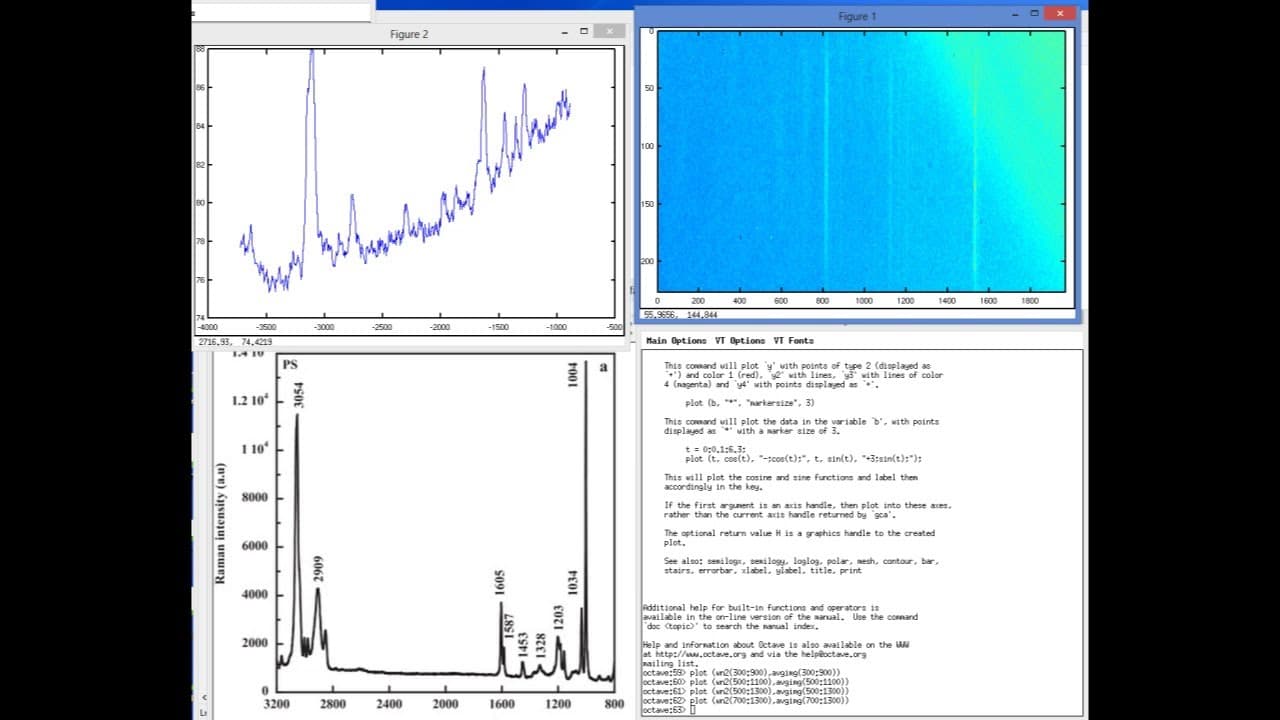
hey everyone I've been trying to get my Raman spectroscopy setup to work for months and finally tonight I was able to collect some real data so let me tell you about it first off what is Raman spectroscopy this is a technique where you shine a light onto an object and then determine things about the molecular structure of that object by the way tha... Read More
Key Insights
- 🙂 Raman spectroscopy uses color shifts in reflected light to analyze molecular structures effortlessly without object destruction.
- 💿 DIY Raman spectroscopy setup includes essential components like a laser source, optics, diffraction grating, and a modified camera.
- 🙂 Notch filters are crucial to isolate Raman signals from laser light for accurate data collection and analysis.
- 🔨 Calibration tools like octave software help validate collected data and match molecular signatures accurately.
- 👋 Wave number standardization simplifies result comparison in Raman spectroscopy across different laser sources.
- 👪 DIY projects, like building a Raman spectroscopy setup at home, offer unique opportunities for scientific exploration and experimentation.
- ❓ Understanding Raman spectroscopy principles and setup components is essential for successful data collection and analysis.
Install to Summarize YouTube Videos and Get Transcripts
Explore YouTube Video Summarizer or Get YouTube Transcript Extractor
Questions & Answers
Q: What is Raman spectroscopy and how does it work?
Raman spectroscopy is a technique that analyzes molecular structures by observing color shifts in reflected light, providing insights into molecular bonds and structures via unique color shifts.
Q: What components are essential for a DIY Raman spectroscopy setup?
A DIY Raman spectroscopy setup requires a laser source, optics, diffraction grating, camera with infrared filter removal, slit, notch filter, and calibration tools for accurate data collection.
Q: How is the Raman signal isolated from the laser light in the setup?
A notch filter is used to block the laser light, allowing only the color-shifted Raman signal to pass through for observation and analysis of molecular structures.
Q: What is the significance of wave number in Raman spectroscopy?
Wave number in Raman spectroscopy is a standardized format for comparing results across different laser sources without the need for converting wavelengths, enabling consistent data comparison.
Summary & Key Takeaways
-
Raman spectroscopy is a technique that analyzes molecular structures by observing color shifts in reflected light.
-
DIY set-up includes a helium-neon laser, optics, diffraction grating, and a camera modified for infrared filter removal.
-
Calibration and data analysis using octave software validated successful collection of a polystyrene molecular signature.
Read in Other Languages (beta)
Share This Summary 📚
Summarize YouTube Videos and Get Video Transcripts with 1-Click
Try YouTube Summary with ChatGPT & Claude or YouTube Transcript Generator
Explore More Summaries from Applied Science 📚
Summarize YouTube Videos and Get Video Transcripts with 1-Click
Try YouTube Summary with ChatGPT & Claude or YouTube Transcript Generator