How Immune Cells Influence Cancer Spread
TL;DR
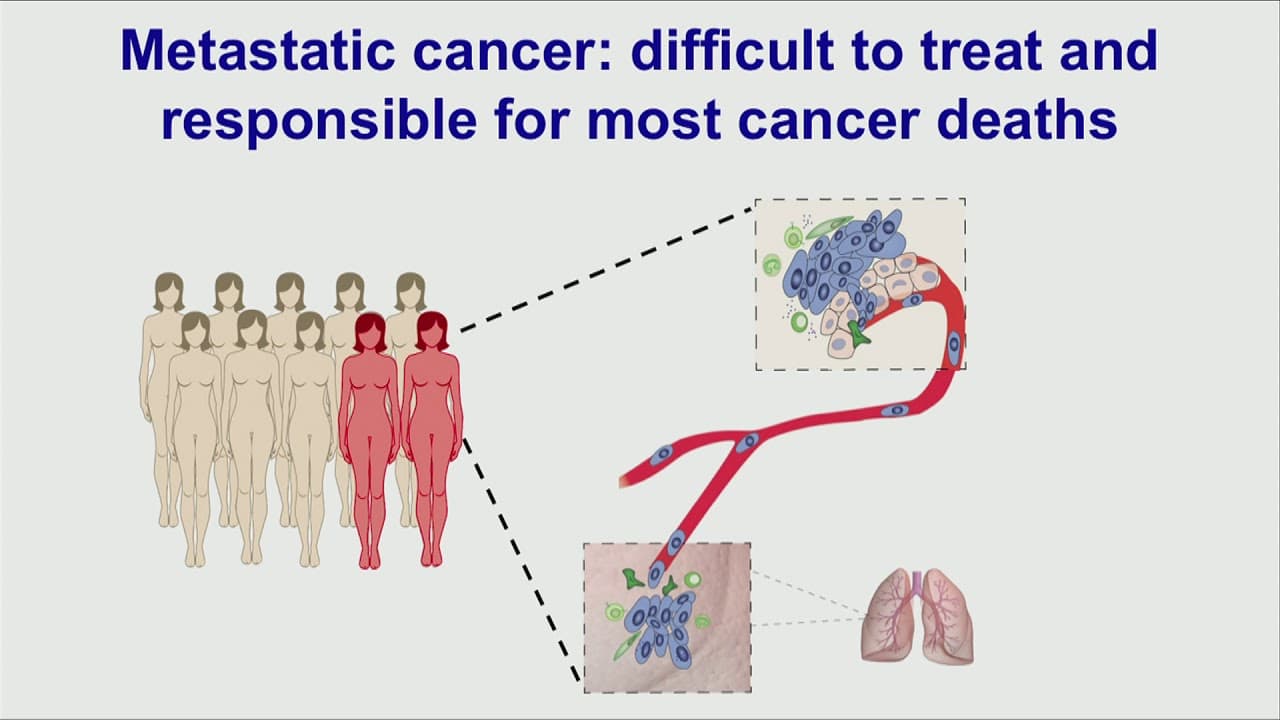
Immune cells can either aid or inhibit cancer spread. Neutrophils, a type of immune cell, can be manipulated by cancer cells to facilitate metastasis. Research is exploring ways to prevent this by targeting neutrophil extracellular traps (NETs) to improve cancer treatment outcomes.
Transcript
- Today's symposium is called Metastasis & Immunity, How Immune Cells can Help Cancer Spread or Stop It in Its Tracks. And, before we get to the program, I just wanted to mention that this is a public lecture that's been going on for 15 years now, and it's a partnership with Cold Spring Harbor and St John the Nursing Center with support from Northw... Read More
Key Insights
- Neutrophils can help cancer spread by forming extracellular traps that cancer cells exploit.
- Targeting neutrophil extracellular traps (NETs) may prevent cancer metastasis.
- Chemotherapy can sometimes worsen cancer by affecting immune cells negatively.
- Combining chemotherapy with immunotherapy shows promise in treating aggressive cancers.
- Macrophages can enable cancer metastasis by assisting tumor cells in invading blood vessels.
- Lymphocytes in tumors often indicate a better prognosis due to their cancer-fighting abilities.
- Clinical trials are exploring combinations of treatments to enhance immune response against cancer.
- Understanding the tumor microenvironment is crucial for developing effective cancer therapies.
Install to Summarize YouTube Videos and Get Transcripts
Explore YouTube Video Summarizer or Get YouTube Transcript Extractor
Questions & Answers
Q: How do neutrophils influence cancer spread?
Neutrophils can influence cancer spread by forming structures known as neutrophil extracellular traps (NETs). These NETs can be manipulated by cancer cells to facilitate their spread to other parts of the body, aiding metastasis. Targeting these NETs is a potential strategy to prevent cancer from spreading.
Q: What is the role of macrophages in cancer?
Macrophages in the tumor microenvironment can assist in cancer metastasis by promoting the invasion of cancer cells into blood vessels. They form part of a complex known as the TMEM complex, which facilitates the entry of cancer cells into the bloodstream, thus aiding in their spread to distant organs.
Q: Why are lymphocytes important in cancer prognosis?
Lymphocytes are important in cancer prognosis because their presence in tumors often indicates an active immune response against cancer cells. Tumors with high levels of lymphocytes, particularly CD8 or killer T-cells, are associated with better outcomes as these cells can effectively kill cancer cells.
Q: How does chemotherapy impact the immune system in cancer treatment?
Chemotherapy can impact the immune system by affecting immune cells, sometimes negatively. While it is effective in killing cancer cells, chemotherapy can also harm beneficial immune cells, potentially leading to unintended consequences like aiding cancer spread. Research is ongoing to understand and mitigate these effects.
Q: What are the potential benefits of combining chemotherapy with immunotherapy?
Combining chemotherapy with immunotherapy can enhance treatment effectiveness by stabilizing aggressive tumors and promoting a healthy immune response. This approach can lead to better tumor shrinkage and longer-lasting responses, potentially improving survival rates in patients with difficult-to-treat cancers.
Q: What challenges exist in targeting inflammation in cancer treatment?
Targeting inflammation in cancer treatment is challenging because inflammation is a natural and necessary response in the body. Identifying and targeting the specific inflammatory processes that cancer exploits, without disrupting beneficial inflammation, is a complex task requiring further research and understanding.
Q: How do clinical trials contribute to cancer treatment advancements?
Clinical trials are essential for advancing cancer treatment as they allow researchers to test new therapies and combinations in a controlled environment. Trials help identify effective treatments, understand their impacts, and refine approaches to improve patient outcomes, contributing significantly to medical progress.
Q: What is the significance of the tumor microenvironment in cancer research?
The tumor microenvironment is significant in cancer research because it consists of various cells and factors that can influence cancer growth and spread. Understanding the interactions within this environment is crucial for developing targeted therapies that can disrupt cancer-supportive processes and enhance treatment efficacy.
Summary & Key Takeaways
-
Immune cells like neutrophils can either promote or inhibit cancer spread. Cancer cells exploit neutrophils to aid metastasis, but targeting neutrophil extracellular traps (NETs) can potentially prevent this. Research is ongoing to develop therapies that enhance immune response against cancer.
-
Macrophages and lymphocytes play significant roles in cancer progression and treatment. While macrophages can assist in cancer metastasis, lymphocytes often indicate a better prognosis due to their ability to fight cancer cells. Immunotherapy and chemotherapy combinations show promise in improving patient outcomes.
-
Clinical trials are critical for advancing cancer treatment. By understanding the tumor microenvironment and the role of immune cells, researchers are developing targeted therapies to improve survival rates and manage cancer as a chronic disease.
Read in Other Languages (beta)
Share This Summary 📚
Summarize YouTube Videos and Get Video Transcripts with 1-Click
Try YouTube Summary with ChatGPT & Claude or YouTube Transcript Generator
Explore More Summaries from Cold Spring Harbor Laboratory 📚






Summarize YouTube Videos and Get Video Transcripts with 1-Click
Try YouTube Summary with ChatGPT & Claude or YouTube Transcript Generator