Source of Error in Measurement
TL;DR
Understanding the four sources of errors in measurement to ensure accurate research findings and decision-making.
Transcript
hello everybody and welcome to Lesson 16 source of error in measurement as we know where we are doing a research we have to measure our data correctly so as to get our finding correct otherwise if there is an error in measurement of our data so our finding will have a mistake and that mistake leads for the decision maker to make improper decision o... Read More
Key Insights
- 🥺 Respondent reluctance, lack of knowledge, and temporary factors can lead to errors.
- 🖤 Uncomfortable situations or lack of privacy can affect data accuracy.
- ❓ Data collectors, encoders, and analysts can introduce errors if not careful.
- ❓ Using defective instruments, complex questionnaires, and unclear instructions can result in errors.
- ❓ Clear consent agreements and suitable conditions can reduce errors.
- ℹ️ Careful data preparation and using multiple data sources can improve accuracy.
- 🧑✈️ Piloting questionnaires can help identify and address misunderstandings.
Install to Summarize YouTube Videos and Get Transcripts
Explore YouTube Video Summarizer or Get YouTube Transcript Extractor
Questions & Answers
Q: What are the four main sources of error in measurement mentioned in the content?
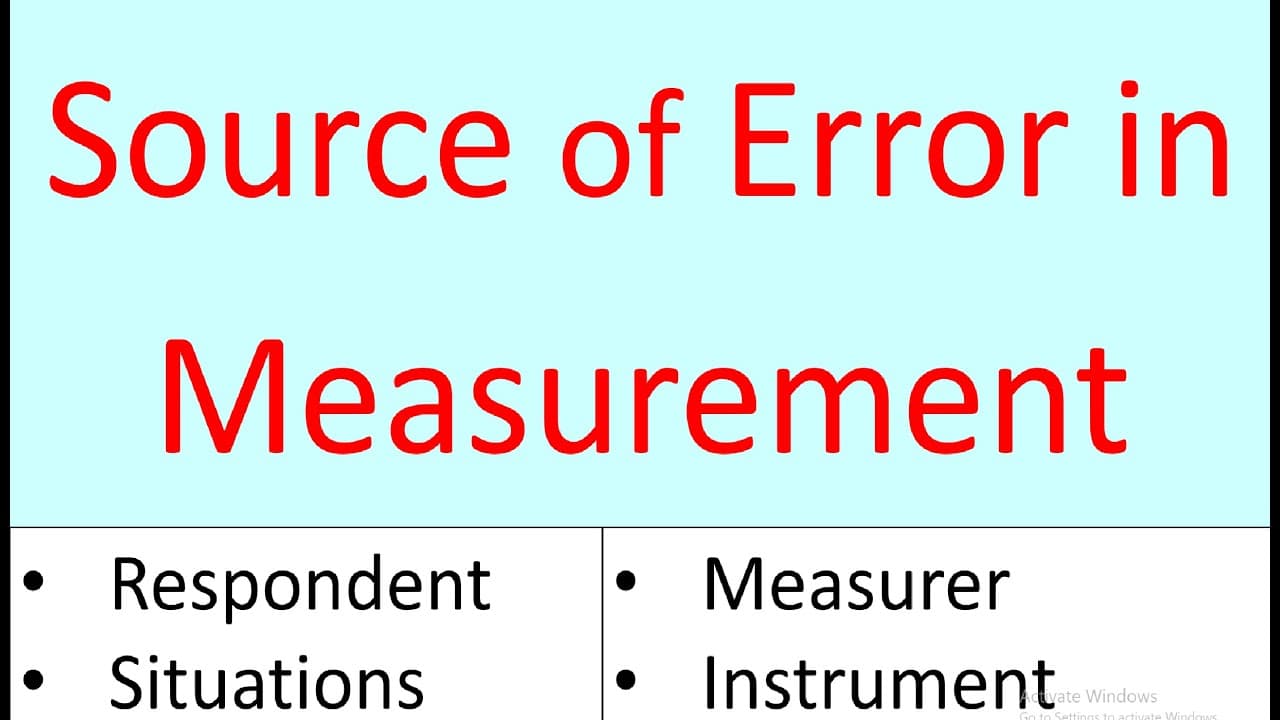
The four main sources of error are the respondent, the situations, the measurer, and the instrument. Each of these can introduce inaccuracies in research data.
Q: How can a respondent contribute to errors in measurement?
Respondents may provide incorrect or incomplete responses due to reluctance, lack of knowledge, temporary factors like fatigue, or misunderstanding of questions, leading to data errors.
Q: What role does the situations surrounding respondents play in measurement errors?
Uncomfortable environments, lack of privacy, or the presence of authority figures can affect respondents' willingness to provide accurate information, resulting in errors in data collection.
Q: How can using a defective instrument lead to errors in measurement?
Defective measuring instruments, complex questionnaires, ambiguous wording, or unclear instructions can all contribute to errors in data collection and analysis, impacting the reliability of research findings.
Summary & Key Takeaways
-
Errors in measurement can lead to inaccurate research findings and poor decision-making.
-
The four sources of error are the respondent, the situations, the measurer, and the instrument.
-
Methods to reduce errors include clear consent agreements, suitable conditions for respondents, and careful data preparation.
Read in Other Languages (beta)
Share This Summary 📚
Summarize YouTube Videos and Get Video Transcripts with 1-Click
Try YouTube Summary with ChatGPT & Claude or YouTube Transcript Generator
Explore More Summaries from Solomon Getachew 📚




Summarize YouTube Videos and Get Video Transcripts with 1-Click
Try YouTube Summary with ChatGPT & Claude or YouTube Transcript Generator