How Do Economists Approach Major Life Decisions?
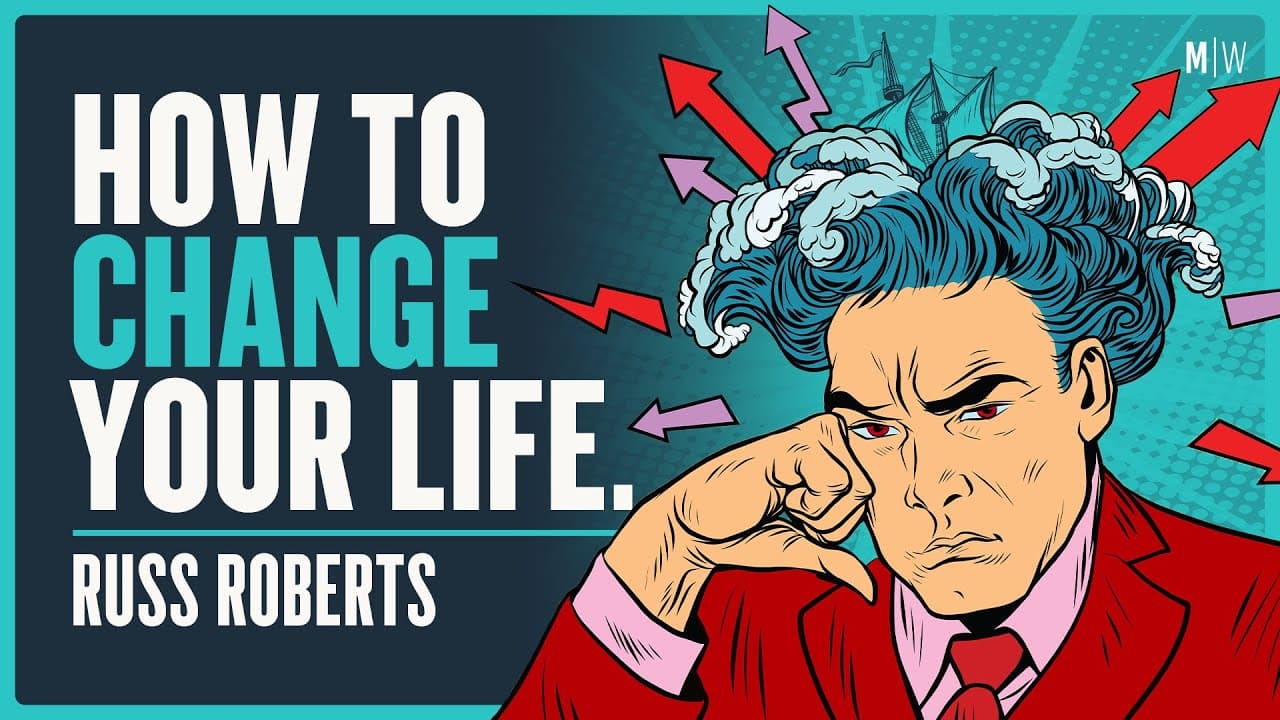
TL;DR
Major life decisions extend beyond mere pleasure and pain analysis; they require deep consideration of values, relationships, and long-term satisfaction. Economists' traditional frameworks often overlook the complexity of these choices, making it essential to reflect on who you want to be rather than just focusing on immediate gains.
Transcript
these decisions about whether to marry who to marry whether their children where to Live Career what kind of a friend to be these are decisions that capture who we are they're much more than just the sum of everyday Pleasure and Pain that I accumulate through the course of living and if I only take that perspective I'm going to miss out on the over... Read More
Key Insights
- 🍉 Decision-making involves more than maximizing pleasure; it should consider values, aspirations, and long-term satisfaction.
- ℹ️ The economist's framework has limitations in capturing the complexity of decision-making, such as relationships, moral dilemmas, and deeper sources of satisfaction.
- 😮 "Wow" problems require a different approach to decision-making, acknowledging uncertainty and the need to consider personal growth and fulfillment.
Install to Summarize YouTube Videos and Get Transcripts
Explore YouTube Video Summarizer or Get YouTube Transcript Extractor
Questions & Answers
Q: How do economists traditionally assess decision-making?
Economists typically analyze decisions through a framework that prioritizes maximizing pleasure by balancing finite resources and infinite wants.
Q: Why is the economist's framework limited in capturing the full range of decision-making factors?
The economist's framework focuses on immediate pleasures and pains, ignoring the significance of relationships, morality, and deeper sources of satisfaction and meaning.
Q: What are "wow" problems in decision-making?
"Wow" problems are complex decisions that cannot be easily analyzed using cost-benefit analysis or rational calculations due to their uncertainty, long-term consequences, and subjective nature.
Q: What is the alternative to rational decision-making?
Instead of relying solely on rational calculations, individuals should consider their values, aspirations, and long-term goals to make decisions that align with their personal growth and fulfillment.
Summary & Key Takeaways
-
Economist's framework: Economists traditionally analyze decision-making by balancing finite resources, such as time and money, with infinite wants and desires in order to maximize pleasure.
-
The limitations of the economist's framework: This framework fails to consider the importance of other people, relationships, moral dilemmas, and deeper sources of satisfaction and meaning in life.
-
Examining "wow" problems: These are decisions that cannot be analyzed using a cost-benefit analysis or rational calculations due to their complexity, uncertainty, and long-term impact.
-
The alternative to rational decision-making: Instead of relying solely on rational calculations, individuals should consider their values, aspirations, and who they want to become in order to make meaningful and fulfilling choices.
Read in Other Languages (beta)
Share This Summary 📚
Summarize YouTube Videos and Get Video Transcripts with 1-Click
Try YouTube Summary with ChatGPT & Claude or YouTube Transcript Generator
Explore More Summaries from Chris Williamson 📚






Summarize YouTube Videos and Get Video Transcripts with 1-Click
Try YouTube Summary with ChatGPT & Claude or YouTube Transcript Generator