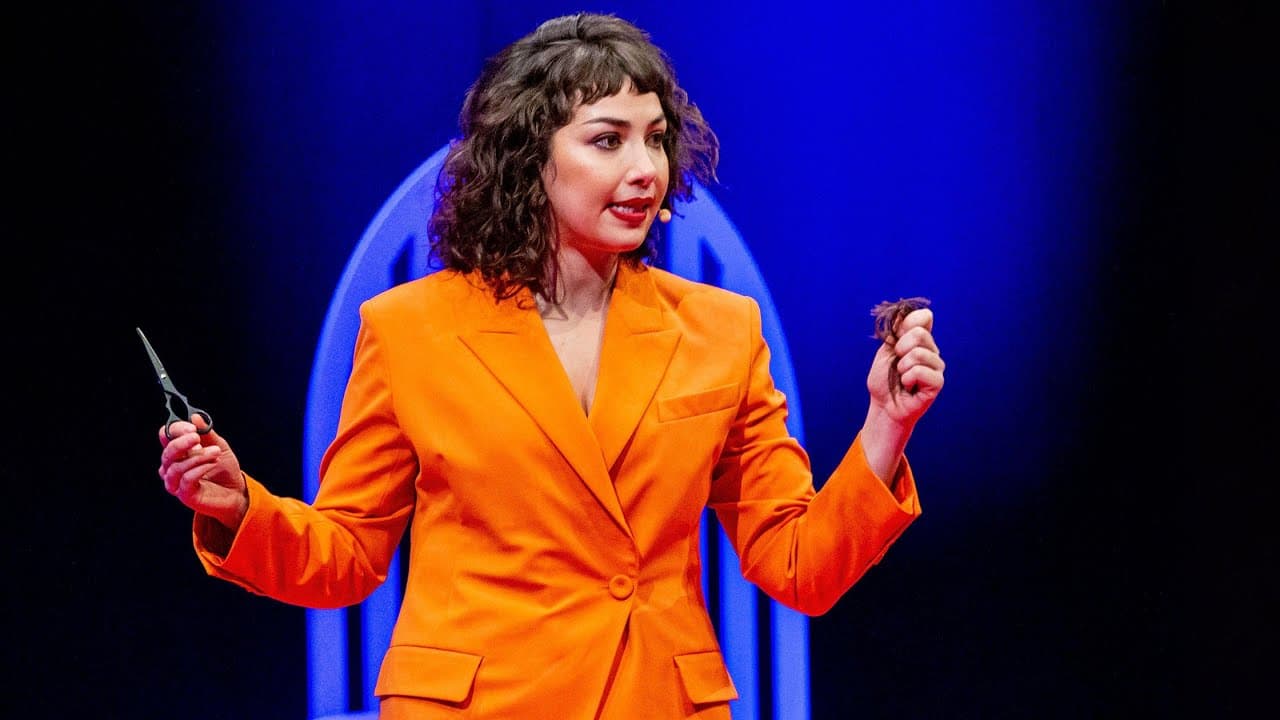
Why Iranians Are Cutting Their Hair for "Woman, Life, Freedom" | Sahar Zand | TED
TL;DR
This content explores the restrictions and oppression faced by women in Iran and their ongoing fight for freedom and equality.
Transcript
When you were a child, what did you want to be when you grew up? A footballer? An actress? A doctor? Well, when I was a little girl, whenever I was asked the question, my answer was pretty much always the same: "When I grow up, I want to become a man." To my logic, that was the only way I could live a life free from the suffocating restrictions tha... Read More
Key Insights
- 💔 The speaker recalls her childhood in Iran and the suffocating restrictions placed on women, including mandatory hijab and limited freedoms in public spaces such as the beach.
- 💔 She describes the oppressive laws and lack of basic rights experienced by women in Iran, including limited access to divorce, custody of children, protection against sexual harassment and domestic violence, and the inability to sing in public or have sex outside of marriage.
- 💔 The speaker shares her escape from Iran as a refugee and emphasizes the lack of hope for change for those left behind.
- 💪 The unjust killing of Mahsa Amini sparks anti-regime protests across Iran, with women defying strict morality laws by removing their headscarves, burning them, and cutting off their hair. They demand democracy, freedom of speech, and the fall of the supreme leader.
- 😔 The Iranian regime responds with a brutal crackdown, resulting in the deaths of 500 people, including around 80 children. Thousands of protesters are arrested, and there are reports of psychological, physical, and sexual torture in prisons.
- 💡 Hope emerges as protesters continue to stand their ground, chanting for women's freedom and a better future for Iran.
- 💪 The speaker urges non-Iranians and Iranians abroad to support the protesters by staying informed, signing petitions, attending protests, and pressuring governments to put pressure on the Iranian regime.
- 💡 The speaker emphasizes the importance of hope in creating and sustaining change, despite the oppressive crackdown, and encourages everyone to take a step towards a future where freedom is a reality for all.
Install to Summarize YouTube Videos and Get Transcripts
Explore YouTube Video Summarizer or Get YouTube Transcript Extractor
Questions & Answers
Q: What were some of the restrictive rules that the speaker had to follow as a girl growing up in Iran?
The speaker had to follow restrictive rules such as wearing the hijab, fully covering from head to toe, including wearing trousers, a long-sleeved top, and a loose covering called the manto. Iranian women also face limitations on basic rights like divorce, custody of children, and even travel. They are not allowed to sing in public or have sex outside of marriage.
Q: What event sparked the biggest anti-regime protests across Iran since the formation of the Islamic Republic?
The unjust killing of 22-year-old Mahsa Jina Amini by the morality police, who deemed she was showing more hair than acceptable, ignited the biggest anti-regime protests across Iran. The news of Mahsa's killing gained attention through social media and independent journalists, unlike the regime's usual attempts to suppress such incidents.
Q: How have women in Iran been defying the strict morality laws in their fight for equality and dignity?
In their fight for equality and dignity, women in Iran have been defying the strict morality laws by taking off their headscarves, burning them in bonfires, and even cutting off their hair. They are protesting for freedom of speech, expression, and democracy. The chants "Zan. Zendegi. Azadi." (Woman, Life, Freedom) represent their determination.
Q: What has been the regime's response to the anti-regime protests in Iran?
The regime's response to the anti-regime protests has been brutal and deadly. The crackdown includes brutal killings, arrests, psychological, physical, and sexual torture in prisons, forced confessions, and public executions of the protesters. The authoritarian regime aims to suppress hope, knowing that as long as people remain hopeless, they will continue to resign to oppression and injustice.
Summary & Key Takeaways
-
The speaker recalls her childhood in Iran, where she felt restricted by societal expectations and gender norms.
-
The oppressive treatment of women in Iran is highlighted, including mandatory hijab and limited rights in divorce, custody, and travel.
-
The unjust killing of Mahsa Amini sparked widespread anti-regime protests in Iran, with women defying morality laws and demanding freedom and equality. The regime has responded with brutality and deadly force.
Read in Other Languages (beta)
Share This Summary 📚
Summarize YouTube Videos and Get Video Transcripts with 1-Click
Try YouTube Summary with ChatGPT & Claude or YouTube Transcript Generator
Explore More Summaries from TED 📚





Summarize YouTube Videos and Get Video Transcripts with 1-Click
Try YouTube Summary with ChatGPT & Claude or YouTube Transcript Generator