Stress Response: Savior to Killer

Transcript
This program is brought to you by Stanford University. Please visit us at stanford.edu. If you're a normal mammal, what stress is about is 3 minutes of screaming terror on the savannah, after which it's either over with or you're over with. Over the last three decades, Stanford University neurobiologist Robert Sapolski has been advancing our unders... Read More
Install to Summarize YouTube Videos and Get Transcripts
Explore YouTube Video Summarizer or Get YouTube Transcript Extractor
Summary
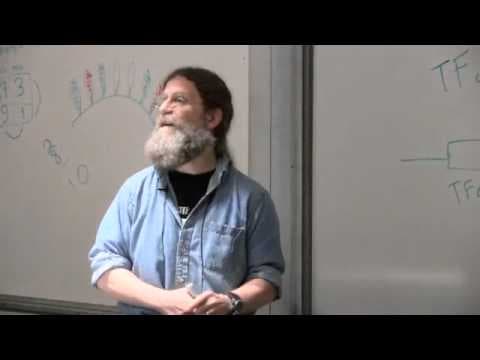
In this video, Stanford University neurobiologist Robert Sapolsky discusses the concept of stress, how it affects our bodies, and how our social standing can make us more or less susceptible to stress. He explains that while stress is a natural response to immediate threats in the animal kingdom, humans tend to activate the same stress response for psychological states, leading to chronic stress. Sapolsky also shares his personal experiences studying stress and acknowledges his own struggles in coping with stress.
Questions & Answers
Q: What is the main focus of Robert Sapolsky's research?
Robert Sapolsky has been studying stress for the past three decades, with a particular focus on how it impacts our bodies and how our social standing can influence our susceptibility to stress.
Q: How does stress affect our bodies?
When experiencing stress, our bodies enter a heightened state of preparedness for fight or flight. This includes increased heart rate, elevated blood pressure, and redirecting bodily resources to immediate survival needs. However, unlike other animals, humans tend to activate the stress response for psychological states, which can lead to chronic stress and various health issues.
Q: Can you explain the difference between stressors and the stress response?
Stressors are the triggers or stimuli that cause stress, such as immediate threats or psychological factors like worrying about finances. The stress response refers to the physiological changes that occur in the body when exposed to stressors. While stressors may vary, the stress response remains largely the same, resulting in a release of hormones and increased physiological arousal.
Q: How can chronic stress be more damaging than the stressor itself?
Chronic stress refers to the ongoing activation of the stress response due to continuous exposure to stressors. While the stress response is designed to protect us in immediate crisis situations, prolonged activation can have negative health consequences. In the case of chronic stress, the stressor may be psychological in nature and not pose an immediate threat, but the constant activation of the stress response can lead to wear and tear on the body, causing various health problems.
Q: How does stress impact social species like baboons?
In social species like baboons, stress is often caused by social interactions rather than immediate physical threats like being chased by predators. In these species, stress is induced by conflicts and hierarchies within the social group. Baboons serve as an excellent model for understanding stress-related diseases prevalent in western societies, as they face similar social stressors.
Q: What sets humans apart from other animals in terms of stress response?
Unlike other animals, humans tend to activate the stress response for psychological states and worries unrelated to immediate threats. For example, humans can experience heightened stress levels in response to public speaking or financial concerns. This extended activation of the stress response is not seen in other animals and can lead to prolonged periods of stress and associated health problems.
Q: How does Robert Sapolsky personally cope with stress?
Robert Sapolsky admits that despite his extensive knowledge of stress and how it impacts the body, he struggles with stress himself. He acknowledges that his unconventional work schedule and high-stress environment contribute to this. However, he finds solace in his love for his work, which helps him cope with the stress he experiences.
Q: What are the challenges of conducting research on stress in different environments?
Robert Sapolsky notes that conducting research in different environments, such as his lab in East Africa, presents unique challenges and opportunities. While it allows for different and more interesting research, the conditions and limitations, such as limited access to amenities, can be difficult to adjust to compared to a more developed setting.
Q: What are some takeaways from Robert Sapolsky's research on stress?
One key takeaway is that chronic stress, caused by prolonged activation of the stress response, can have significant negative impacts on our health. Furthermore, understanding that humans activate the stress response for purely psychological states highlights the importance of managing stress and finding effective coping mechanisms. Additionally, the study of stress in different environments and species helps shed light on the complex nature of stress and its effects.
Takeaways
In summary, Robert Sapolsky's research on stress explores the impact of stress on our bodies, the differences in stress response between humans and other animals, and the importance of managing stress to maintain good health. Chronic stress, caused by the prolonged activation of the stress response, can be more damaging than the stressor itself and lead to various health issues. Understanding how stress affects us and finding effective coping strategies is essential for overall well-being. Additionally, studying stress in different environments and species provides valuable insights into the complex nature of stress and its effects.
Read in Other Languages (beta)
Share This Summary 📚
Summarize YouTube Videos and Get Video Transcripts with 1-Click
Try YouTube Summary with ChatGPT & Claude or YouTube Transcript Generator
Explore More Summaries from Stanford 📚




Summarize YouTube Videos and Get Video Transcripts with 1-Click
Try YouTube Summary with ChatGPT & Claude or YouTube Transcript Generator