6 Animals with Extraordinary Adaptations to Cave Life
TL;DR
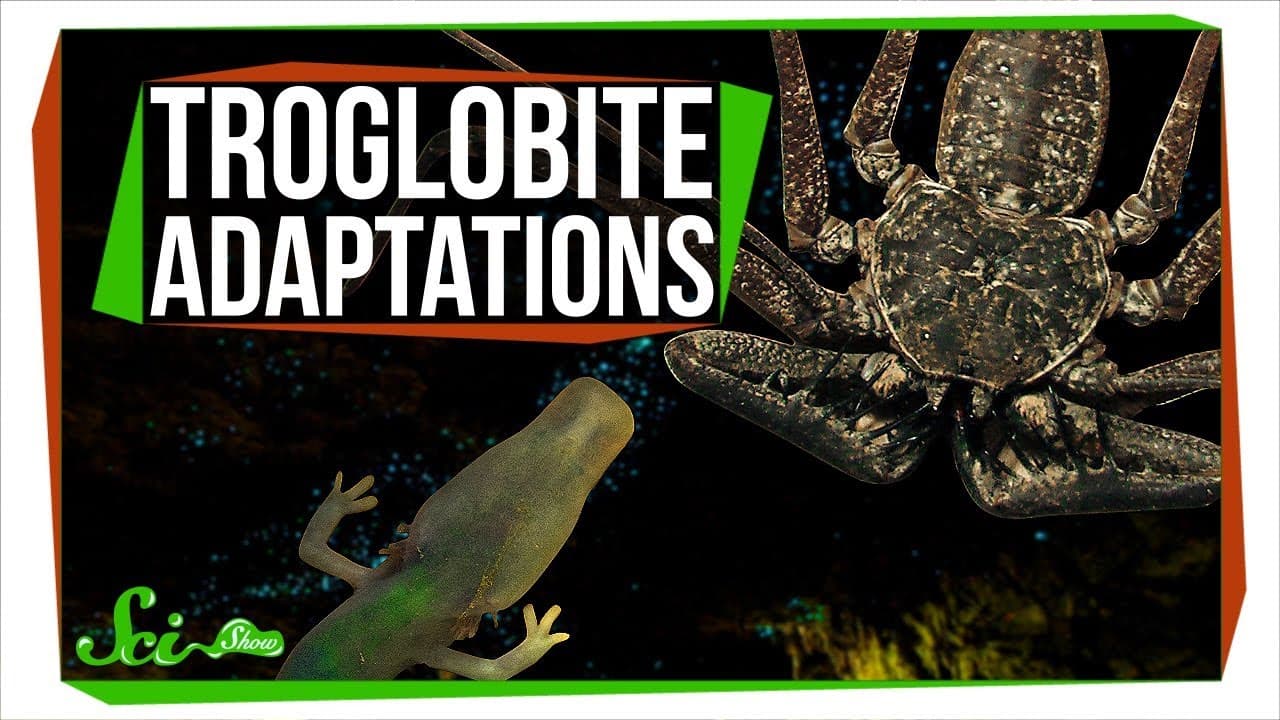
Animals in caves have evolved unique traits like taste buds on their heads, glow worms lure prey with light, and cave crickets feel vibrations to find food and mates.
Transcript
[♩INTRO] It’s not easy living in a cave. There isn’t a ton of space, the pickings are slim, and then there’s the whole living-in-total-darkness bit. So it’s not surprising that the species that live in caves, or troglobites, have made some adjustments. Many are eyeless, for example, or have become basically colorless. But cave-dwelling species have... Read More
Key Insights
- 😋 Adapted taste buds help Mexican cave fish efficiently find food in darkness.
- 🪤 Glow worms in New Zealand use bioluminescence to lure prey towards their sticky traps in caves.
- 🥘 Cave crickets have evolved to sense low-frequency ground vibrations for locating food and mates.
- 🕷️ Behaviorally, some cave-dwelling species like whip spiders have adapted to be less aggressive.
- 👃 The olm salamander relies on its exceptional sense of smell to navigate and interact with its environment in cave habitats.
- 🪲 Hamann's organ in cave beetles functions as a humidity sensor, crucial for survival in moisture-scarce environments.
- 🕶️ Cave-dwelling species showcase unique evolutionary adaptations to thrive in dark and challenging environments.
Install to Summarize YouTube Videos and Get Transcripts
Explore YouTube Video Summarizer or Get YouTube Transcript Extractor
Questions & Answers
Q: How have Mexican cave fish adapted to living in darkness?
Mexican cave fish have lost their eyes but developed taste buds in unique places, like their lips and heads, allowing them to find food efficiently in the dark.
Q: How do glow worms in New Zealand caves attract prey?
Glow worms use bioluminescence to lure insects towards their sticky snares made of silk, saliva, and urea hanging from cave ceilings, a unique hunting strategy in darkness.
Q: How do cave crickets locate mates in the absence of hearing organs?
Cave crickets use a vibration-sensing organ on their legs to feel sound, including low-frequency ground vibrations produced by males to attract females for mating.
Q: What unique trait helps the olm salamander thrive in caves?
The olm salamander has a highly developed sense of smell, enabling it to locate food and mates in total darkness, with specialized cells detecting scents in its olfactory epithelium.
Summary & Key Takeaways
-
Cave-dwelling animals have developed unique traits due to living in darkness, like taste buds on heads, bioluminescent glow worms, and sound-sensing crickets.
-
Some cave-dwelling species have adapted behaviorally, evolving to be less aggressive.
-
The olm salamander uses its amazing sense of smell to find food and mates in the dark, living for nearly a century.
Read in Other Languages (beta)
Share This Summary 📚
Summarize YouTube Videos and Get Video Transcripts with 1-Click
Try YouTube Summary with ChatGPT & Claude or YouTube Transcript Generator
Explore More Summaries from SciShow 📚





Summarize YouTube Videos and Get Video Transcripts with 1-Click
Try YouTube Summary with ChatGPT & Claude or YouTube Transcript Generator