Products
Features
YouTube Video Summarizer
Summarize YouTube videos
Web & PDF Highlighter
Highlight web pages & PDFs
Chat with PDF
Ask any PDF questions with AI
Ask AI Clone
Chat with your highlights & memories
Audio Transcriber
Transcribe audio files to text
Glasp Reader
Read and highlight articles
Kindle Highlight Export
Export your Kindle highlights
Idea Hatch
Hatch ideas from your highlights
Integrations
Obsidian Plugin
Notion Integration
Pocket Integration
Instapaper Integration
Medium Integration
Readwise Integration
Snipd Integration
Hypothesis Integration
Apps & Extensions
Chrome Extension
Safari Extension
Edge Add-ons
Firefox Add-ons
iOS App
Android App
Discover
Discover
Ideas
Discover new ideas and insights
Articles
Curated articles and insights
Books
Book recommendations by great minds
Posts
Essays and notes from readers
Quotes
Inspiring quotes collection
Videos
Curated videos and summaries
Explore Glasp
Glasp Newsletter
Weekly insights and updates
Glasp Talk
Interview series with great minds
Glasp Blog
Latest news and articles
Glasp Use Cases
Learn how others use Glasp
Build & Support
Glasp API
Access Glasp's API for developers
MCP Connector
Connect Glasp to Claude & ChatGPT
Community
Glasp Reddit Community
Students
Student discount and benefits
FAQs
Frequently Asked Questions
AboutPricing
DashboardLog inSign up

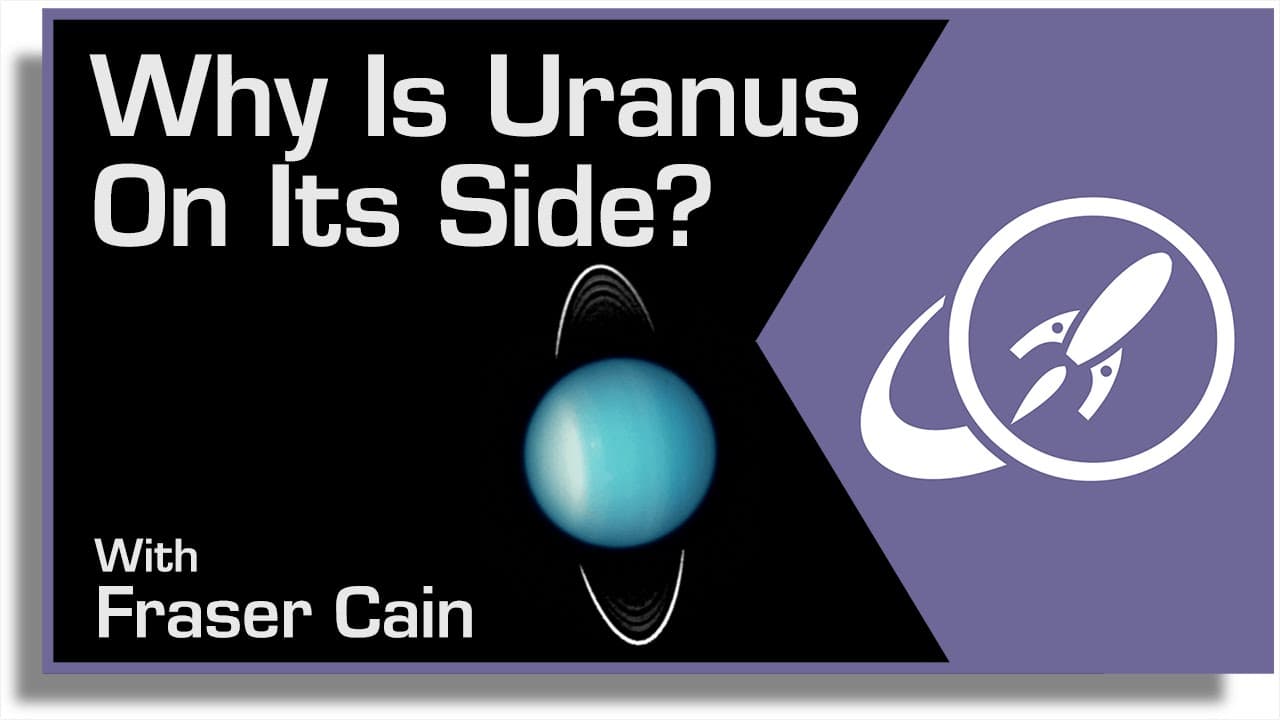
Why is Uranus on its Side? An Ancient Catastrophe of Planetary Proportions
75.9K views
•
August 5, 2016
by
Fraser Cain
YouTube video player
Why is Uranus on its Side? An Ancient Catastrophe of Planetary Proportions

TL;DR

Uranus' unique tilt and mysterious history make it a fascinating yet overlooked planet in our solar system.

Transcript

It’s impossible to do an episode about Uranus without opening up the back door to a spit storm of potty humour. I get it, there’s something just hilarious about talking about your, mine and everyone’s anus. And even if you use the more sanitized and sterile term urine-us, it’s still pretty dirty, in an unwashed New York stairwell kind of way. You’r... Read More

Key Insights

  • 😫 Uranus' extreme tilt of 97.8 degrees sets it apart from other planets, hinting at a turbulent past of collisions and interactions.
  • 🖤 The lack of dedicated missions to Uranus has limited our knowledge of the planet's unique features and scientific value.
  • 💁 Understanding Uranus' history and composition could provide valuable insights into planetary formation and evolution in the solar system.

Install to Summarize YouTube Videos and Get Transcripts

Explore YouTube Video Summarizer or Get YouTube Transcript Extractor

Questions & Answers

Q: What makes Uranus unique among the planets in our solar system?

Uranus stands out due to its extreme 97.8-degree tilt, which is significantly different from the more moderate tilts of other planets, leading to its unusual seasonal patterns and orbits.

Q: Why has Uranus not been further explored despite its scientific significance?

Uranus remains largely unexplored due to the lack of dedicated missions to the planet, with only one close encounter by Voyager II in 1986 providing limited data on its complex dynamics and features.

Q: How did Uranus' tilt come to be, and what does it tell us about the early solar system?

Uranus' tilted axis suggests a violent past of collisions and interactions during the early formation of the solar system, with a cataclysmic event likely flipping the planet over and shaping its current configuration.

Q: What future missions or studies could shed more light on Uranus and its intriguing characteristics?

Future missions to Uranus, like orbiters or landers, could provide valuable insights into the planet's composition, atmosphere, and moons, helping unravel its mysteries and further our understanding of planetary evolution.

Summary & Key Takeaways

  • Uranus, the 7th planet from the Sun, boasts unique features like its extreme axial tilt, dusty rings, and numerous moons.

  • The planet's 97.8-degree tilt hints at a violent early history of collisions and interactions shaping its current state.

  • Despite its scientific value, Uranus remains unexplored, with only one close flyby by Voyager II in 1986.


Read in Other Languages (beta)

English

Share This Summary 📚

Summarize YouTube Videos and Get Video Transcripts with 1-Click

Download browser extensions on:

Try YouTube Summary with ChatGPT & Claude or YouTube Transcript Generator

Explore More Summaries from Fraser Cain 📚
Are We Living in a Simulation? Understanding the Simulation Hypothesis thumbnail
Are We Living in a Simulation? Understanding the Simulation Hypothesis
Fraser Cain
Why Did Mars Lose Its Atmosphere? And How Can We Get It Back? thumbnail
Why Did Mars Lose Its Atmosphere? And How Can We Get It Back?
Fraser Cain
What's On The Far Side Of The Moon? thumbnail
What's On The Far Side Of The Moon?
Fraser Cain
Exploring Space Lava Tubes: How To Prepare For It thumbnail
Exploring Space Lava Tubes: How To Prepare For It
Fraser Cain / Universe Today Podcast
Why Isn't the Asteroid Belt a Planet? thumbnail
Why Isn't the Asteroid Belt a Planet?
Fraser Cain

Summarize YouTube Videos and Get Video Transcripts with 1-Click

Download browser extensions on:

Try YouTube Summary with ChatGPT & Claude or YouTube Transcript Generator

Apps & Extensions

  • Chrome Extension
  • Safari Extension
  • Edge Add-ons
  • Firefox Add-ons
  • iOS App
  • Android App

Key Features

  • YouTube Video Summarizer
  • Web & PDF Summarizer
  • Web & PDF Highlighter
  • Chat with PDF
  • Ask AI Clone
  • Audio Transcriber
  • Glasp Reader
  • Kindle Highlight Export
  • Idea Hatch

Integrations

  • Obsidian Plugin
  • Notion Integration
  • Pocket Integration
  • Instapaper Integration
  • Medium Integration
  • Readwise Integration
  • Snipd Integration
  • Hypothesis Integration

More Features

  • APIs
  • MCP Connector
  • Blog & Post
  • Embed Links
  • Image Highlight
  • Personality Test
  • Quote Shots

Company

  • About us
  • Blog
  • Community
  • FAQs
  • Job Board
  • Newsletter
  • Pricing
Terms

•

Privacy

•

Guidelines

© 2026 Glasp Inc. All rights reserved.