What Can We Learn from Mel's Programming Dilemma?
TL;DR
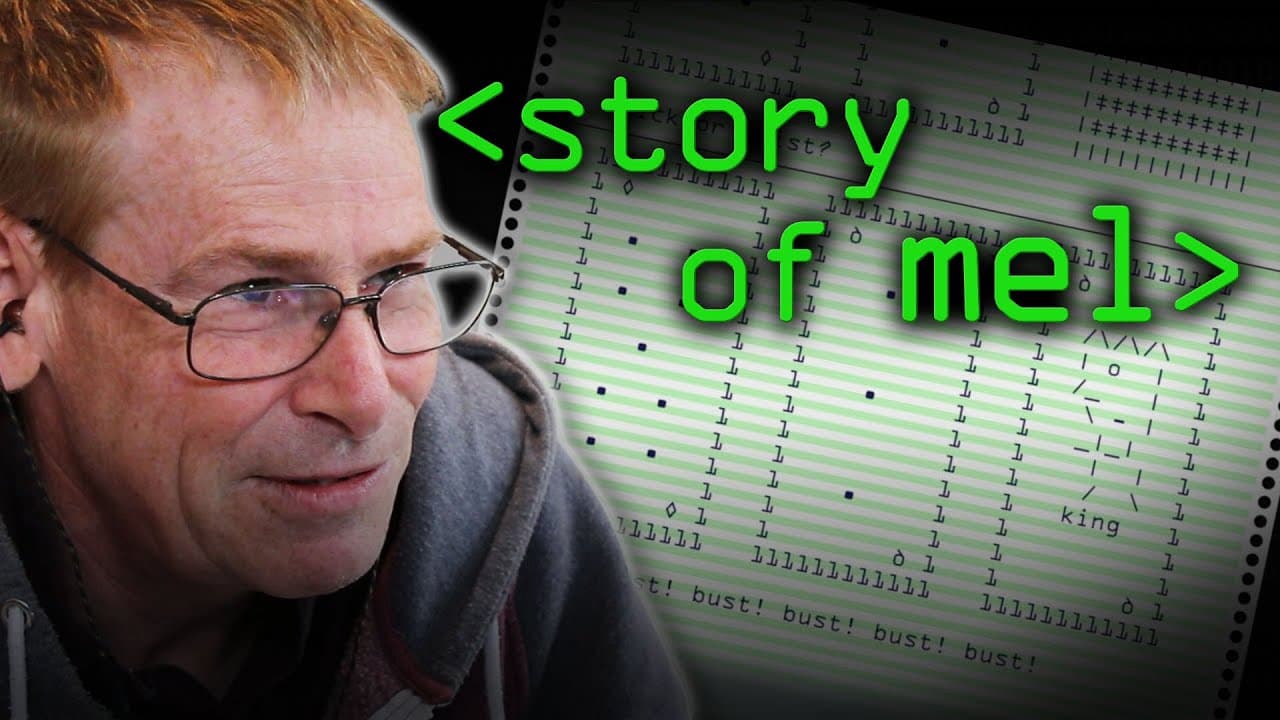
Mel's experience with self-modifying code in the 1950s exemplifies the pitfalls of clever coding practices. His attempt to manipulate a blackjack program inadvertently favoured the house, highlighting the risks of complexity and lack of maintainability in programming. This case serves as a cautionary tale about the importance of clear, comprehensible code and the potential consequences of prioritising clever techniques over simplicity.
Transcript
so we've been talking about mel who's this kind of like mythical is he mythical do we know he's a real person so yeah mel was a real person in i think 1956 to 60 when computing was real cutting edge and memory was at a premium so i think he had 4096 bytes to work with or something like that so luxury luxury yeah every bike counted so we did the sel... Read More
Key Insights
- 💦 Mel's story showcases the challenges of working with limited memory and the need for efficient coding practices.
- 🤳 Self-modifying code can be dangerous and difficult to maintain, as demonstrated by the unintended consequences of Mel's modifications.
- 🥺 The importance of simplicity and clarity in coding is highlighted, as overly complex and clever programming can lead to confusion for future developers.
- 👨💻 The story emphasizes the need for thorough testing and understanding of code, as even seemingly innocuous changes can cause unexpected issues.
- 👨💻 The concept of maintainability is crucial in programming, as the time spent understanding and fixing overly complex code can outweigh any initial efficiency gains.
- 🎨 The story also reflects on the evolution of programming practices, questioning whether Mel would have embraced modern approaches like object-oriented design and testing.
- 🖤 The lack of certain features, such as index registers, in early computing systems added complexity to the code and the potential for unintended consequences.
Install to Summarize YouTube Videos and Get Transcripts
Explore YouTube Video Summarizer or Get YouTube Transcript Extractor
Questions & Answers
Q: Who was Mel and what was his role in the early days of computing?
Mel was a real person who worked as a programmer in the 1950s when computing was at the forefront. He worked on self-modifying code and dealt with limited memory.
Q: What was the request made to Mel regarding the blackjack program?
Mel was asked to modify the blackjack program to stack the odds in the customer's favor for better sales. However, the changes ended up benefiting the computer instead.
Q: Why did Mel refuse to fix the program after the changes backfired?
Mel believed in not manipulating the probabilities and maintaining the integrity of a program. He saw the unintended consequence as a confirmation of his stance and refused to correct it.
Q: What was the issue that Mel encountered in the program after he left?
The person who took over the program found a loop in the code that had no exit. This loop continuously ran without any way to break out, and the person struggled to understand its purpose.
Summary & Key Takeaways
-
Mel was a real programmer in the 1950s when computing was cutting edge and memory was limited. He worked on self-modifying code.
-
Mel's story involves him being asked to modify a blackjack program to stack the odds in the customer's favor, but it ended up stacking the odds in the computer's favor instead.
-
This story highlights the dangers of self-modifying code, the importance of maintainability, and the consequences of being too clever in programming.
Read in Other Languages (beta)
Share This Summary 📚
Summarize YouTube Videos and Get Video Transcripts with 1-Click
Try YouTube Summary with ChatGPT & Claude or YouTube Transcript Generator
Explore More Summaries from Computerphile 📚





Summarize YouTube Videos and Get Video Transcripts with 1-Click
Try YouTube Summary with ChatGPT & Claude or YouTube Transcript Generator