Paxos Agreement - Computerphile
TL;DR
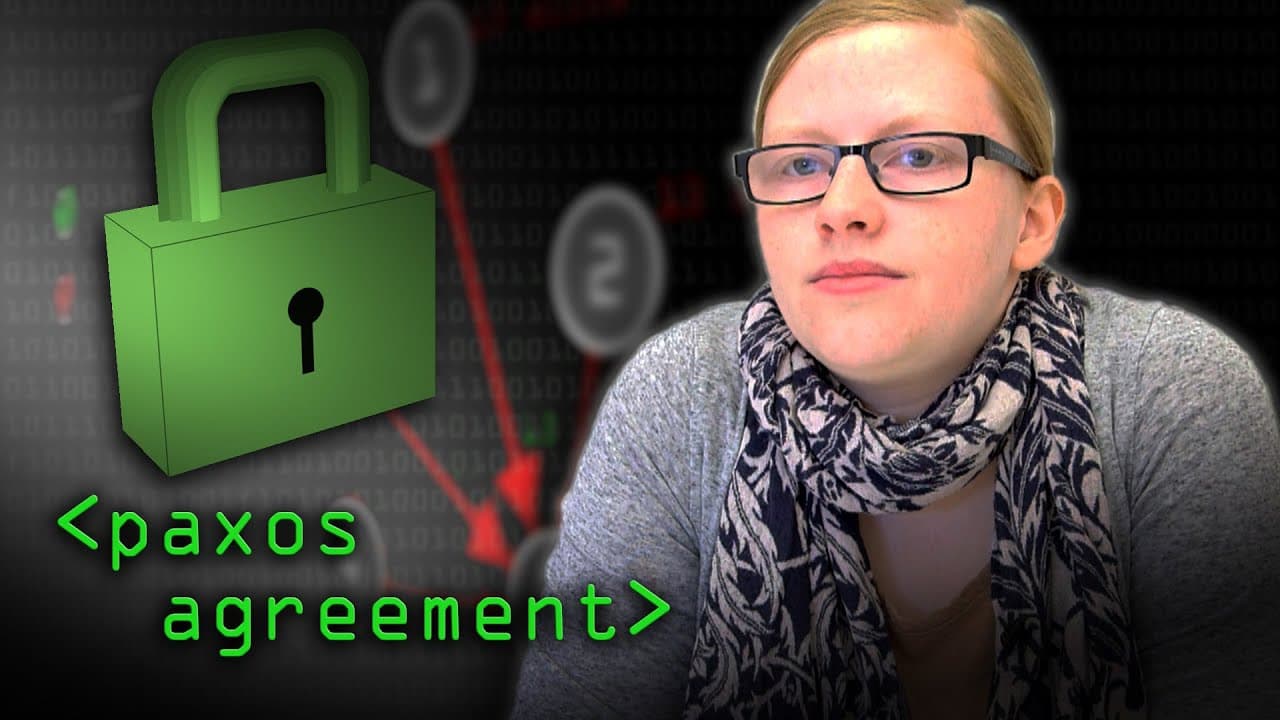
Paxos algorithm allows computers in a distributed system to agree on a value even in the presence of failures.
Transcript
Paxos is a really fundamental algorithm in distributed systems. It was invented over a decade ago. by Leslie Lamport who is very famous - won the Turing Award which is like the computer science equivalent to the Nobel Prize. And he has had tons of contributions this is really one of the most important ones he did during his time doing research It's... Read More
Key Insights
- 😉 The Paxos algorithm was invented over a decade ago by Leslie Lamport, a renowned computer scientist who won the Turing Award.
- 🤪 Paxos ensures agreement among computers in a distributed system by going through two main phases: promised and commit.
- 👻 Agreement in Paxos requires a majority of nodes to agree, allowing the system to tolerate failures and continue functioning.
- ⏰ Paxos is commonly used to implement exclusive access to resources, like locks, in distributed systems.
- 🎰 The concept of leader election is often used alongside Paxos to delegate requests to a particular machine.
- 👻 Multipaxos is an extension of Paxos that allows for agreement on multiple values over time.
- 🛝 The first phase of Paxos, the promised stage, can be precomputed to reduce the round trip time when a value is actually requested.
Install to Summarize YouTube Videos and Get Transcripts
Explore YouTube Video Summarizer or Get YouTube Transcript Extractor
Questions & Answers
Q: What is the purpose of the Paxos algorithm in distributed systems?
The Paxos algorithm allows computers in a distributed system to agree on a value, ensuring reliability and consistency even in the presence of failures.
Q: How does Paxos handle failures and network issues?
Paxos requires a majority of nodes to agree before progressing, allowing the system to continue working even if some nodes fail or the network experiences issues. Failed nodes can catch up once they recover.
Q: Can Paxos be used to ensure exclusive access to resources?
Yes, Paxos can be used to implement lock systems where only one entity can access a resource at a time. This is useful for preventing conflicts and maintaining data integrity.
Q: Is Paxos widely used in distributed systems?
Yes, Paxos is a widely used algorithm in distributed systems, especially in scenarios that require agreement among nodes or concurrency control, such as distributed databases and distributed file systems.
Summary & Key Takeaways
-
Paxos is a fundamental algorithm in distributed systems, invented by Leslie Lamport, that enables computers to agree on something even in the face of failures.
-
The algorithm consists of two main phases: the promised stage and the commit stage, where a majority of nodes need to agree before moving forward.
-
Paxos is commonly used in distributed systems for tasks such as ensuring exclusive access to resources, like locks, and maintaining consistency.
Read in Other Languages (beta)
Share This Summary 📚
Summarize YouTube Videos and Get Video Transcripts with 1-Click
Try YouTube Summary with ChatGPT & Claude or YouTube Transcript Generator
Explore More Summaries from Computerphile 📚






Summarize YouTube Videos and Get Video Transcripts with 1-Click
Try YouTube Summary with ChatGPT & Claude or YouTube Transcript Generator