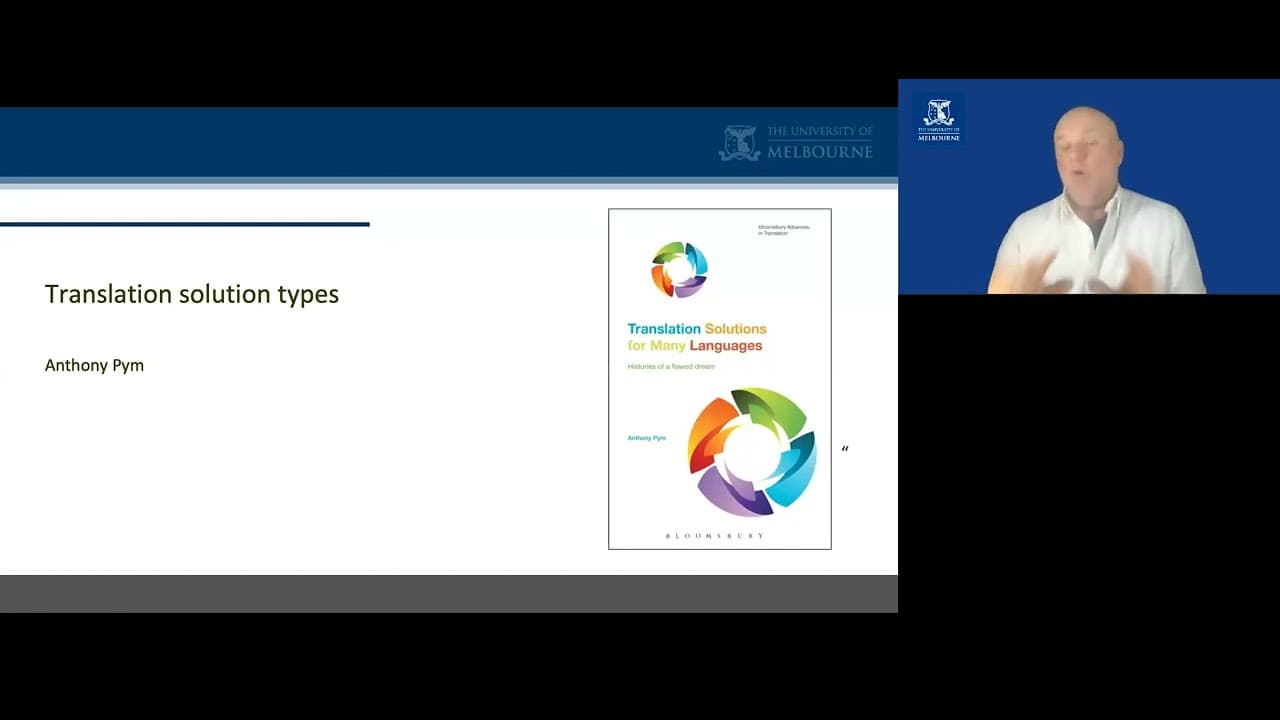
6.1 Translation solution types
TL;DR
Translation solution types vary from copying to perspective change, density adjustment to text tailoring.
Transcript
I'd now like to look at what I'm calling translation solution types, which is just all the little tricks, all the things that translators could do. And I tried to arrange them into some memorisible or memorable order to follow this lecture, first, you should try to translate these examples into your favorite language other than English. So what you... Read More
Key Insights
- 🔑 Translation solution types encompass copying words and structures, perspective changes, density adjustments, and text tailoring.
- 🖤 Machine translation may lack the nuanced approach of human translators in applying solution types effectively.
- 💱 Text tailoring is crucial for major changes in the text to ensure accuracy and cultural relevance.
Install to Summarize YouTube Videos and Get Transcripts
Explore YouTube Video Summarizer or Get YouTube Transcript Extractor
Questions & Answers
Q: What are some common translation solution types?
Common solution types include copying words and structures, perspective change, density adjustment, and text tailoring, each serving specific purposes in the translation process.
Q: How does machine translation differ from human translators in applying solution types?
Machine translation often lacks the creative adaptability of human translators, as it may not effectively perform text tailoring, cultural correspondence, or language-specific adaptations, which are crucial for nuanced translations.
Q: Why is text tailoring important in the translation process?
Text tailoring involves major changes to the text, ensuring accuracy, clarity, and cultural relevance in the translation. It allows translators to adapt the content effectively for the target audience.
Q: How can translators balance between different solution types in translation?
Translators need to consider factors such as effort, risk of error, and reader comprehension when choosing solution types. Balancing these factors helps in delivering accurate and engaging translations.
Summary & Key Takeaways
-
Translation solution types range from copying words and structures to perspective changes and density adjustments.
-
Text tailoring involves major changes to the text, while cultural correspondence and language-specific adaptations are essential.
-
Machine translation tends to avoid text tailoring and cultural correspondence, while human translators can creatively combine solution types.
Read in Other Languages (beta)
Share This Summary 📚
Summarize YouTube Videos and Get Video Transcripts with 1-Click
Try YouTube Summary with ChatGPT & Claude or YouTube Transcript Generator
Explore More Summaries from Anthony Pym 📚

Summarize YouTube Videos and Get Video Transcripts with 1-Click
Try YouTube Summary with ChatGPT & Claude or YouTube Transcript Generator