Did Ancient Egyptians Actually Put the “Pharaoh’s Curse” on Their Tombs?
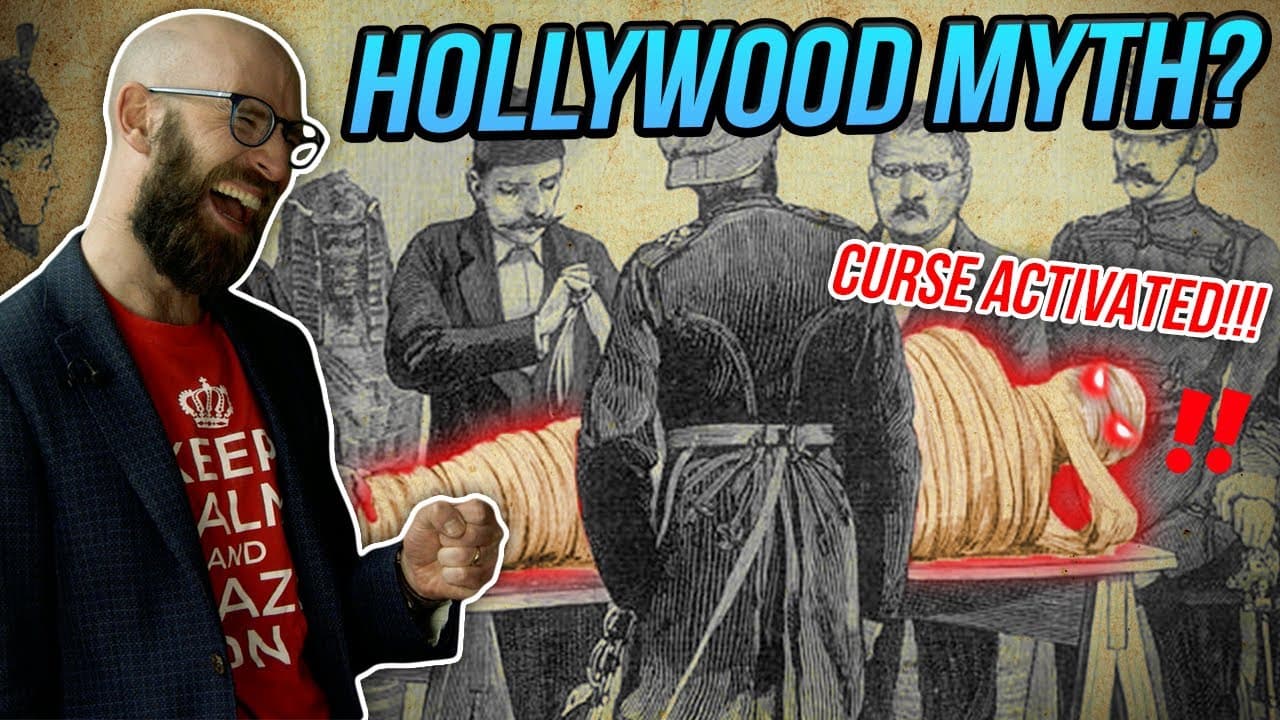
TL;DR
The legend of the Pharaoh's curse surrounding ancient Egyptian tombs is rooted in Western orientalist ideas, but there is no concrete evidence supporting its existence.
Transcript
today's video is brought to you by Squarespace Squarespace is an all-in-one platform that helps you build your brand and grow your business online you can stand out with a beautiful website engage with your audience and sell anything new products content you create even your time Squarespace offers a ton of features to make your website stand out s... Read More
Key Insights
- ❓ Protective curses in ancient Egyptian tombs were rare and primarily focused on maintaining ritual purity.
- 💦 The idea of the Pharaoh's curse gained popularity through mummy unwrapping events and fictional works.
- ❓ The deaths associated with the curse are largely coincidental and have no concrete evidence supporting a supernatural cause.
- 🧑⚕️ Microorganisms found in ancient tombs could potentially cause health issues but are not directly linked to the curse.
Install to Summarize YouTube Videos and Get Transcripts
Explore YouTube Video Summarizer or Get YouTube Transcript Extractor
Questions & Answers
Q: Did the ancient Egyptians actually place curses on their tombs?
While some curses were found in tombs, they were primarily intended to maintain ritual purity and were not aimed at deterring grave robbers.
Q: Are there any documented cases of archaeologists dying due to the curse?
The deaths commonly attributed to the curse are largely coincidental, with no concrete evidence linking them to the opening of ancient tombs.
Q: Why did the Pharaoh's curse gain so much popularity?
The sensationalized stories surrounding mummy unwrapping events and fictional works sparked interest and fueled the belief in the curse.
Q: Is there any scientific explanation for the deaths associated with the curse?
Microorganisms found in ancient Egyptian tombs could potentially cause health issues, but there is no evidence linking them to the deaths of archaeologists.
Summary & Key Takeaways
-
Protective curses in ancient Egyptian tombs are rare, with the majority of inscriptions being ritual in nature.
-
The idea of the Pharaoh's curse gained popularity in the 19th century through mummy unwrapping events and fictional stories.
-
The discovery of Tutankhamun's tomb in 1922 sparked rumors of a curse, but the deaths associated with it are mostly coincidental.
Read in Other Languages (beta)
Share This Summary 📚
Summarize YouTube Videos and Get Video Transcripts with 1-Click
Try YouTube Summary with ChatGPT & Claude or YouTube Transcript Generator
Explore More Summaries from Today I Found Out 📚






Summarize YouTube Videos and Get Video Transcripts with 1-Click
Try YouTube Summary with ChatGPT & Claude or YouTube Transcript Generator