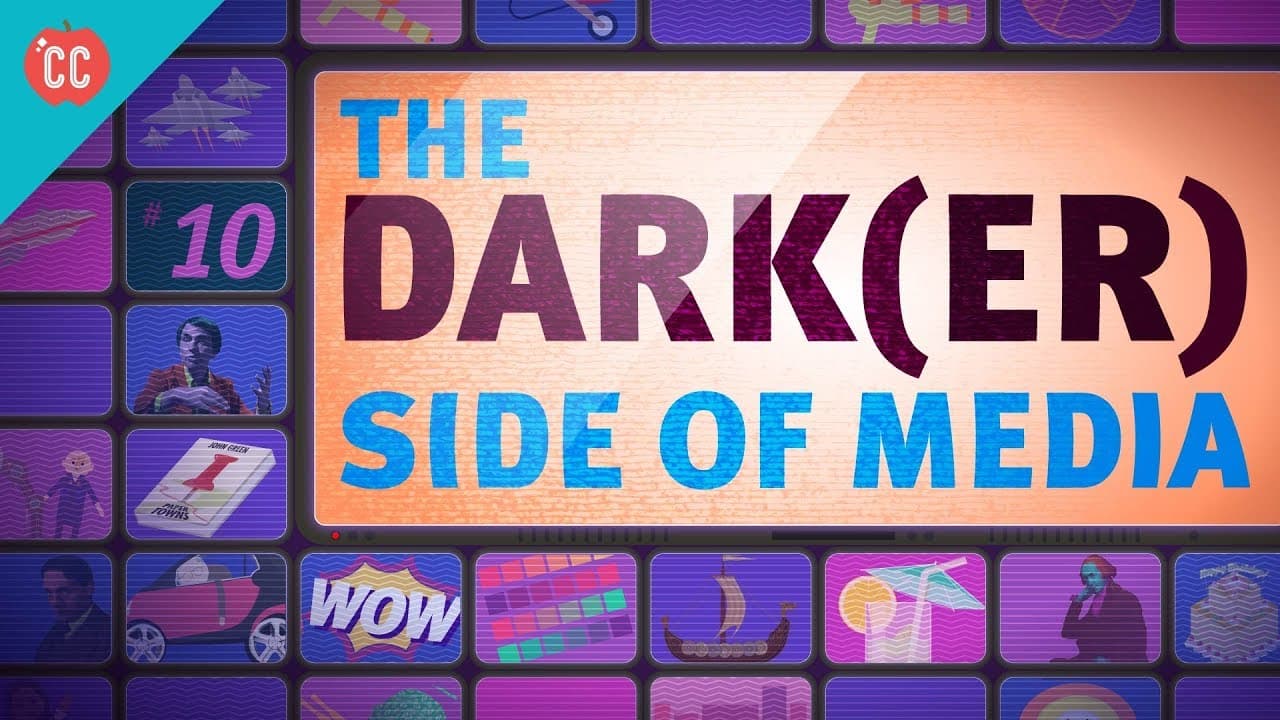
The Dark(er) Side of Media: Crash Course Media Literacy #10
TL;DR
Explores propaganda, misinformation, and disinformation in media literacy.
Transcript
Say you have an evil twin. They’re just like you but...different – somehow evil-er. Maybe they have a fancy twirling mustache and are just constantly listening to emo music. Maybe they hate chocolate and fun and bubbles and the greatest film of all time, Titanic. What if your evil twin not only looked and sounded just like you, but pretended to be ... Read More
Key Insights
- Propaganda, misinformation, and disinformation are considered the dark side of media, crucial for media literacy.
- Propaganda uses information to promote specific viewpoints and can manipulate public opinion, often associated with governments.
- Disinformation involves deliberately false information to confuse, distract, or manipulate audiences, often through coordinated campaigns.
- Misinformation is unintentional inaccuracies, often occurring during breaking news, and can lead to widespread misconceptions.
- Digital media has amplified the spread of misinformation and disinformation, making it harder to discern truth from falsehood.
- Coordinated disinformation campaigns can create alternate realities and manipulate public perception on a large scale.
- Media literacy involves critically evaluating information sources to avoid falling victim to misinformation and disinformation.
- Understanding these media tactics is essential for making informed decisions and resisting manipulation in the digital age.
Install to Summarize YouTube Videos and Get Transcripts
Explore YouTube Video Summarizer or Get YouTube Transcript Extractor
Questions & Answers
Q: What is the main focus of the video?
The video focuses on the darker side of media, specifically propaganda, misinformation, and disinformation. It explains how these elements are used to manipulate public perception and emphasizes the importance of understanding them to become more media literate.
Q: How does propaganda differ from disinformation?
Propaganda involves using information to promote specific viewpoints and is often associated with governments. It aims to manipulate public opinion. Disinformation, however, involves deliberately false information designed to confuse or distract audiences, often through coordinated campaigns.
Q: What role does misinformation play in the media?
Misinformation is unintentional inaccuracies that often occur during breaking news situations. These inaccuracies can lead to widespread misconceptions and are a significant aspect of the media landscape, making it essential for individuals to critically evaluate information.
Q: Why is media literacy important in the digital age?
Media literacy is crucial in the digital age because the spread of misinformation and disinformation has been amplified by digital media. Being media literate involves critically evaluating information sources to discern truth from falsehood and avoid manipulation.
Q: How do disinformation campaigns operate?
Disinformation campaigns involve coordinated efforts to spread deliberately false information. These campaigns can create alternate realities, manipulate public perception, and are often executed on a large scale, leveraging the reach of digital media.
Q: What impact does digital media have on misinformation?
Digital media has significantly amplified the spread of misinformation, making it more challenging to discern accurate information. The rapid dissemination of information online can lead to widespread misconceptions and requires individuals to be more vigilant in evaluating sources.
Q: How can individuals protect themselves from misinformation?
Individuals can protect themselves from misinformation by developing media literacy skills, which involve critically evaluating information sources, cross-checking facts, and being aware of the tactics used in misinformation and disinformation campaigns.
Q: What is the significance of understanding media tactics?
Understanding media tactics like propaganda, misinformation, and disinformation is essential for making informed decisions and resisting manipulation. It allows individuals to navigate the media landscape more effectively and make choices based on accurate information.
Summary & Key Takeaways
-
The video discusses the darker side of media, focusing on propaganda, misinformation, and disinformation. It highlights how these elements manipulate public perception and the importance of understanding them for media literacy.
-
Propaganda is often used by governments to influence public opinion, while disinformation involves deliberate falsehoods to confuse audiences. Misinformation, on the other hand, stems from unintentional inaccuracies.
-
The rise of digital media has amplified the spread of false information, making media literacy crucial. The video emphasizes the need to critically evaluate information sources to avoid manipulation.
Read in Other Languages (beta)
Share This Summary 📚
Summarize YouTube Videos and Get Video Transcripts with 1-Click
Try YouTube Summary with ChatGPT & Claude or YouTube Transcript Generator
Explore More Summaries from CrashCourse 📚

Summarize YouTube Videos and Get Video Transcripts with 1-Click
Try YouTube Summary with ChatGPT & Claude or YouTube Transcript Generator