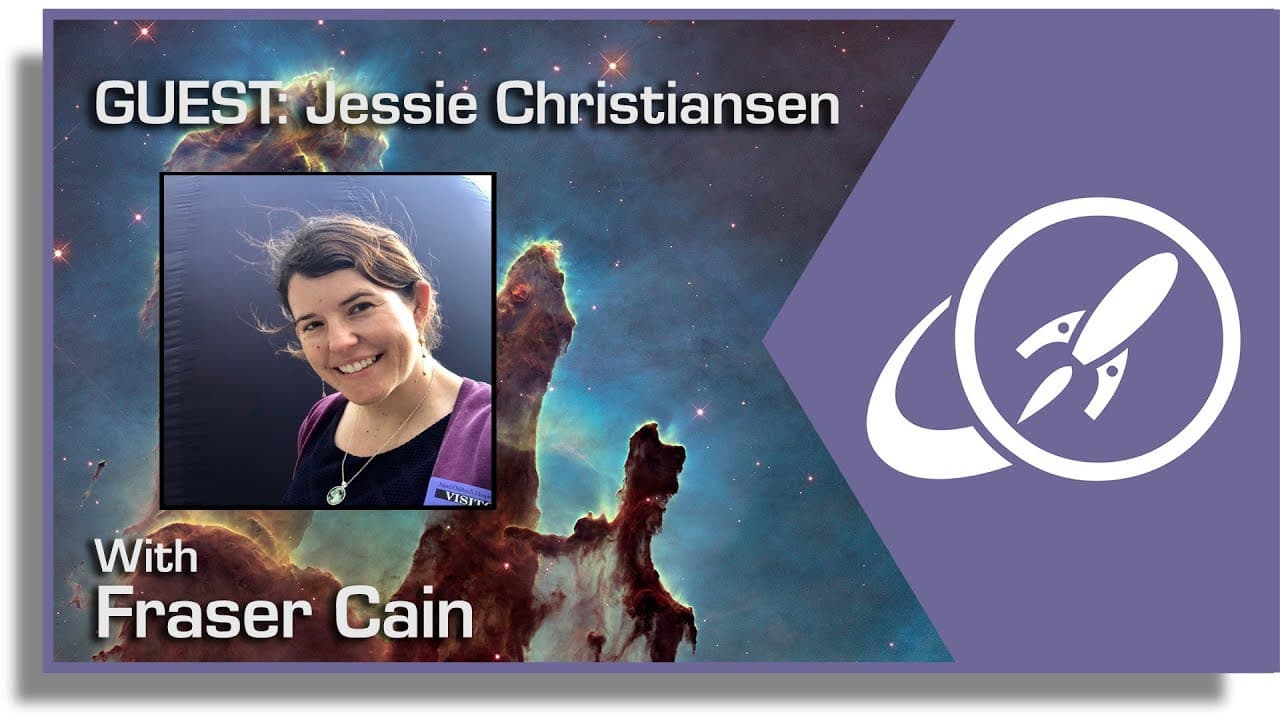
Open Space 30: Searching for Exoplanets with Dr. Jessie Christiansen
TL;DR
NASA scientist Dr. Jesse Christensen discusses exoplanets, revealing new discoveries and challenges in the field.
Transcript
we should be live but as always I require the validation of external people people give me a hard time for not knowing who the guest is so just before we even get started before we get into just the chat this is dr. Jessie Christensen a research scientist at NASA's exoplanet Science Institute and the deputy sites lead at NASA's exoplanet archive ex... Read More
Key Insights
- 👶 NASA's Tess mission aims to discover thousands of new exoplanets, potentially quintupling the known sample of planets.
- 👶 Exoplanet discoveries have reached new heights, with innovative methods and technologies revealing a diverse array of worlds.
Install to Summarize YouTube Videos and Get Transcripts
Explore YouTube Video Summarizer or Get YouTube Transcript Extractor
Questions & Answers
Q: How many exoplanets are currently known, and what methods are used to discover them?
Dr. Christensen mentions that we are close to reaching 4,000 known exoplanets, and techniques like transit method and radial velocity are some of the methods used for discovery.
Q: What is the role of the James Webb Space Telescope in studying exoplanet atmospheres?
James Webb Space Telescope will play a crucial role in studying exoplanet atmospheres, looking for molecular signatures and exploring atmospheric structures.
Q: Can the gravitational lensing technique be utilized to detect exoplanets?
Gravitational lensing can indeed be used to detect exoplanets by observing distortions in light as a planet crosses in front of its background star.
Q: What is the significance of exploring the possibility of planets around metal-poor stars?
Studying planets around metal-poor stars can reveal insights into the formation and evolution of planets under unique conditions and shed light on planet formation theories.
Summary & Key Takeaways
-
Dr. Jesse Christensen, a research scientist at NASA, explores the fascinating world of exoplanets.
-
The discussion delves into the tools used to discover exoplanets, trends in the field, and the challenges faced.
-
Exciting insights about the potential for future discoveries and missions in exoplanet research are shared.
Read in Other Languages (beta)
Share This Summary 📚
Summarize YouTube Videos and Get Video Transcripts with 1-Click
Try YouTube Summary with ChatGPT & Claude or YouTube Transcript Generator
Explore More Summaries from Fraser Cain 📚
Summarize YouTube Videos and Get Video Transcripts with 1-Click
Try YouTube Summary with ChatGPT & Claude or YouTube Transcript Generator