10 Minutes of This Feels Like 8 Hours of Sleep (Andrew Huberman)
TL;DR
Andrew Huberman discusses Yoga Nidra and NSDR for improved rest.
Transcript
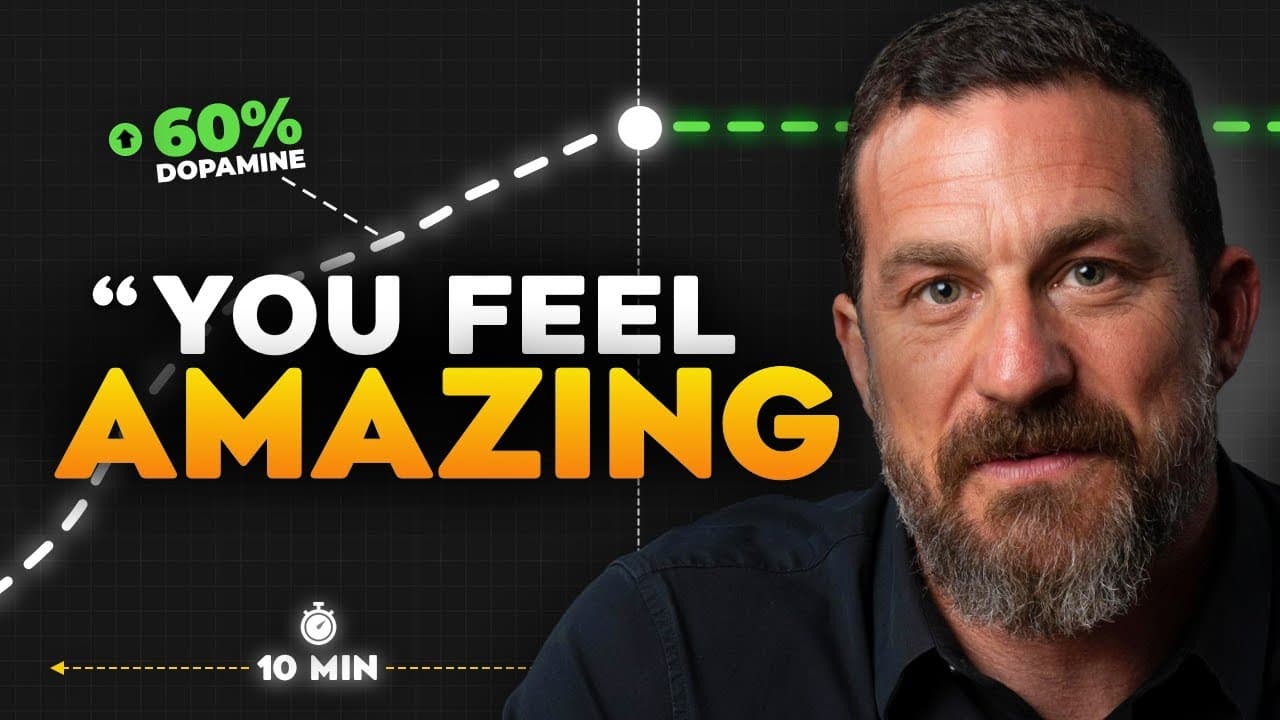
if ever there was a protocol that is useful for people to explore given that sleep is so important and mental and physical Vigor are so important it's a 10 to 20 minute or I've continued to do it about once a day and I personally just feel as if I've slept 8 hours feel amazing people who did this experienced a 60% increase i... Read More
Key Insights
- Yoga Nidra, also known as yoga sleep, is an ancient practice that involves lying still and focusing on long exhale breathing to slow the heart rate and promote relaxation.
- Andrew Huberman shifted from animal studies to human research to explore stress mitigation and trauma, discovering the restorative benefits of Yoga Nidra.
- Huberman developed Non-Sleep Deep Rest (NSDR) to simplify Yoga Nidra, removing mysticism and focusing on relaxation through body scans and breath control.
- NSDR can significantly decrease autonomic arousal and promote a shallow sleep-like state, offering mental and physical rejuvenation.
- A study in Denmark showed a 60% increase in dopamine in specific brain areas after an hour of Yoga Nidra, highlighting its potential benefits for motivation and reward pathways.
- NSDR differs from meditation by focusing on relaxation rather than concentration, making it suitable for improving sleep and reducing stress.
- Preliminary research suggests NSDR may allow certain brain areas to enter sleep-like states, potentially aiding in sleep recovery.
- Huberman emphasizes NSDR as a potent, cost-effective tool for enhancing mental and physical vigor, suitable for daily practice.
Install to Summarize YouTube Videos and Get Transcripts
Explore YouTube Video Summarizer or Get YouTube Transcript Extractor
Questions & Answers
Q: What is Yoga Nidra and how does it work?
Yoga Nidra, or yoga sleep, is an ancient practice that involves lying down and remaining still while focusing on long exhale breathing. This practice slows the heart rate through respiratory sinus arrhythmia, promoting relaxation and offsetting sleep loss. It is believed to replenish mental and physical vigor, even when one has slept well.
Q: How did Andrew Huberman discover the benefits of Yoga Nidra?
Andrew Huberman discovered Yoga Nidra around 2015-2016 while exploring stress mitigation and trauma. During a visit to a trauma treatment center in Florida, he participated in Yoga Nidra sessions and experienced significant restorative effects, prompting him to shift his research focus from animal studies to human studies to explore its benefits further.
Q: What is Non-Sleep Deep Rest (NSDR) and how does it differ from Yoga Nidra?
Non-Sleep Deep Rest (NSDR) is a simplified version of Yoga Nidra developed by Andrew Huberman. It strips away mysticism and focuses on relaxation through body scans and breath control. NSDR involves lying down for 10 to 30 minutes, promoting relaxation without the need for specific intentions or mysticism, making it more accessible and practical.
Q: What are the benefits of practicing NSDR?
NSDR can significantly decrease autonomic arousal and induce a shallow sleep-like state, offering mental and physical rejuvenation. It differs from meditation by focusing on relaxation rather than concentration, making it suitable for improving sleep, reducing stress, and enhancing overall mental and physical vigor. It is a versatile, cost-effective tool for daily practice.
Q: What did the study in Denmark reveal about Yoga Nidra?
A study in Denmark found that an hour of Yoga Nidra led to a 60% increase in dopamine levels in key brain areas, such as the striatum, involved in movement, motivation, and reward pathways. This significant dopamine boost highlights the potential benefits of Yoga Nidra for enhancing cognitive performance and overall well-being.
Q: How does NSDR impact sleep and relaxation compared to meditation?
NSDR focuses on relaxation rather than concentration, making it more effective for those struggling with sleep. Unlike meditation, which involves focusing and can disrupt sleep, NSDR promotes relaxation and self-directed relaxation techniques, helping to improve sleep quality and reduce stress by teaching individuals to relax their minds and bodies.
Q: What are the preliminary findings about NSDR's impact on the brain?
Preliminary research suggests that NSDR may allow certain brain areas to enter sleep-like states, potentially aiding in sleep recovery. Huberman is collaborating with Dr. Matthew Walker to explore the neural mechanisms behind NSDR using brain imaging, aiming to understand how closely it mimics sleep and its potential benefits for sleep-deprived individuals.
Q: Why does Andrew Huberman advocate for NSDR as a daily practice?
Andrew Huberman advocates for NSDR as a daily practice due to its potency and cost-effectiveness in enhancing mental and physical vigor. NSDR can be practiced any time of day or night, offering significant restorative benefits even with just 10 minutes of practice. It is a versatile tool that complements other wellness protocols, such as exercise and nutrition.
Summary & Key Takeaways
-
Andrew Huberman introduces Yoga Nidra and its modern adaptation, Non-Sleep Deep Rest (NSDR), as effective protocols for enhancing mental and physical vitality. These practices focus on relaxation techniques, such as long exhale breathing and body scans, to promote a state of restfulness and rejuvenation.
-
Research indicates that Yoga Nidra can increase dopamine levels in key brain areas, supporting motivation and reward pathways. NSDR offers similar benefits, providing a practical, mysticism-free approach to relaxation that can be practiced daily to improve sleep and reduce stress.
-
NSDR differs from traditional meditation by emphasizing relaxation over concentration, making it particularly effective for those struggling with sleep. Huberman advocates for its use as a versatile, zero-cost protocol for restoring mental and physical energy, applicable at any time of day or night.
Read in Other Languages (beta)
Share This Summary 📚
Summarize YouTube Videos and Get Video Transcripts with 1-Click
Try YouTube Summary with ChatGPT & Claude or YouTube Transcript Generator
Explore More Summaries from RESPIRE 📚

Summarize YouTube Videos and Get Video Transcripts with 1-Click
Try YouTube Summary with ChatGPT & Claude or YouTube Transcript Generator