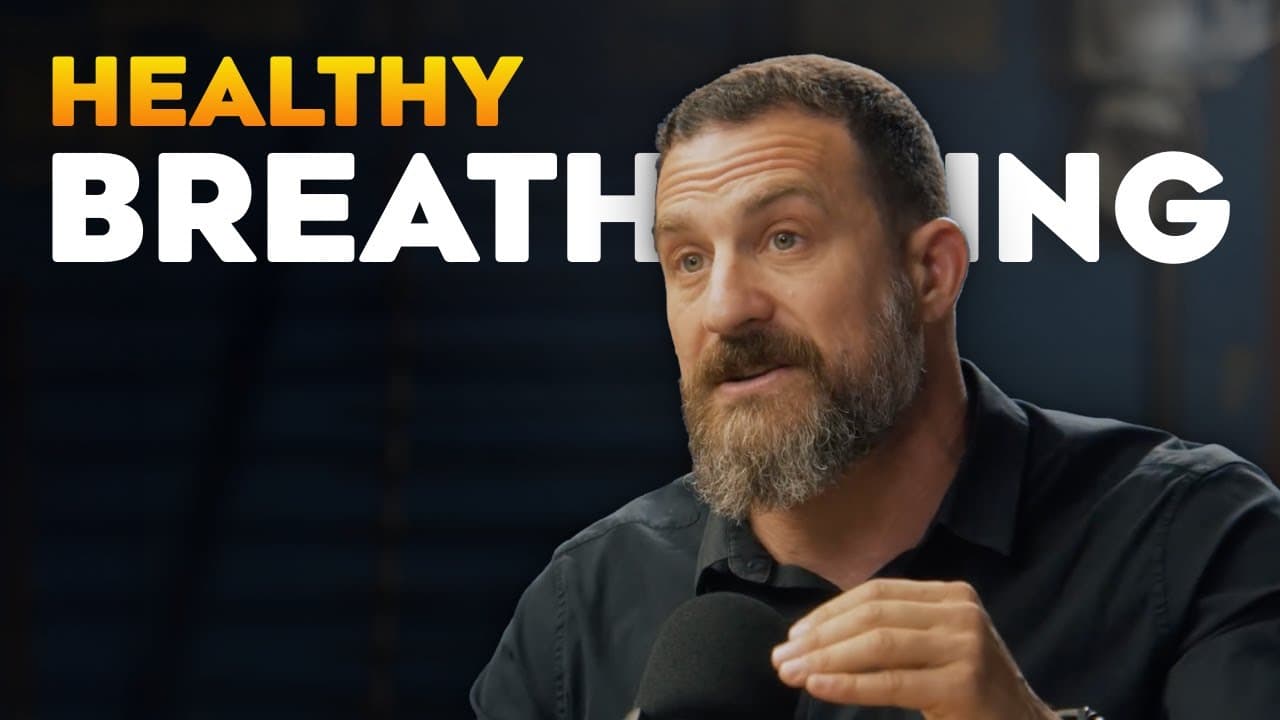
Poor Breathing Is Hurting Your Health (And How to Fix It)
TL;DR
Proper breathing improves mental and physical health significantly.
Transcript
I don't think that most people realize just how important how we breathe is to our quality of life and that includes our mental health our physical health and what we call Performance in ways that we would not be able to otherwise if we are not breathing correctly breathing has been shown to alter personality that's right breathing ... Read More
Key Insights
- Breathing patterns significantly impact both mental and physical health, influencing focus, calmness, and overall performance.
- Most people over-breathe, taking 15 to 30 shallow breaths per minute, which leads to brain hyperexcitability and reduced learning efficiency.
- Correct breathing involves nasal breathing and pauses between breaths, which helps in delivering more oxygen efficiently.
- A carbon dioxide tolerance test helps determine if someone is over-breathing and provides a baseline for improvement.
- Box breathing exercises can improve breathing efficiency, involving equal duration of inhale, hold, exhale, and hold.
- Box breathing exercises enhance neuromechanical control over the diaphragm, promoting neuroplasticity and better breathing patterns.
- Practicing proper breathing techniques can reduce stress, improve sleep quality, and enhance calmness.
- The carbon dioxide tolerance test and box breathing exercises are simple, cost-free methods to improve breathing health.
Install to Summarize YouTube Videos and Get Transcripts
Explore YouTube Video Summarizer or Get YouTube Transcript Extractor
Questions & Answers
Q: What is the significance of proper breathing patterns?
Proper breathing patterns are crucial for enhancing both mental and physical health. They help in maintaining calmness, improving focus, and boosting overall performance. Correct breathing ensures efficient oxygen delivery, reducing brain hyperexcitability and enhancing the ability to learn and process information effectively.
Q: How does over-breathing affect brain function?
Over-breathing leads to brain hyperexcitability, making it less efficient at detecting and learning information. It increases the brain's background noise, which hampers focus and concentration. This inefficient breathing pattern can negatively impact mental clarity and overall cognitive performance.
Q: What is the carbon dioxide tolerance test?
The carbon dioxide tolerance test is a simple method to assess how well an individual manages carbon dioxide through their breathing. It involves inhaling deeply through the nose and measuring the duration of a controlled exhale. The results indicate whether a person has low, moderate, or high carbon dioxide tolerance, guiding improvements in breathing efficiency.
Q: What is box breathing, and how does it help?
Box breathing is a breathing exercise involving equal duration of inhaling, holding, exhaling, and holding breaths. It helps in improving neuromechanical control over the diaphragm, promoting neuroplasticity, and enhancing resting breathing patterns. This exercise can reduce stress, improve sleep, and increase overall calmness and focus.
Q: Why is nasal breathing recommended?
Nasal breathing is recommended because it provides resistance that delivers more oxygen efficiently to the body. It helps in maintaining proper breathing patterns and ensures better oxygen-carbon dioxide balance, which is essential for optimal brain and body function.
Q: How can breathing exercises improve sleep quality?
Breathing exercises, such as box breathing, can improve sleep quality by promoting relaxation and reducing stress levels. Proper breathing patterns lead to a calmer state of mind, which is conducive to better sleep. These exercises help in establishing a more restful and restorative sleep cycle.
Q: What are the benefits of improving carbon dioxide tolerance?
Improving carbon dioxide tolerance enhances breathing efficiency and reduces over-breathing tendencies. It leads to better oxygen delivery, improved mental clarity, and reduced stress levels. Higher tolerance also supports better focus, learning capabilities, and overall cognitive performance.
Q: How often should one practice box breathing exercises?
Box breathing exercises can be practiced daily or even just once or twice a week to improve breathing efficiency. Consistent practice helps in establishing better breathing patterns over time, leading to numerous health benefits such as reduced stress, improved sleep, and enhanced mental focus.
Summary & Key Takeaways
-
Andrew Huberman emphasizes the importance of proper breathing patterns for enhancing mental and physical health. He introduces the concept of over-breathing and its negative effects on brain function and performance, advocating for nasal breathing with pauses.
-
The video outlines a carbon dioxide tolerance test to assess one's breathing health. This test helps individuals understand their current state and provides a baseline to improve their breathing efficiency through targeted exercises.
-
Box breathing exercises are recommended to improve breathing patterns. These exercises involve equal duration of inhaling, holding, exhaling, and holding, promoting better control over the diaphragm and leading to numerous health benefits.
Read in Other Languages (beta)
Share This Summary 📚
Summarize YouTube Videos and Get Video Transcripts with 1-Click
Try YouTube Summary with ChatGPT & Claude or YouTube Transcript Generator
Explore More Summaries from RESPIRE 📚




Summarize YouTube Videos and Get Video Transcripts with 1-Click
Try YouTube Summary with ChatGPT & Claude or YouTube Transcript Generator