Where Did Democracy Come From, and Does It Still Work?
TL;DR
Democracy faces criticism and challenges but remains vital.
Transcript
Does it ever feel like our democracy is…broken? [tense music] Like most Americans, I grew up learning that democracy was the best form of government. Full stop. But then, what am I supposed to make of American life today? A recent poll found that more than half of Americans think our democracy isn’t going well. So, what’s the deal? Is it possible... Read More
Key Insights
- Democracy has been criticized for centuries, with philosophers like Plato and de Tocqueville expressing skepticism about its effectiveness.
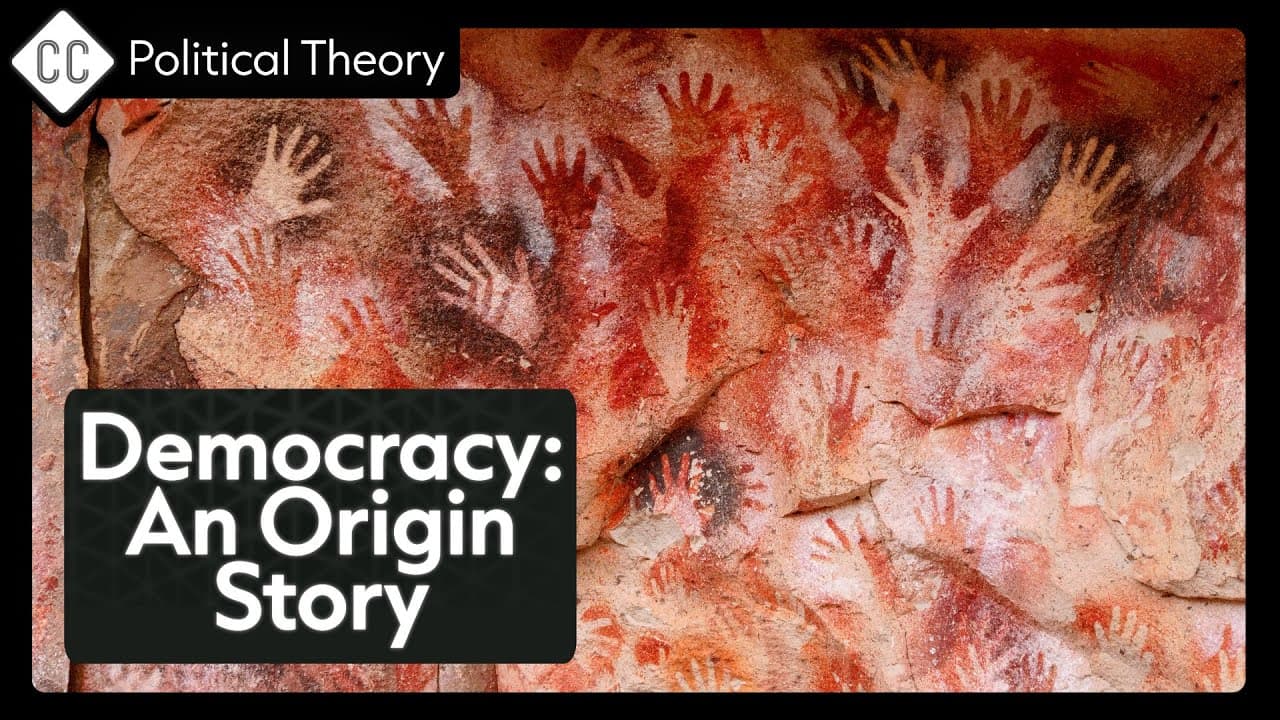
- The origin of democracy is often attributed to ancient Athens, but democratic practices existed in prehistoric times among hunter-gatherers.
- Different models of democracy, such as republican, liberal, and deliberative, offer varying approaches to decision-making and individual rights.
- Representative democracy is the most common form today, but it faces challenges regarding true representation and voter participation.
- The boundary problem questions whose opinions should matter more in democratic decision-making, highlighting issues of representation.
- Voter participation remains a challenge, with barriers like voter ID laws and a sense of disenfranchisement affecting turnout.
- Radical democracy advocates for continuous debate and extending equality to marginalized groups, viewing democracy as a way of life.
- Agonism, a concept within radical democracy, emphasizes accommodating diverse ideas rather than striving for consensus.
Install to Summarize YouTube Videos and Get Transcripts
Explore YouTube Video Summarizer or Get YouTube Transcript Extractor
Questions & Answers
Q: What are the main criticisms of democracy discussed in the video?
The video highlights several criticisms of democracy, including the potential for chaos due to excessive freedom, as noted by Plato, and the skepticism expressed by de Tocqueville. It also discusses the challenges of representation and voter participation, as well as the boundary problem, which questions whose opinions should matter more in decision-making.
Q: How does the video describe the origins of democracy?
The video challenges the common belief that democracy originated in ancient Athens, noting that democratic practices existed long before among prehistoric hunter-gatherers. While Athens is often credited with formalizing democracy, the video emphasizes that democratic decision-making has a much older and broader history.
Q: What are the different models of democracy mentioned in the video?
The video discusses three models of democracy: republican, liberal, and deliberative. The republican model focuses on civic values and the common good, the liberal model emphasizes individual rights, and the deliberative model seeks a balance between the two by encouraging discussion and consensus among diverse viewpoints.
Q: What challenges does representative democracy face according to the video?
Representative democracy faces challenges related to true representation, as individuals may be represented by officials who do not share their views or interests. Additionally, voter participation is a concern, with barriers like voter ID laws and a sense of disenfranchisement affecting turnout. The boundary problem further complicates representation by questioning whose opinions should hold more weight.
Q: How does the video address the issue of voter participation?
The video notes that voter participation remains a significant challenge for democracy. Despite high turnout in the 2020 U.S. presidential election, many eligible voters did not participate. Barriers such as voter ID laws and shortened voting times disproportionately affect marginalized groups, contributing to a sense of disenfranchisement and discouraging voter engagement.
Q: What is radical democracy, and how does it differ from traditional democracy?
Radical democracy, as discussed in the video, emphasizes continuous debate and the extension of democratic ideals to marginalized groups. Unlike traditional democracy, which may focus on achieving consensus, radical democracy values the accommodation of diverse ideas and views democracy as a dynamic, evolving process that requires ongoing engagement and reform.
Q: What role does agonism play in radical democracy?
Agonism, a concept within radical democracy, plays a crucial role by encouraging the acceptance and accommodation of diverse ideas and perspectives. Instead of striving for consensus, agonism values the nuances and differences among individuals, viewing them as essential to the vitality and progress of democracy. This approach seeks to maintain a vibrant and inclusive democratic discourse.
Q: How does the video suggest democracy should be approached moving forward?
The video suggests that democracy should be approached as an ongoing project that requires continuous revision and struggle. It advocates for radical democracy, which emphasizes expanding democratic ideals to marginalized groups and fostering an inclusive dialogue. By embracing diversity and accommodating different perspectives, democracy can remain dynamic and responsive to societal needs.
Summary & Key Takeaways
-
Democracy has been both praised and criticized throughout history, with philosophers like Plato highlighting its potential chaos due to excessive freedom. Despite its flaws, democracy remains a preferred form of government compared to alternatives like military rule or monarchy.
-
Different models of democracy, such as republican, liberal, and deliberative, offer diverse approaches to governance. The deliberative model, which emphasizes consensus through discussion, is viewed as the best compromise between individual rights and the common good.
-
Challenges to democracy include representation issues, voter participation barriers, and the boundary problem. Radical democracy proposes ongoing debate and inclusivity to address these challenges, viewing democracy as a dynamic and evolving process rather than a static institution.
Read in Other Languages (beta)
Share This Summary 📚
Summarize YouTube Videos and Get Video Transcripts with 1-Click
Try YouTube Summary with ChatGPT & Claude or YouTube Transcript Generator
Explore More Summaries from CrashCourse 📚
Summarize YouTube Videos and Get Video Transcripts with 1-Click
Try YouTube Summary with ChatGPT & Claude or YouTube Transcript Generator